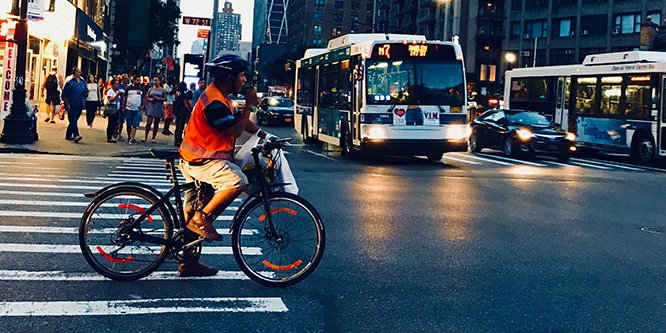
Photo: @walfredcabrera1 via Twenty20
A new study finds that New York City’s app-based delivery workers regularly face nonpayment or underpayment, unsanitary or unsafe working conditions and the risk of violence.
The study from advocacy group Worker’s Justice Project in partnership with Cornell University was based on a survey of 500 app-based workers, many of whom work for Grubhub, Doordash and UberEats. It comes as third-party delivery marketplaces are being counted on for speedy online delivery by retailers as well.
Among the findings:
- Forty-two percent experienced non-payment or underpayment.
- Forty-nine percent have been in an accident or crash while making a delivery. Seventy-five percent of these paid for the medical care with their personal funds.
- Fifty-four percent have experienced bike theft and 30 percent were physically assaulted during the robbery.
- NYC food delivery workers face a ‘harrowing world’ – Cornell University
- New Legislation Would Require Restaurants To Let Delivery Cyclists Use Their Restroom – Gothamist
- DoorDash workers protest outside CEO Tony Xu’s home demanding better pay, tip transparency and PPE – TechCrunch
- As Philly-based GoPuff goes global, its delivery drivers demand better pay and work conditions – Philadelphia Inquirer
- #DeleteInstacart – Gig Workers Collective
- Instacart workers urge customers to delete the app over labor issues – MarketWatch
- Council Advances Bills To Improve Working Conditions For Delivery Workers – Gothamist
- DoorDash drivers want more money. We asked restaurant owners to weigh in – San Francisco Examiner
- GoPuff drivers demand better treatment from company – The Hill