Are More Store Closings Than Openings in Retail’s Future?
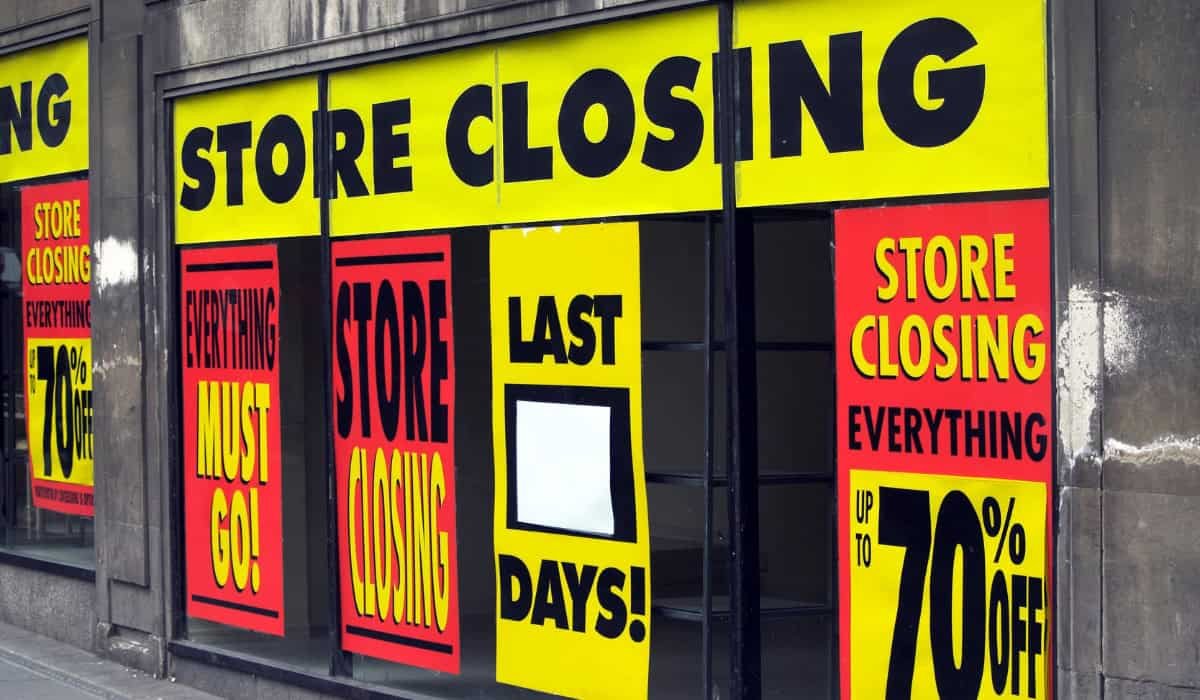
Coresight Research predicts a spike in store closings in the U.S. this year, representing the second consecutive year that closures outpace openings. The net increased closures were attributed to shifts to online shopping.
In 2024, U.S. store closures totaled 7,325, reaching the highest number of closings since 2020, the first year of the pandemic, according to Coresight’s findings. Openings reached 5,970, which still represented the highest number of openings since 2012 when Coresight began tracking opening/closing data.
For 2025, closings are predicted to more than double year over year to approximately 15,000. Openings are expected to remain about the same at about 5,800 this year.
Coresight said it already tracked over 2,000 planned closures year to date, including announcements from Party City, Big Lots, Kohl’s, and Macy’s. As of Jan. 17, major U.S. retailers have announced 29.6% fewer openings and 334.3% more closures compared to a year ago.
Coresight expects the closures in 2025 to fall into three categories:
- Liquidations resulting in all stores closing, such as Party City.
- Distressed retailers closing large swathes of stores, often under Chapter 11 bankruptcy restructuring, as with Big Lots.
- Legacy retailers reshaping their store footprints due to a “changed retail context,” as with Kohl’s and Macy’s.
Coresight said that consumers seeking savings amid inflationary pressures continue to drive e-commerce purchases.
“We continue to see a trend of consumers opting for the path of least resistance,” said Coresight’s CEO Deborah Weinswig in a statement. “Not only do they want the best prices, but they also have no patience for stores that are constantly disorganized, out of stock, and that deliver poor customer service.”
Weinswig urged retailers with stores to tap artificial intelligence and better optimize pricing to improve the in-store experience. She said, “We have seen Shein and Temu capture market share as consumers choose to shop online to save time, money, and avoid frustration.”
In April 2024, UBS retail analyst Michael Lasser predicted that about 45,000 stores would close in the U.S. in the next five years as online retail penetration increases to 28% by 2028 from 21% in 2023. As reported by Footwear News, Lasser also cited expected market share gains by Temu and Shein. “There will be just less need for stores,” he noted at the time.
Higher borrowing costs, rising wages, and consumers spending more on services were cited as other factors in the store closures.
Lasser still believes stores “remain an important part of the overall retail ecosystem” because they’re increasingly serving as fulfillment centers for online orders. He said, “This is increasingly more important as consumers are becoming more demanding for convenience or immediate deliveries.”
Brandon Svec, national director of U.S. retail analytics for CoStar Group, told CoStar News that Coresight's estimates for 2025 store closings are much higher than most other forecasts.
According to Business of Home, Telsey Advisory Group recently predicted a 1.7% growth in net store openings in the U.S. for 2025 as positive growth in off-price, home, and dollar channels offsets declines in luxury and department stores.
The U.S. retail vacancy rate also remains a low 4.1%, according to CoStar data.
Svec told CoStar News last August, “It's not, in my opinion, a resumption of the retail apocalypse that we saw in 2018, 2019, 2020 where we were seeing so many stores closed. There are still a substantial amount of tenants from a broad range of sectors looking for space. And the longer-term imbalance between the space needed in retail and the space that we have, I don't think has shifted.”
Discussion Thread0
The RetailWire Daily
One morning briefing: the retail news, expert perspective, and business context to bring into your next meeting.
Want to know more? Learn more