Photo: Getty Images/Eva-Katalin
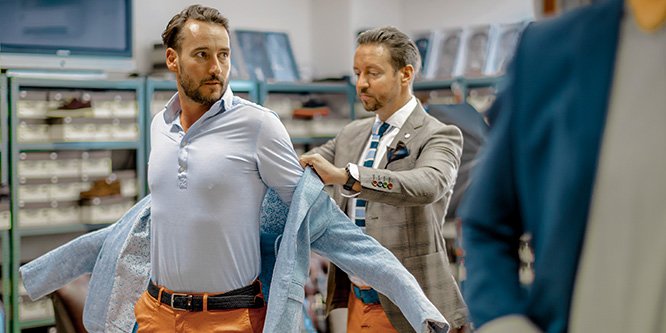
A new university study finds store loyalty, purchase intentions and spending behavior are negatively affected when consumers encounter a salesperson who is standing nearby.
The close proximity resulted in greater feelings of psychological discomfort among consumers, which, in turn, decreased spending, according to the study. The phenomenon was found to be even more pronounced with products that are closely tied to the consumer's identity expression.
Freeman Wu, co-author and marketing professor at Vanderbilt, said in a statement, “When shoppers are purchasing something that is closely tied to their personal identity — an article of clothing, for example — a salesperson in close proximity elicits a self-preservation response in the shopper, reducing the likelihood of a sale."
The studies were conducted before the pandemic and the researchers said further studies could explore whether social distancing had made people more sensitive to physical proximity.
Researchers noted that the studies took place in individualistic cultures in North America and Western Europe “where personal space is valued” and that the findings might be different in collectivistic cultures, embraced by many Eastern countries, where community and relationships with others is emphasized.
The researchers suggest that salespeople could be trained on how much personal space to provide shoppers, as "too little personal space may inadvertently repel sales."
Another university study that appeared in 2019 in the Journal of International Marketing found Western consumers were less suspicious of store associates they didn’t know versus Eastern consumers as long as the reason behind the extra attention was evident.
The researchers wrote, “Our empirical studies indicate that any single element of high attentiveness, be it frequent contact, intensive warmth, unsolicited care and information, or their resulting combinations, is sufficient to induce negative responses due to suspicion of ulterior motive among such consumers. Nonetheless, our results suggest that this response may be overcome if employees mitigate consumers’ suspicion of ulterior motive, such as by revealing to customers that their income is not commission-based, or by showing high attentiveness out of genuine concern.”
The findings comes despite the complaint of not being able to find a salesperson regularly ranking as the top pet peeve in studies of in-store shopping.