DISCUSSION
Are retailers getting too political with voter registration campaigns?
Written by Tom Ryan
Ahead of the midterm elections, a coalition of 137 companies — including Walmart, Gap, Abercrombie & Fitch and Dick’s Sporting Goods — last week launched the Time to Vote campaign, a “nonpartisan effort led by CEOs, aimed at increasing voter participation.”
A press release noted that the U.S. has one of the lowest voter participation rates among developed nations, as low as 36 percent in the 2014 general election.
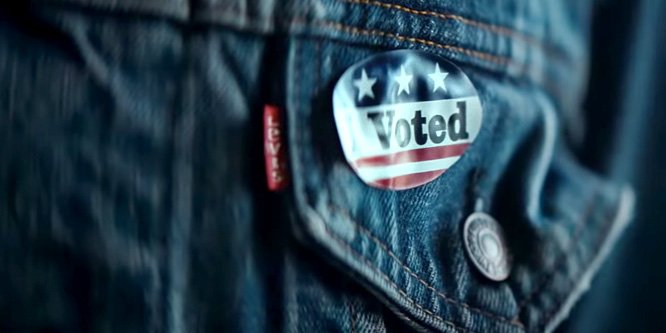
Levi’s kicked off a TV campaign last Tuesday on the National Voter Registration Day around the effort.
Participating companies also committed to offering paid time off, a day without meetings and resources for mail-in ballots and early voting to help their employees vote.
Walmart created a website, walmartcommunityvotes.com, that encourages consumers to learn about local candidates and poll details. Walmart said in a statement to Footwear News, “As every election matters, we’re empowering our associates and customers with voting information to more easily exercise this great privilege and responsibility.”
Corporate America has enjoyed a booming stock market and healthy economy in the time since President Trump was elected. But some have questioned how “nonpartisan” the effort can be in today’s politically-charged climate. The Time to Vote initiative was started by Patagonia, which has sued the Trump administration over planned reductions to Utah national monuments.
Other participating CEOs have spoken out against other hot-button issues such as exiting the Paris climate agreement, revamped immigration policies and gun control.
Walmart CEO, Doug McMillon criticized President Trump after the 2017 Charlottesville rally, and the discounter joined many in opposing tariffs on imports from China.
Yet, some participants such as Southwest Airlines have stayed out of the political fray. The coalition asserts the effort is similar to past get-out-the-vote campaigns such as MTV’s Rock the Vote in the nineties.
“We’ve voiced disagreement on policy issues in Democratic and Republican administrations,” Patagonia CEO Rose Marcario told The New York Times. “This is about recognizing that a vibrant democracy relies on engaged citizens voting, and that business can play a vital role by removing barriers.”
-
U.S. Companies Launch New “Time To Vote” Campaign – Time To Vote/PRNewswire
-
Walmart Community Votes – Walmart
-
Walmart, Patagonia and Lyft Make Push to Increase Voter Turnout – The New York Times
-
How These Retailers and Brands Hope to Increase Voter Turnout in November – Footwear News
-
Why do brands care if you vote? – Vox
Discussion Thread0
The RetailWire Daily
One morning briefing: the retail news, expert perspective, and business context to bring into your next meeting.
Want to know more? Learn more