
Image generated using ChatGPT
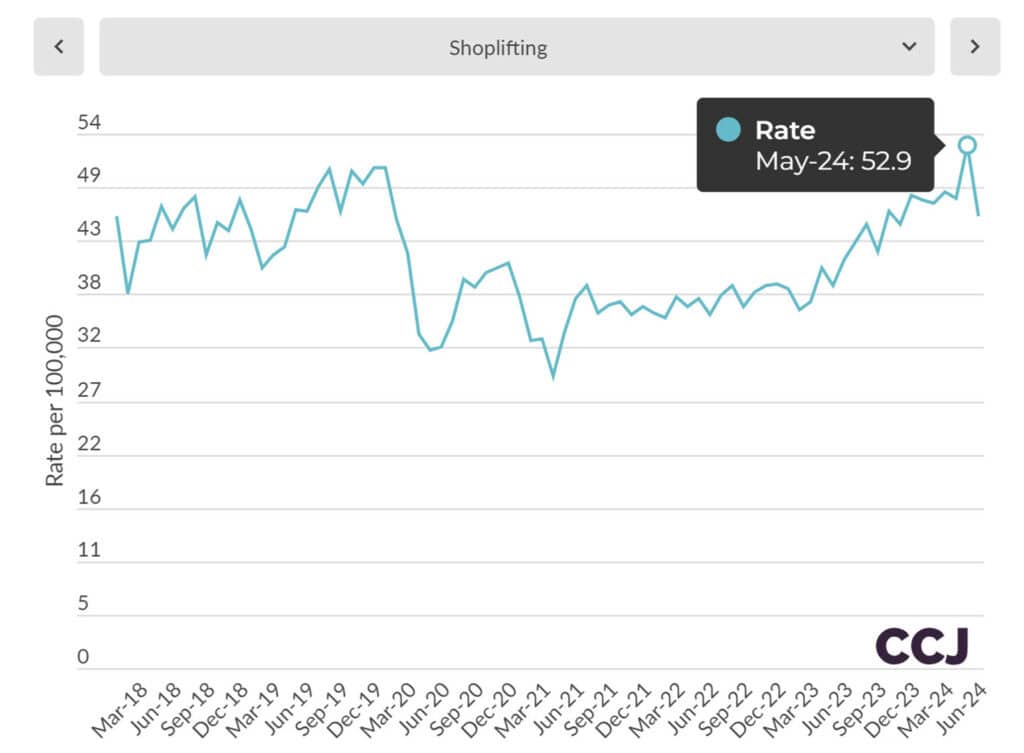
Earlier this month, the Council on Criminal Justice (CCJ) released statistics on crime rates across the country, which quantified the rising concern retailers have been facing regarding shoplifting. Despite falling rates of violent crime across the country to either at or below pre-pandemic levels, one statistic stands out: Retail theft is on the rise at an alarming rate, up 24% in the first half of the year compared to the same period in 2023. In May of this year, the CCJ reported the highest monthly crime rate since before 2018 for shoplifting, as depicted in the below chart.
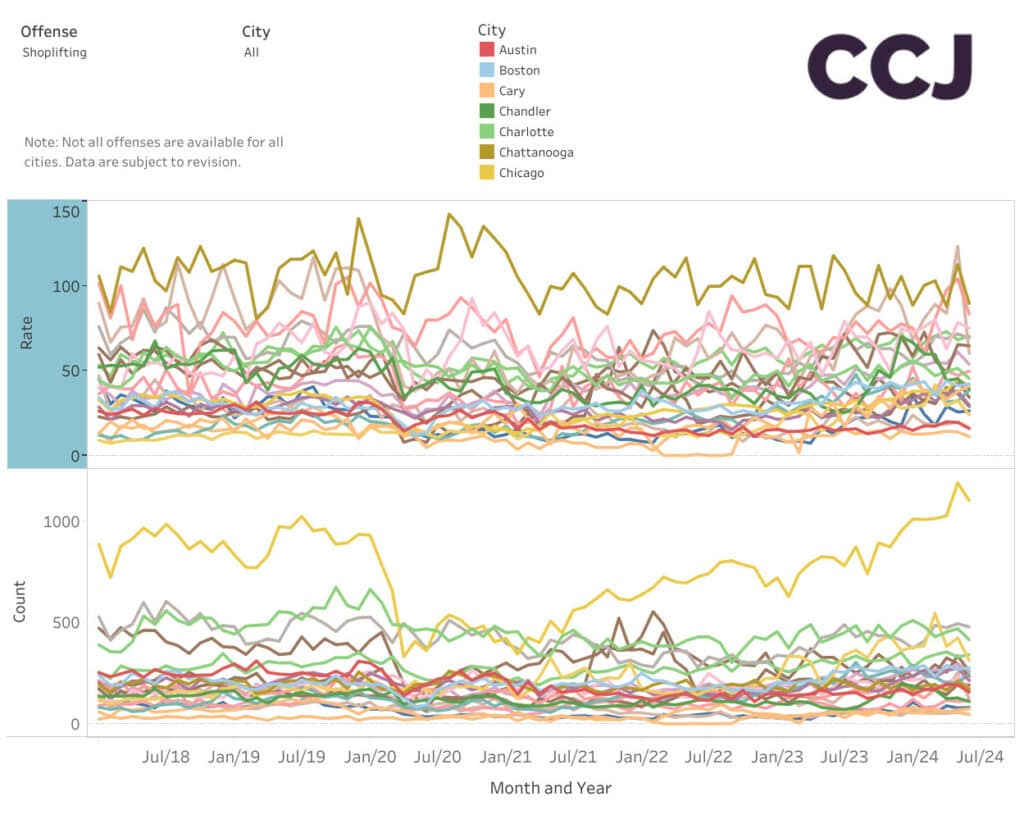
The rising shoplifting rates also account for a trend known as “flash mob” robberies as a form of organized retail crime (ORC), in which a group of shoplifters will raid a specific location. Data from the CCJ is available for major cities, covering a sampling of large and small jurisdictions across approximately 40 key cities that have shared data consistently over the last six years. As shown in the below chart, these issues are not exclusive to one region of the country. Little Rock, Chattanooga, Fayetteville, Durham, and Omaha had some of the highest rates reported.
What’s driving this continued rise? Some opinion pieces rationalize these acts as retaliation in response to corporate greed following a trend of increased price gouging and inflation amidst record-high corporate profits. This perspective suggests that economic pressures and perceived injustices are fueling the rise in theft. Faced with this, some companies are even resorting to extreme tactics to stop the bleeding of profitability. Retailers are currently weighing the tradeoffs between being customer-centric and combating rising rates of shoplifting across the country.
Last year, Target executed nine store closures, noting theft as the main factor. Nordstrom, Whole Foods, Nike, Walgreens, and Rite Aid have all taken similar actions. Locked cases have been installed across several major chains, including Walgreens, Target, and Walmart, to encase basic items ranging from pharmacy or personal care items to apparel and accessories such as socks and underwear.
Many of those same retailers are also walking back self-checkout initiatives that have presented opportunities for theft. Additionally, some mall properties have hired security staff at entrances to check identification and enforce adult supervision for anyone under the age of 18. This is to help curb instances of looting, theft, property damage, and more, especially among younger shoppers. For instance, a mall in Los Angeles enacted a chaperone policy last December after a huge brawl broke out when “approximately 1,000 juveniles came to loot and damage the property.”
Another strategy some luxury retailers have begun to test, in part to combat theft, is changing to appointment-only shopping models. Most recently, a Sak’s location in San Francisco swapped to appointment-only availability, citing crime as one of the factors in this decision.
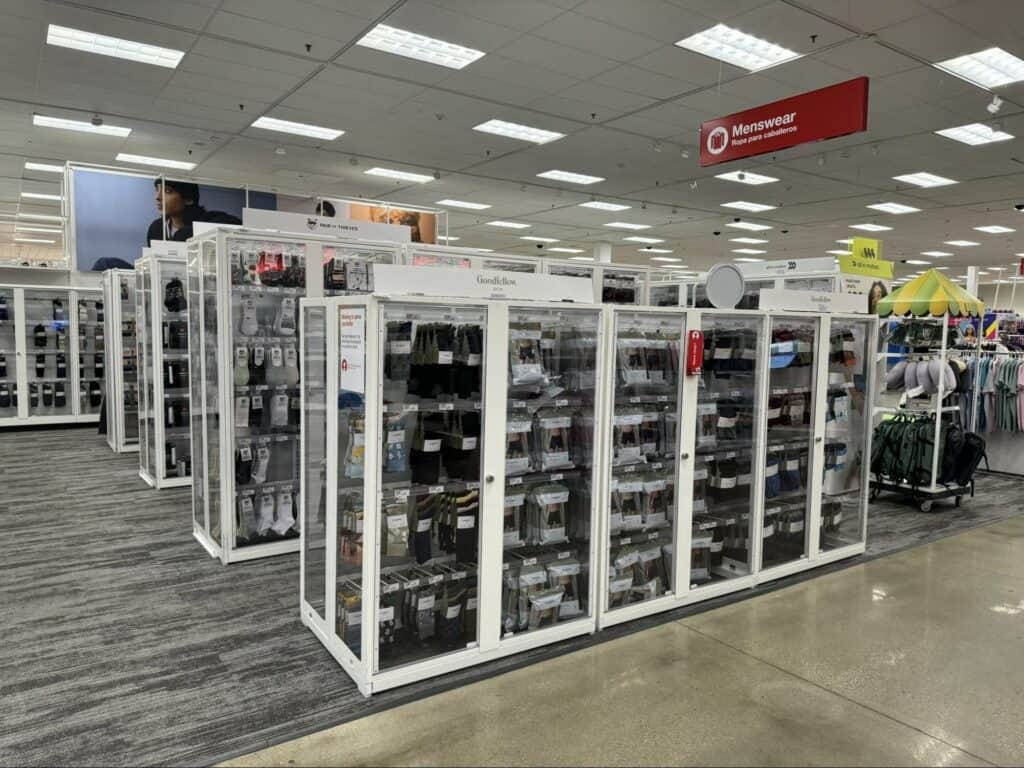
While these tactics are essential for reducing losses, they often come with a tradeoff that can impact the overall customer experience at the expense of sales. These measures can create a perception of distrust among honest customers, potentially leading to a decline in sales. The inconvenience of having to contact an associate for support is also causing an impact. In Amazon’s most recent earnings call, CEO Andy Jassy noted that the company has seen sales growth specifically in the pharmacy category due to customer reactions to locked cabinets.
In the face of surmounting obstacles, what can retailers truly do? To counterbalance some of the negatives, a ramp up in customer service and staffing can help. As one example, a primary backlash against self-checkouts was the reduction in floor support. Many customers responded with frustration that they now had to do the job of the store associate. With the absence of supervision in the checkout process, an opportunity for theft is created. Adding more staff across the store will increase expenses, of course, but a higher presence of employees can, with proper training, improve customer service and therefore increase sales, as well as be a shoplifting deterrent.
Providing a positive shopping experience is crucial, especially with discretionary spending low, particularly during an election year. Striking the right balance between loss prevention and customer-centric strategies is challenging, and there is no perfect formula, but the customer should be — and should always remain — the focus for retailers.