DISCUSSION
Can associate dress codes support in-store social distancing?
Written by Tom Ryan
University researchers conclude that the way store associates are dressed offers in-store signals that may be used as part of social distancing initiatives as consumers get more comfortable shopping in stores again.
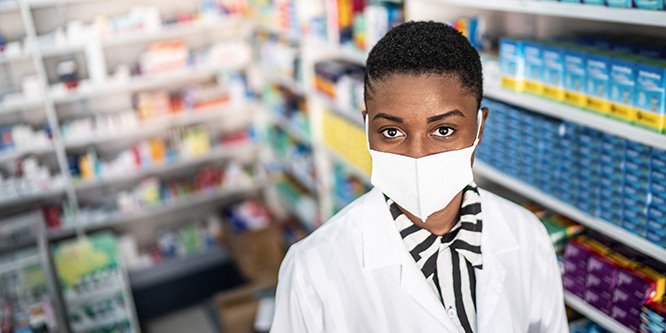
In an article in the Harvard Business Review, professors from Georgia Southern University and University of Alabama pointed to their own pre-pandemic research that showed shoppers are almost twice as likely to interact with a formally dressed employee (i.e., a hair salon employee wearing a white lab coat) as one who was informally dressed (white polo).
The article also cited more recent research showing shoppers still significantly prefer a formally dressed employee over a casually dressed one, even when they are both wearing a mask.
Based largely on those insights, the professors’ suggestions include:
- Formal dressing for vaccinated associates: Beyond encouraging engagement for shopping reasons, having vaccinated employees dress more formally could encourage shoppers to approach them for assistance while their non-vaccinated colleagues could dress less formally to encourage less interaction. Having more formally-dressed associates could make customers are more willing to approach with questions, thereby reducing excessive time spent searching and touching objects around the store;
- Color codes: Associates could be assigned different colored clothing based on how comfortable they are being within close distance to others with shoppers alerted through signage at the store’s entrance;
- Continued masks for associates: With a University of Southern California survey that came in January showing that 83 percent of Americans are more likely to approach an employee with a face mask over an identical employee without a mask, continued employee mask wearing could instill greater confidence in an associate to support more satisfactory shopping experiences.
Discussion Thread0
The RetailWire Daily
One morning briefing: the retail news, expert perspective, and business context to bring into your next meeting.
Want to know more? Learn more