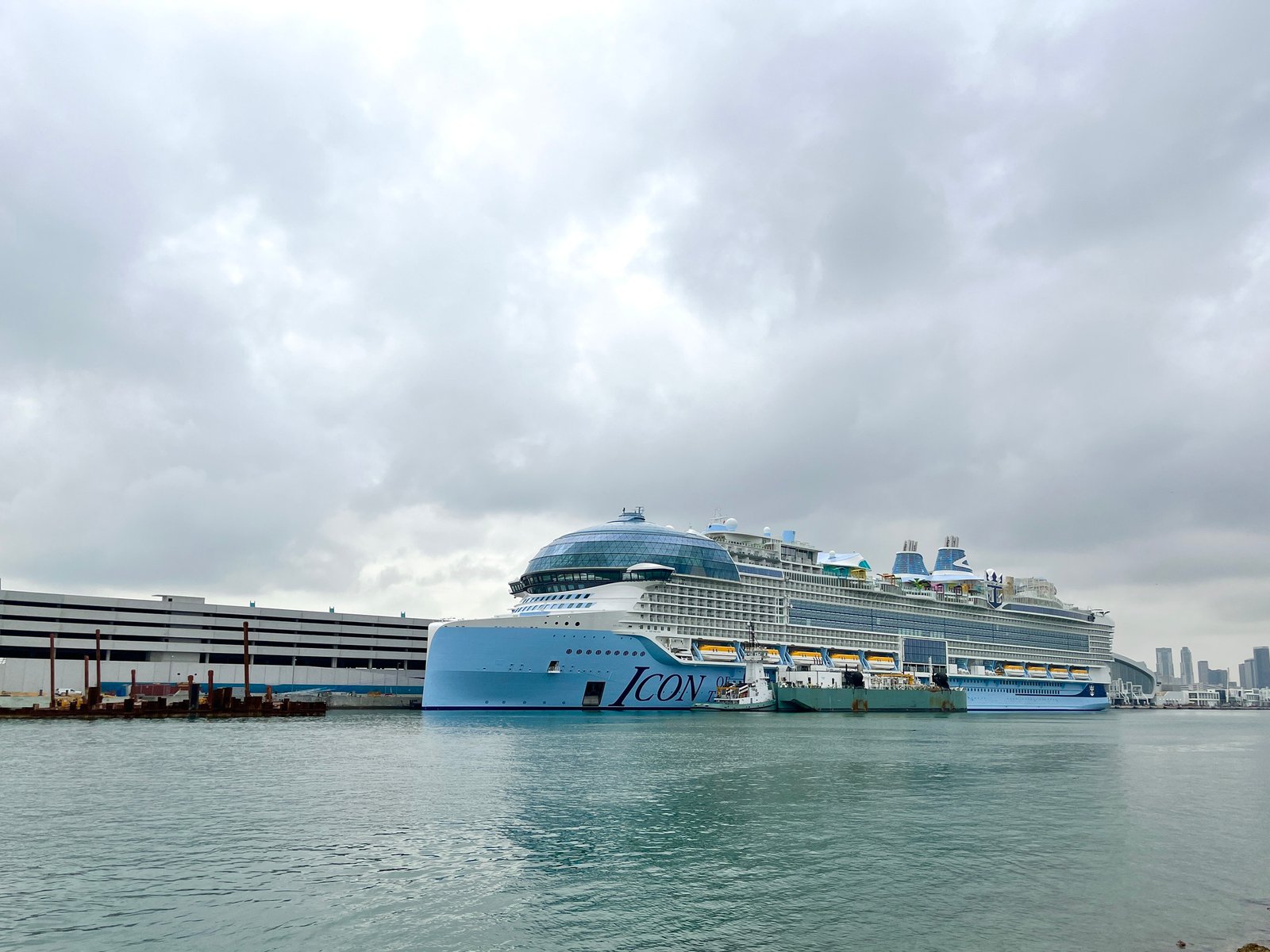
Can the World's Largest Cruise Ship Weather the Tides of the Cruise Industry?
Over the past weekend, the world's largest cruise ship, the "Icon of the Seas," began its maiden commercial journey. Launched from the Port of Miami, Florida, this massive floating resort embarked on a seven-day tour, taking travelers on an unforgettable journey through tropical islands. It's like a floating town with eight unique areas onboard called "neighborhoods," seven swimming pools, and six waterslides.
Spread over 20 decks, the vessel can accommodate up to 7,600 guests, making it more than just an average cruise experience. Building this sea behemoth was no small feat, and it came with a hefty price tag of $2 billion.
However, the launch of this mega-cruise ship has sparked a debate about the environmental sustainability of cruise tourism. The ship's engine runs on liquified natural gas (LNG), which burns cleaner compared to other marine fuels. But there's a catch — LNG has a high methane content.
Methane is a potent greenhouse gas, about 80 times more effective at trapping heat in the atmosphere than carbon dioxide. Therefore, it's a crucial contributor to the planet's warming, and researchers worldwide are calling for significant reductions in methane emissions to mitigate the global climate crisis.
Scientists from the International Council on Clean Transportation (ICCT), Explicit ApS, and the Netherlands Organization for Applied Scientific Research teamed up on the Fugitive and Unburned Methane Emissions from Ships (FUMES) project to determine specifics. They collected data on methane emissions from LNG ships measuring directly from the ship's exhaust with drones and helicopters, including leaks and emissions from unloading cargo from 18 ships with common LNG engines. They found twice as much emissions as what EU regulations and the International Maritime Organization (IMO) thought. To put it into perspective, using LNG as marine fuel can result in over 120% more life-cycle greenhouse gas emissions than marine gas oil, according to Bryan Comer, director of the ICCT's Marine Program.
The Current Trajectory of the Cruise Industry
The shipbuilding industry had a significant year in 2023, delivering a total of 23 new cruise ships, ranging from the world's largest cruise to smaller vessels like Silversea Cruises's Silver Nova, which has a capacity for 728 guests.
According to Cruising.org, "Global cruise capacity is forecast to grow 19% to more than 746K lower berths from 2022 to 2028." Overall, the cruise industry, one of the most rapidly growing sectors in tourism, is bouncing back from the pandemic quicker than international tourism. The industry's growth strategy for the period of 2023-2025 hinges on drawing in 4 million new cruise travelers. Younger generations, like millennials and Gen X, are the primary targets, as most of those individuals who have cruised plan to do so again.
Moreover, there's a surge of interest in first-time cruising among these groups. Consequently, cruise lines are diversifying their offerings with both shorter and longer itineraries. Solo cruising is gaining popularity, leading to an increase in single-cabin construction. Despite the growing popularity of other locations, North America still holds its position as the primary market, with the Mediterranean trailing behind.
Cruise vacations are surging in popularity for 2024 and are a top choice for travelers of varying budgets due to the competitive pricing compared to land-based vacation alternatives. Around 35.7 million passengers are predicted to cruise in 2024, a rise from 31.5 million in 2023 and 6% more than in 2019, according to the Cruise Lines International Association (CLIA). Conversely, smaller operators like the SeaDream Yacht Club report strong bookings for 2024 and 2025 and have started booking for fall 2026.
Booking.com adapted to this trend by launching a cruise-focused service last November.
A Cruise Industry Divided
While excitement surrounds these gigantic cruise ships, a different kind of sea-faring experience is gaining attention as well. Many high-end resort brands are planning to introduce smaller, luxurious vessels into the market, often referred to as large yachts. These smaller ships, like Aman's 50-cabin vessel and Ritz-Carlton's 224-suite ship set to sail in 2024, offer a different kind of cruising experience.
Even shipping retail leader MSC Group is venturing into the upscale, downsized market through its luxury cruise brand, Explora Journeys, which launched its 461-suite Explora 1 in 2023. This new trend in cruising has created a split in the industry's newest offerings. It's a classic tale of the underdogs versus the giants, each vying for a different kind of traveler.
Small vessels offer a more intimate, land-focused journey, perfect for those who prefer exploring port cities over onboard entertainment. They also garner a strong appeal among wealthy travelers due to their ability to offer top-notch customer services and tailor-made itineraries.
There's also the sustainability angle to consider, important to both companies and travelers. Mega-ships, despite their popularity, have been under fire for their environmental impact and have faced restrictions due to overcrowding at ports. Smaller vessels, on the other hand, are not just easier to manage logistically, but they also have a smaller carbon footprint, aligning more with the industry's goal of net-zero emissions by 2050.
Some of the new mega-ships are too big to fit into certain ports, so cruise companies have resorted to buying private islands in the Bahamas as exclusive resorts for their passengers.
Whether travelers prefer the bustling environment of a mega-ship or the intimate experience of a smaller luxury liner, only time will tell which model will prevail in the ever-evolving cruise industry. As the "Icon of the Seas" takes on its first commercial voyage, it leaves behind questions about the future of cruise tourism and its impact on our planet.
Discussion Thread0
The RetailWire Daily
One morning briefing: the retail news, expert perspective, and business context to bring into your next meeting.
Want to know more? Learn more