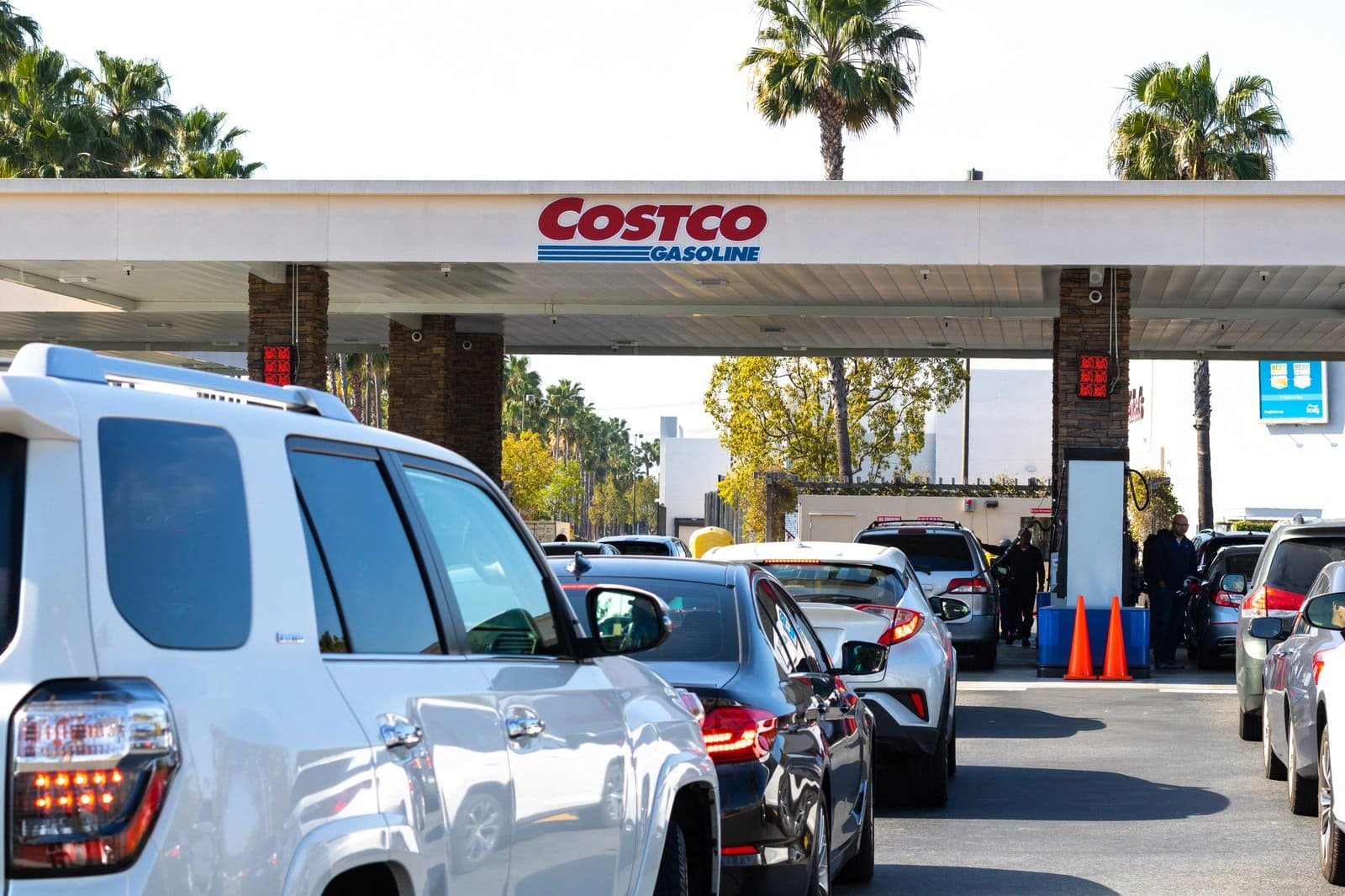
Costco gas

July 14, 2026

vijay.fang@outlook.com/Depositphotos.com

Are Standalone Costco Gas Stations (and Warehouse Clubs in General) Big Trouble for Convenience Retailers?

With the opening of Costco’s first standalone gas station in Mission Viejo, California, and plans to develop at least another, the notion of whether or not these gas stations — and warehouse club fuel stations more broadly — might threaten convenience store competitors is cast into the spotlight.

“Regardless of Costco’s long-term plans for standalone gas stations, the new Mission Viejo location will almost certainly put pressure on nearby convenience retailers, which are unlikely to match the wholesaler’s aggressive fuel pricing. According to Costco’s website, the station is selling regular gasoline for $4.59 per gallon — roughly 71 cents below the Orange County average, according to AAA,” wrote C-Store Dive’s Brett Dworksi.

“While the site does not include a Costco warehouse or convenience store, it could divert traffic from nearby retailers. Circle K, ExtraMile, United Pacific, BP and Shell locations are all in the area, and could see declines in visits and merchandise sales,” he added.

The wider framing on this issue was highlighted by Modern Retail’s Anna Hensel in a recent piece discussing the plight faced by many convenience stores as customers increasingly showed hesitance to spend — or even visit — as gas prices soared and competing warehouse clubs offered a much more attractive one-stop solution.

“If people don’t visit gas stations as frequently, it stands to reason that they may not make impulse purchases there as frequently,” Hensel wrote.

“And there’s data to suggest that gas station owners have a right to be worried. Location analytics firm Placer.ai, which tracks weekly foot traffic to different retailers year over year, has noted a consistent decline in visits to gas stations since mid-April. For the week of June 29, visits to gas stations were down 4.1% year over year,” she continued.

Will Lowered Gas Prices and Increased Support From Vendors Help Convenience Retailers Compete Against Costco and Other Clubs?

One method of attack was outlined as Hensel quoted Casey’s General Stores CEO Darren Rebelez, who indicated that Casey’s was already targeting the lower end of gas pricing ranges in order to attract consumers increasingly attentive to fuel prices — and their attendant impulse spending. Rebelez believed that Casey’s was pulling more shoppers to its locations through affordable fuel prices, and seeing results down the line (with pizza sales being up 10% YoY, as one example).

And Ramon Laguarta, chairman and CEO of PepsiCo., recently spoke to similar findings during a recent earnings call. Laguarta noted that sales via “impulse channels” for Pepsi products had seen headwinds, and despite international business showing promise, a short-term game plan was necessary.

“In those particular channels, we’re working with our customer partners in solutions to convert more of the traffic in store — bundles, linking to meals, solutions to address that particular channel,” he said during the call.

As for Hensel, her take was that whether or not shopper psychology — and these negative associated trends for convenience retailers — would have a long-lasting impact generally would be tied to the longevity of the inflationary pressure being exhibited on the U.S. economy.

BrainTrust

"Costco’s member-only fuel concept will likely siphon away some trips from nearby convenience stores, but they aren’t competing for in-store visits."
Avatar of Jamie Tenser

Jamie Tenser

Retail Tech Marketing Strategist | B2B Expert Storytelling™ Guru | President, VSN Media LLC


"C-stores have far more to sell than the current version of the standalone Costco gas station. That makes them relevant to their customers. They need to play up that angle."
Avatar of Shep Hyken

Shep Hyken

Chief Amazement Officer, Shepard Presentations, LLC


"The best operators have already figured out that fuel is a traffic driver, not a business model. Casey’s is a good example. Pizza up 10% year over year isn’t a coincidence."
Avatar of Chris Niesen

Chris Niesen


Discussion Questions

Do you believe that Costco is looking to eventually scale its standalone gas station concept?

In your opinion, are traditional gas/c-store locations in trouble as shoppers find new ways to fuel up for less while availing of cheaper impulse buys at the same time? What can be done by the latter besides simple price cuts?

C-stores have leaned heavily into prepared foods, trendy beverage and snacks as of late — but will more differentiation be needed?

Poll

12 Comments
Oldest
Newest Most Voted
Shep Hyken

Will Costco scale its standalone gas stations? Well, there’s a reason they built one with another on its way. They are testing the concept. If it works, do you blame them?

Brands like Costco know that to stay relevant, they must always be looking for new opportunities. This may bring a Costco benefit (low gas prices) to a new type of customer/member. I’m sure we’ll see other changes made as time moves on.

There are no guarantees this will work. Remember when Amazon tried brick-and-mortar stores?

C-stores have far more to sell than the current version of the standalone Costco gas station. That makes them relevant to their customers. They need to play up that angle.

Georganne Bender
Georganne Bender

People who just want to fill up their tank will probably love Costco’s standalone gas stations, but a lot of people value the convenience of a gas station/convenience store combo for more than just fuel. Even if those stores continue to do well, they’ll likely need to step up their game if Costco’s model takes off. I guess we’ll have to wait and see.

Craig Sundstrom
Craig Sundstrom

So is a new entrant a threat to existing businesses ?? Well, DUH! Of course it is (particularly if it enjoys a price advantage). But I see no need to – or point in – singling out convenience stores; the only part of this that seems particular to them is that their business model already seems in trouble

Chris Niesen
Chris Niesen

The c-store that earns the visit isn’t always the one with the cheapest gas. It’s the one that gives you a reason to come in.

The best operators have already figured out that fuel is a traffic driver, not a business model. Casey’s is a good example. Pizza up 10% year over year isn’t a coincidence. That’s what happens when you give the customer something worth stopping for.

Costco’s standalone gas station is a real threat to the c-stores that haven’t answered that question yet. If your only advantage is proximity and the customer now has a 71 cent per gallon reason to drive past you, proximity isn’t enough.

The c-stores in trouble are the ones still organized around the transaction. The ones that will be fine have built something the customer actually wants to walk into.

Mark Ryski

Everything Costco does is intentional. This may be a single location test, but it’s an important one. Gas prices are the topic everyone is talking about, and most people know that Costco offers gas at a discount. The long lines for Costco gas at their warehouse stores can be a real traffic bottleneck, so the idea of having standalone Costco gas stations is interesting. If Costco scales this model up, and gas prices remain high, then this will put pressure on traditional gas/c-store locations. With fewer people filling up in their locations, the traffic impact will be felt in their higher margin convenience goods/food. Having competitive pricing is necessary, but competing with Costco will be extremely difficult. For now, one store is a test. If Costco were to open hundreds or even thousands of locations, it would change the gas/c-store landscape. 
 

Brad Halverson
Brad Halverson

Costco gas stations have a shot here to disrupt the market if projections lead to a 15% or more greater share in a given trade area. And Costco’s own success would not be measured on gas volume, but instead benchmarked increases in new memberships, their profit driver. If Costco ever included its kitchen with pizza and the $1.50 hot dog combo, that alone would seal it as a destination.

Last edited 19 days ago by Brad Halverson
Mohamed Amer, PhD

The 71-cent-per-gallon gap isn’t a pricing story. It’s a business model-level disadvantage.
Costco’s fuel discount is absorbed by $5 billion-plus in annual membership fees. Gas exists to reinforce membership value, not generate fuel margin. The standalone station simply unbundles that proposition into new geographies without the warehouse.
No c-store operator can replicate that math. There is no membership fee to subsidize the pump. Competing on price against a structural cross-subsidy is a category error, not a strategy.
The only viable response is what Casey’s is already executing: make the stop worth taking regardless of who wins on fuel. The in-store experience has to earn the visit on its own terms.

Jamie Tenser

Costco’s member-only fuel concept will likely siphon away some trips from nearby convenience stores, but they aren’t competing for in-store visits. With a whopping 40 fuel pumps, the setup resembles the exterior of a Buc-ee’s, minus the brisket and energy drinks inside.
Interesting to me that these units being tested in California have no mention of EV fast charging. I’d speculate that Costco has done the fill-ups-per-square-foot-per-hour calculation and concluded that selling juice is a slow way to make money.

Neil Saunders
Neil Saunders

There are lot of current and future disruptions for gas stations and their associated convenience offerings: a higher penetration of electric vehicles, the rise of cheaper dollar stores in rural areas displacing local purchasing, more health-conscious consumers which reduces snacking, and so on. Compared to these bigger forces, Costco has a tiny overall impact. It’s simply a matter of math: Costco has around 750 gas stations in select locations. But there are over 160,000 gas stations (including 120,000 with convenience stores attached) across the US. Costco can be locally troublesome for traditional players, but it simply doesn’t have the reach or penetration to be nationally disruptive. 

Allison McCabe

“For the week of June 29, visits to gas stations were down 4.1% year over year,”  Yes, because people are economizing on gas AND there continues to be a shift to hybrid and electric cars.

Perry Kramer
Perry Kramer

Stand a lone stations for the Clubs are not their core model. C-store visits are down because people are conserving trips driven by the high cost of fuel, and the continued overall drop in fuel demand driven by the proliferation of Hybrids. the Majority of C-store s have used the quality of their assortment including prepared foods.
The level of effort to have a customer pay the annual membership fee for just Gas instead of the club treasure hunt may work in a few select markets but it will probably not expand enough to have a notable impact on C-stores. That said in general Clubs have a price/margin advantage when fuel prices drop because they turn their tanks 5 to 10 times faster than the average c-store allowing them to quickly take advantage of price drops. allowing them to take advantage in select high traffic markets.

Brian Numainville

Costco (and other standalone gas stations) serve one shopping occasion but certainly don’t handle others where shoppers might be looking for a quick meal on the go, a needed supply, or something else. The quality of the c-store/gas competitors in a given area with a Costco or other entrant also plays a role in what might happen.

12 Comments
Oldest
Newest Most Voted
Shep Hyken

Will Costco scale its standalone gas stations? Well, there’s a reason they built one with another on its way. They are testing the concept. If it works, do you blame them?

Brands like Costco know that to stay relevant, they must always be looking for new opportunities. This may bring a Costco benefit (low gas prices) to a new type of customer/member. I’m sure we’ll see other changes made as time moves on.

There are no guarantees this will work. Remember when Amazon tried brick-and-mortar stores?

C-stores have far more to sell than the current version of the standalone Costco gas station. That makes them relevant to their customers. They need to play up that angle.

Georganne Bender
Georganne Bender

People who just want to fill up their tank will probably love Costco’s standalone gas stations, but a lot of people value the convenience of a gas station/convenience store combo for more than just fuel. Even if those stores continue to do well, they’ll likely need to step up their game if Costco’s model takes off. I guess we’ll have to wait and see.

Craig Sundstrom
Craig Sundstrom

So is a new entrant a threat to existing businesses ?? Well, DUH! Of course it is (particularly if it enjoys a price advantage). But I see no need to – or point in – singling out convenience stores; the only part of this that seems particular to them is that their business model already seems in trouble

Chris Niesen
Chris Niesen

The c-store that earns the visit isn’t always the one with the cheapest gas. It’s the one that gives you a reason to come in.

The best operators have already figured out that fuel is a traffic driver, not a business model. Casey’s is a good example. Pizza up 10% year over year isn’t a coincidence. That’s what happens when you give the customer something worth stopping for.

Costco’s standalone gas station is a real threat to the c-stores that haven’t answered that question yet. If your only advantage is proximity and the customer now has a 71 cent per gallon reason to drive past you, proximity isn’t enough.

The c-stores in trouble are the ones still organized around the transaction. The ones that will be fine have built something the customer actually wants to walk into.

Mark Ryski

Everything Costco does is intentional. This may be a single location test, but it’s an important one. Gas prices are the topic everyone is talking about, and most people know that Costco offers gas at a discount. The long lines for Costco gas at their warehouse stores can be a real traffic bottleneck, so the idea of having standalone Costco gas stations is interesting. If Costco scales this model up, and gas prices remain high, then this will put pressure on traditional gas/c-store locations. With fewer people filling up in their locations, the traffic impact will be felt in their higher margin convenience goods/food. Having competitive pricing is necessary, but competing with Costco will be extremely difficult. For now, one store is a test. If Costco were to open hundreds or even thousands of locations, it would change the gas/c-store landscape. 
 

Brad Halverson
Brad Halverson

Costco gas stations have a shot here to disrupt the market if projections lead to a 15% or more greater share in a given trade area. And Costco’s own success would not be measured on gas volume, but instead benchmarked increases in new memberships, their profit driver. If Costco ever included its kitchen with pizza and the $1.50 hot dog combo, that alone would seal it as a destination.

Last edited 19 days ago by Brad Halverson
Mohamed Amer, PhD

The 71-cent-per-gallon gap isn’t a pricing story. It’s a business model-level disadvantage.
Costco’s fuel discount is absorbed by $5 billion-plus in annual membership fees. Gas exists to reinforce membership value, not generate fuel margin. The standalone station simply unbundles that proposition into new geographies without the warehouse.
No c-store operator can replicate that math. There is no membership fee to subsidize the pump. Competing on price against a structural cross-subsidy is a category error, not a strategy.
The only viable response is what Casey’s is already executing: make the stop worth taking regardless of who wins on fuel. The in-store experience has to earn the visit on its own terms.

Jamie Tenser

Costco’s member-only fuel concept will likely siphon away some trips from nearby convenience stores, but they aren’t competing for in-store visits. With a whopping 40 fuel pumps, the setup resembles the exterior of a Buc-ee’s, minus the brisket and energy drinks inside.
Interesting to me that these units being tested in California have no mention of EV fast charging. I’d speculate that Costco has done the fill-ups-per-square-foot-per-hour calculation and concluded that selling juice is a slow way to make money.

Neil Saunders
Neil Saunders

There are lot of current and future disruptions for gas stations and their associated convenience offerings: a higher penetration of electric vehicles, the rise of cheaper dollar stores in rural areas displacing local purchasing, more health-conscious consumers which reduces snacking, and so on. Compared to these bigger forces, Costco has a tiny overall impact. It’s simply a matter of math: Costco has around 750 gas stations in select locations. But there are over 160,000 gas stations (including 120,000 with convenience stores attached) across the US. Costco can be locally troublesome for traditional players, but it simply doesn’t have the reach or penetration to be nationally disruptive. 

Allison McCabe

“For the week of June 29, visits to gas stations were down 4.1% year over year,”  Yes, because people are economizing on gas AND there continues to be a shift to hybrid and electric cars.

Perry Kramer
Perry Kramer

Stand a lone stations for the Clubs are not their core model. C-store visits are down because people are conserving trips driven by the high cost of fuel, and the continued overall drop in fuel demand driven by the proliferation of Hybrids. the Majority of C-store s have used the quality of their assortment including prepared foods.
The level of effort to have a customer pay the annual membership fee for just Gas instead of the club treasure hunt may work in a few select markets but it will probably not expand enough to have a notable impact on C-stores. That said in general Clubs have a price/margin advantage when fuel prices drop because they turn their tanks 5 to 10 times faster than the average c-store allowing them to quickly take advantage of price drops. allowing them to take advantage in select high traffic markets.

Brian Numainville

Costco (and other standalone gas stations) serve one shopping occasion but certainly don’t handle others where shoppers might be looking for a quick meal on the go, a needed supply, or something else. The quality of the c-store/gas competitors in a given area with a Costco or other entrant also plays a role in what might happen.

More Discussions