DISCUSSION
Do grocers need a fresh approach to boost online sales of meat and produce?
Written by RetailWire Staff
Photo: Getty Images/PonyWang
Online grocery shopping remains popular with customers, even if some surveys show a slight reduction in the use of the service since its peak of adoption early in the novel coronavirus pandemic. But when it comes to shopping for perishables online, a new survey finds that many shoppers still say, “perish the thought.”
More than half of shoppers (54 percent) shop for meat, chicken, or fish primarily in physical stores, according to a PYMNTS survey. Nearly as many customers (53 percent) shop for fruit and vegetables primarily in-store. These categories are much more frequently purchased in-store than others, with only 44 percent of customers purchasing most of their food in-store today. On the opposite end of the spectrum, only 35 percent of customers buy paper products and cleaning supplies mainly in physical stores. Only 27 percent of customers purchase pet food mainly in physical stores.
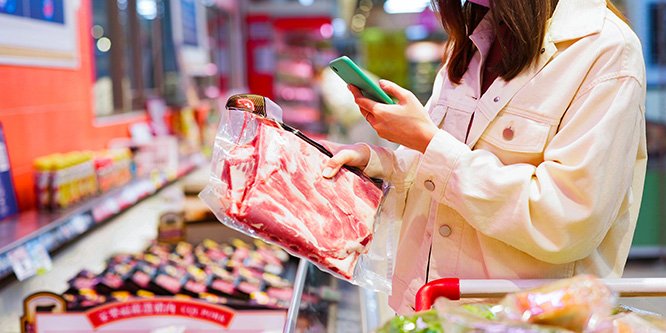
Shopping in-store for meat and vegetables allows customers to assess the quality of products on-the-spot, rather than depending on the opinion of a shopper from Instacart or another service picking an order. It also prevents customers from worrying about products going bad in a warehouse or being damaged during shipping or delivery.
Before the pandemic-era spike in e-grocery adoption, perishables were posing a pain point for grocery pick-up and delivery services.
In 2018, Walmart patented a solution called “Fresh Online Experience,” according to CB Insights. The system described in the patent would allow customers to order a perishable item in-store via mobile or web, at which point an in-store picker would use a 3-D scanner to take a 360-degree image of a real-life product and send it to the customer. The customer could then either accept or reject the item within a fixed amount of time. It is not clear if the solution was ever piloted.
In January 2023, online grocery was down 1.2 percent year-over-year, according to data from Brick Meets Click. Ship-to-home experienced the largest drop, with 10 percent fewer monthly active users using such services than in 2022. The number of online grocery orders has been slowly trending downward since hitting a peak in May of 2020.