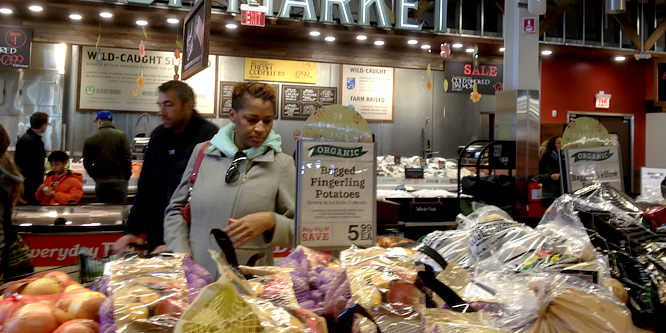
Photo: RetailWire
While Whole Foods has long battled its "whole paycheck" nickname, a new university study finds that the retailer is not alone in facing such biases in the price perception of healthy foods.
While organic ingredients and gluten-free foods may indeed cost more for legitimate reasons, the study finds consumers extend this thinking to a broad range of products, potentially leading to an avoidance of healthier options — or overpayment for them.
“Across five studies, we find that consumers do subscribe to a general lay theory that healthy = expensive despite the fact that this relationship is unlikely to be true in all product categories and contexts,” the report states. “As a result, this lay theory is over-applied beyond the categories where it is objectively true.”
The study came from professors at The Ohio State University, Vanderbilt University and University of Georgia. The findings were published online in the Journal of Consumer Research.
In two of the studies, consumers inferred products were healthier based on price alone. Similarly, consumers assumed foods identified as healthier would cost more.
Another study found that consumers fall back on price when there are not clear differences in the nutritional benefits of various options. The “healthy = expensive” theory also leads consumers to believe that a particular “healthy” ingredient is more important when an item containing it has a higher price.
Further, a lower-priced item — a $2.00 “protein bar” — led respondents to seek out more product reviews than when considering $4.00 one.
The study said the “expensive-equals-healthy” bias particularly impacts families looking to balance budgets.
“It makes it easier for us when we’re shopping to use this lay theory, and just assume we’re getting something healthier when we pay more,” said Rebecca Reczek, co-author of the study and professor of marketing at The Ohio State University, in a statement. “But we don’t have to be led astray. We can compare nutrition labels and we can do research before we go to the grocery store. We can use facts rather than our intuition.”