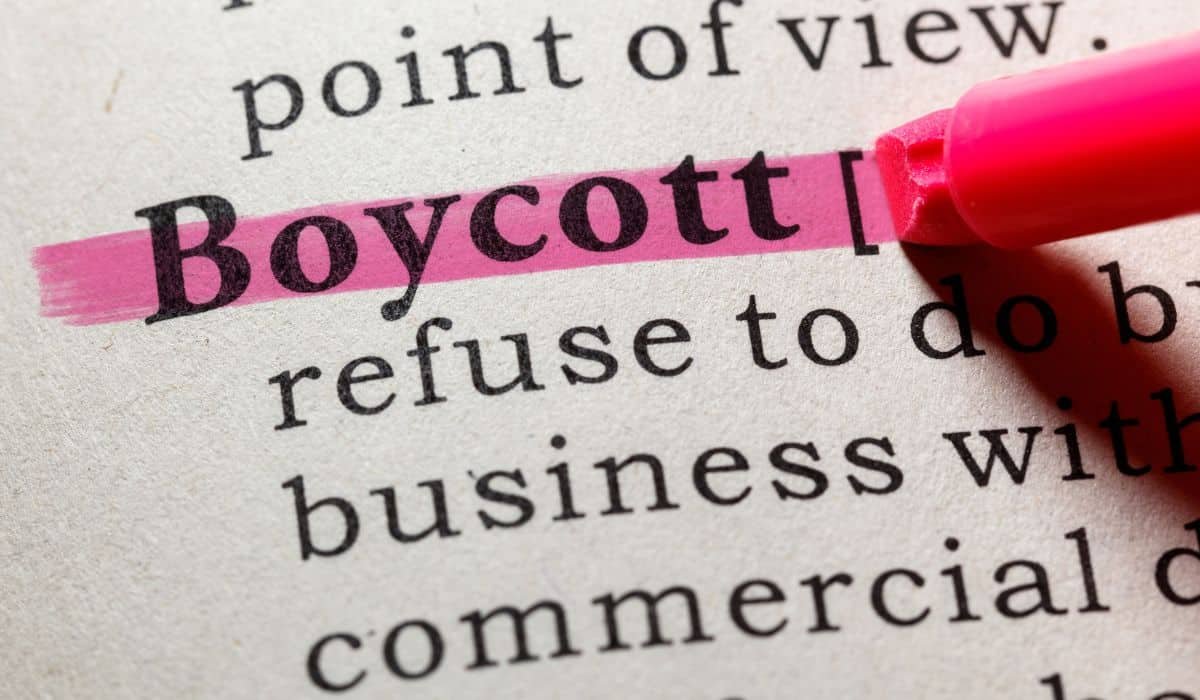
Feb. 28 'Economic Blackout' Boycott Planned by Activists: Will It Be Effective?
If you've been active on social media over the past few days, chances are you've witnessed at least one post related to a so-called "economic blackout" boycott slated to take place on Feb. 28, as the month draws to a close.
According to The Washington Post, the man behind the boycott is named John Schwarz, known online by his handle of TheOneCalledJai on TikTok and Instagram. Schwarz lives in the Chicago area and founded The Peoples Union USA, the activist organization responsible for promoting the Feb. 28 boycott.
Schwarz — a 57-year-old meditation teacher — was spurred by the Trump administration's aggressive approach to shrinking the federal government as impetus to make a move.
“They’re dismantling so many things in this country,” Schwarz said, per The Post. “If people are going to step in and make a change that benefits the people, it’s now.”
Backed by $65,000 in GoFundMe donations — and with Schwarz having gained 255,000 new Instagram followers and over 100,000 new TikTok followers during the course of the past few weeks — it appears the movement has some clout.
"We’re all exhausted. We’re all tired. Enough is enough,” Schwarz said. “We can’t sit back and watch these people boast about their wealth … and then we’re all sitting at home in anxiety and fear, not knowing how we’re going to make it till the end of the month.”
How Will the Feb. 28 'Economic Blackout' Boycott Work?
The blackout's goal is fairly simple: don't buy anything (if at all possible) on Feb. 28, particularly from large corporations. Whether it's in-store or online, the aim is to halt purchases from 12:01 a.m. until 11:59 p.m. on the last day of the month.
“No Amazon, no Walmart, no fast food, no gas,” Schwarz said, as quoted by Yahoo! News. “Not a single unnecessary dollar spent.”
When it comes to essentials, the boycott's backers are suggesting that participants stick to small, local businesses.
"Do not go out and shop at any big, major store,” Schwarz said in a recent Instagram video. “If you have to, go to the local pizza place, the small local boutique."
"For our entire lives, they have told us we have no choice, that this is just how things are, that we have to accept these insane prices, the corporate greed, the billionaire tax breaks, all while we struggle just to get by," he said in the video. “For one day, we are going to finally turn the tables."
The Peoples Union USA has several follow-up boycotts planned as well, as The Washington Post relayed, including:
- March 7-14: Amazon, including Whole Foods and Prime purchases.
- March 21-28: Nestlé — including Nescafé, Toll House, Stouffer’s, and Purina.
- March 28: All large corporations and retailers.
- April 7-13: Walmart.
- April 18: All large corporations and retailers.
- April 21-27: General Mills — including Betty Crocker, Cheerios, Gold Medal, and Pillsbury.
Other Boycotts Launched Over DEI Concerns
USA Today reported that several other activist groups or faith communities have launched their own recent boycotts, most related to the retreat from DEI policies taking place as of late.
The news outlet indicated that a Feb. 1 boycott of Target had kicked off in connection with Black History Month over the company's turnaround on the DEI issue in recent months. Rev. Jamal Bryant of New Birth Missionary Baptist Church in Stonecrest, Georgia, is leading a second boycott against Target for similar reasons, according to CNN.
"He [Rev. Bryant] is urging Black Americans to stop shopping at Target and to sell their stock in the retailer for Lent, a 40-day period of prayer and fasting that this year lasts from March 5 to April 17," CNN's Nicquel Terry Ellis and Eva McKend wrote.
A boycott involving the Latino community — rallying around the hashtag #LatinoFreeze and supporting "Latino American, Black American and Allied American Businesses that are supportive to this [DEI-supportive] movement" — as well as a "buy-cott" involving Rev. Al Sharpton and the National Action Network have also made headlines. The latter buy-cott calls for DEI-backing consumers to shop at Costco, a company whose shareholders recently decisively voted down a proposal to curtail its DEI policies.
Feb. 28 Boycott Draws Mixed Reviews From Commenters
Commenters on the Yahoo! News article related to the economic blackout boycotts were mixed in their messaging, ranging from support to cynicism, with some degree of apathy mixed in.
"This will get a chuckle from the major retailers. A more consistent blackout — like a few days every month — would send a much stronger and noticeable message… The problem would be the same one that will exist for this one day blackout: getting people to actually do it," user Sean wrote.
"I'm avoiding spending money in the free market for the next couple years. I'm already pretty frugal so it's a game that eliminates a lot of waste. I also buy local, make my own, thrift and give a lot of unused items away. The level [of] consumerism and the waste sent every day to landfills in our nation are unsustainable," user Neil offered.
"In the unlikely event this has any traction at all (Walmart shoppers aren't noted for social awareness), all that will happen is workers will be sent home early Friday losing a few hours on their paychecks, the shoppers will be back Saturday to catch up and the corporations will not lose anything. I doubt the overpaid celebrities have darkened a big box store in years. In the end it's just adstream media clickbait and a fundraiser for the sponsoring organizations," The Blue Fisherman opined.
Discussion Thread0
The RetailWire Daily
One morning briefing: the retail news, expert perspective, and business context to bring into your next meeting.
Want to know more? Learn more