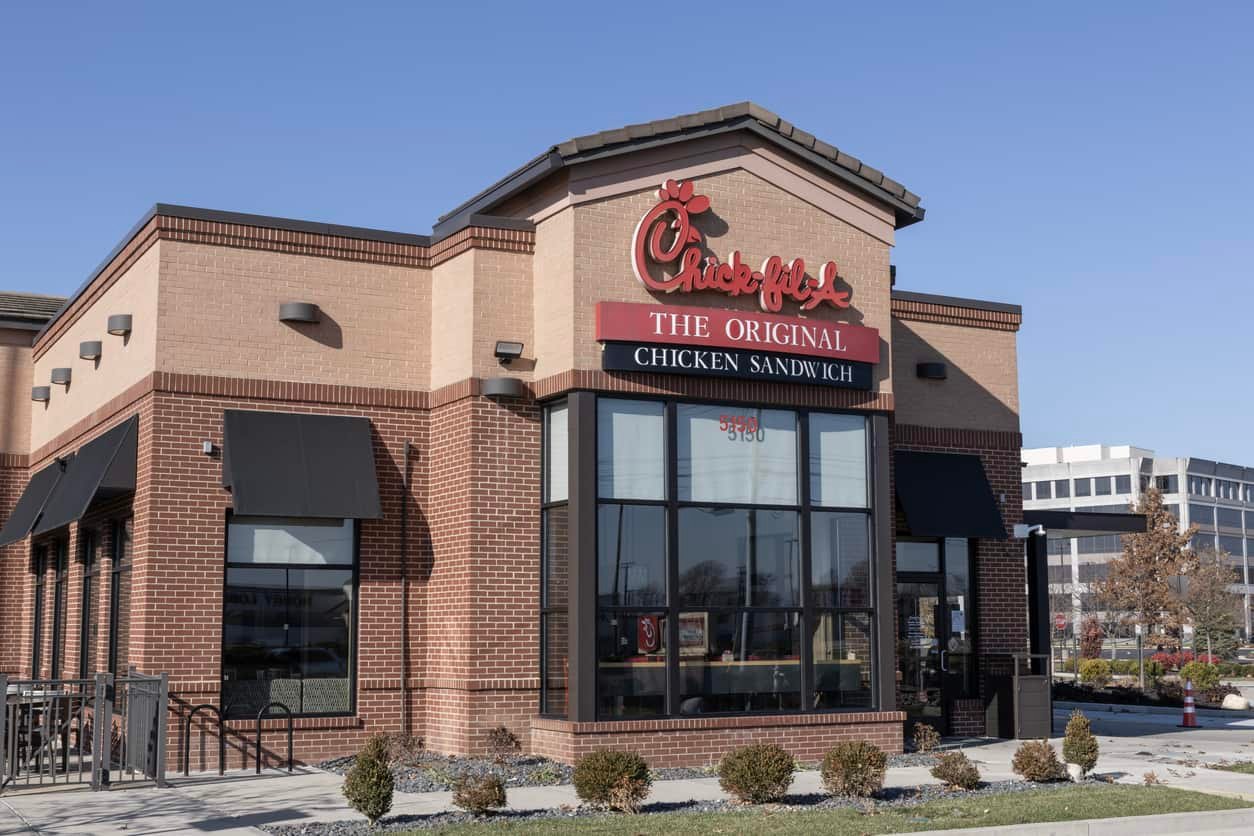
Is Chick-fil-A the Fast-Food Chain To Beat?
Chick-fil-A seems to be maintaining a lead in the fast-food industry without much of a hitch.
In the retail food sector, competition is volatile, and the recent California minimum wage increase has contributed to rising fast-food prices across the state, on top of increases due to inflation over the last few years.
Yet, according to Chick-fil-A’s 2024 franchise disclosure document, its non-mall locations generated an average of $9.4 million in unit revenues last year, as reported by Restaurant Business Online. More surprisingly, despite not having a value menu, Chick-fil-A's average unit volume is over double that of McDonald’s, which approached $4 million last year, and it also surpasses Portillo’s, which posted average unit volumes of $9.1 million during the same period.
The publication also explained that over the past decade, Chick-fil-A has "added the sales equivalent of a combined Taco Bell and Raising Cane’s to its system." The brand's success can be largely attributed to its ability to generate increasing sales from a relatively small number of locations.
This growth has been achieved despite rising inflation, increased operational costs, most other food retailers offering value meals, and reduced consumer spending.
Amidst the price wars between fast-food chains and traditional restaurants, Chick-fil-A seems to be taking different approaches.
For starters, Chick-fil-A debuted its first elevated drive-thru restaurant on Aug. 22 in McDonough, Georgia, near Atlanta. The new location features a unique design with four drive-thru lanes and an elevated kitchen equipped with a fast-food conveyor system, enabling meals to be delivered every six seconds. This design aims to enhance service speed and simplify the drive-thru experience, with the kitchen being twice the size of a standard Chick-fil-A kitchen.
The restaurant does not include a dine-in option, focusing instead on optimizing the drive-thru service. This innovation follows the introduction of Chick-fil-A’s mobile pickup concept in New York City this past March and is part of the company's broader strategy to improve customer service and efficiency.
Moreover, Chick-fil-A is going beyond fast food and venturing into the streaming industry with its own channel, aiming to provide family-friendly content. The fast-food chain is collaborating with major production companies to create unscripted programming, including a new game show from Glassman Media and Sugar23. The streaming network will feature unscripted content with budgets of around $400,000 per episode, with scripted and animated projects also in development. The launch is planned for later this year, and the move is seen as a strategic response to the current challenges in the reality TV market.
Chick-fil-A has also made some questionable changes that have left many disappointed, but it is yet to be seen if these will negatively affect the company's business in the long term.
For example, many have taken to social media and Reddit to express their frustration with the chain's menu prices being too expensive. Some have explained that paying upwards of $7 for a chicken sandwich alone is not worth it, even though Chick-fil-A is trendy and promises quality. A full rotisserie chicken can be purchased from a Walmart or Costco for the same price, while a full combo meal at Chick-fil-A now costs about the same amount as a full takeout meal from a restaurant like Chili's, according to another Redditor.
Additionally, Chick-fil-A announced a change in its chicken sourcing standards in March, transitioning from its previous No Antibiotics Ever (NAE) policy to a new standard called No Antibiotics Important To Human Medicine (NAIHM). According to the chain's website, "NAIHM restricts the use of those antibiotics that are important to human medicine and commonly used to treat people, and allows use of animal antibiotics only if the animal and those around it were to become sick."
This shift, which occurred in the spring, comes in response to challenges in maintaining a consistent supply of high-quality chicken, a problem that became apparent after the company initially adopted antibiotic-free chicken in 2014. The update aligns with other food establishments, as chains like Panera Bread and Tyson Foods have made similar adjustments due to supply chain issues. It also reflects a broader industry trend where fast-food chains must balance maintaining high-quality standards with navigating supply chain complexities.
Discussion Thread0
The RetailWire Daily
One morning briefing: the retail news, expert perspective, and business context to bring into your next meeting.
Want to know more? Learn more