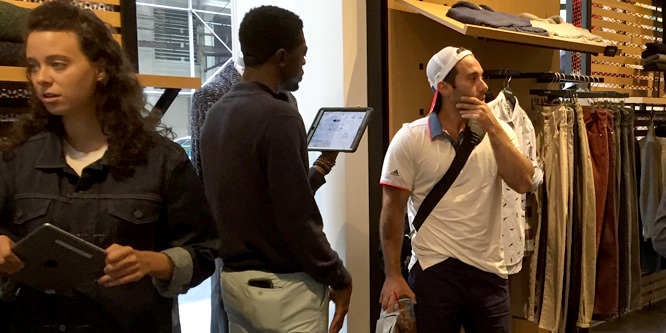
Photo: RetailWire
A new survey from Episerver, a digital content software provider, shows that consumers are more open to personalization techniques when provided by computer algorithms online than by associates in-store.
The “Reimagining Commerce” study found that 56 percent of online shoppers are open to brands knowing things about them to better tailor the shopping experience. Not surprisingly, some apprehension was seen when consumers were asked specifically about what data was okay to use.
Asked what information brands should know about them to best personalize their online shopping experience, the leading answer was purchase history, agreed to by 38 percent. That was followed by personal interests, 25 percent; demographics, 20 percent; and browsing history, 17 percent. Only four percent felt using social media activity was appropriate to personalize the online shopping experience.
Offline, the study found that 43 percent of shoppers are open to personalized in-store experiences.
Yet exploring specifics around data use shows even deeper concerns offline than those expressed for the online experience. Only 14 percent wanted store assistants to use their past in-store and online purchases, returns, sizes, etc. to tailor their visit with personalized recommendations. Just one in 10 were interested in being greeted by name when shopping in-store.
The findings suggest that consumers have grown accustomed to receiving suggestions from retailers online based on their purchase history as well as having their smartphone experiences tailored by browser history, location and other data.
According to a different study by Ivend, titled “Great Omnichannel Expectations,” 47.8 percent of respondents receive targeted offers online but don’t receive them in physical stores.
Ivend’s survey offered more encouragement for retailers looking to make use of consumer data for personalization. Asked what’s okay for retailers to track, 68.3 percent of consumers in the study said purchase histories; 41 percent, browser history; 31 percent, how much shoppers spend; and 30.6 percent, what shoppers look at in the store. Only 15.9 percent found it acceptable for a retailer to track location based on a shopper’s smartphone.