iStock.com/jetcityimage
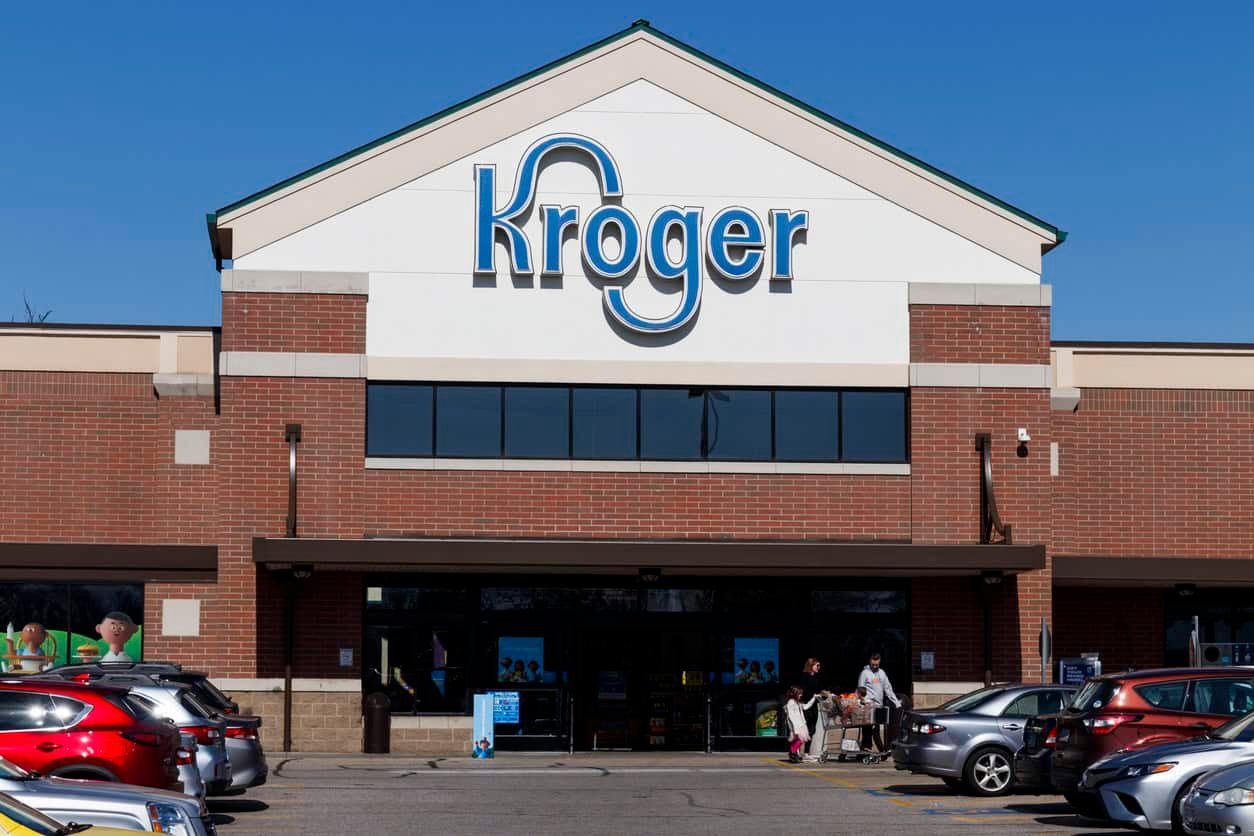
In what could be further repercussions from its failed merger with Albertsons, The Kroger Co. announced on March 3 that CEO and chairman Rodney McMullen has resigned due to "personal conduct" issues.
Kroger, one of the largest U.S. grocers, said its board became aware of “certain personal conduct” by McMullen on Feb. 21. While the investigation by outside counsel found the conduct was "unrelated to the business" and did not involve Kroger workers, it still "was inconsistent with Kroger's Policy on Business Ethics."
Ronald Sargent, Kroger’s lead director since 2017 and a board member since 2006, was appointed interim CEO and chairman as a search for a new CEO ensues. Sargent, who formerly led Staples, said in a statement, “As interim CEO, I am committed to working alongside our proven and experienced management team and dedicated associates to ensure Kroger continues providing exceptional value for our customers.”
Kroger further said that for 2024, it expected identical sales without fuel to be at the high end of its guidance and adjusted EPS to be slightly above the high end of guidance. The company’s Q4 and full-year 2024 results were reported on Thursday.
McMullen, who first started at Kroger as a part-time stock clerk at a location in Lexington, Kentucky, in 1978, eventually joined the corporate office as a financial analyst and played “a pivotal role” in implementing Kroger’s leveraged restructuring in 1988, which avoided a hostile takeover and kept the company public, according to the Cincinnati Business Courier.
He was elected CFO in 1995, leading to Kroger's $13 billion merger with Fred Meyer in 1999. He was appointed president and COO in 2009, CEO in 2014, and chairman in 2015.
Since taking over as CEO, Kroger’s stock has more than tripled in value. Sales have jumped 49.5% to $147.1 billion in 2024 from $98.4 billion in 2013.
Under his leadership, Kroger completed the acquisition of Harris Teeter for $2.5 billion in 2014 and bought Roundy's for about $800 million in 2015.
McMullen spearheaded Kroger’s digital transformation, including the move in 2015 to acquire the technology assets of Dunnhumby, which had been co-owned by Kroger and Tesco, to establish its 84.51° data science arm. McMullen has regularly touted the benefits Kroger gains from tapping data to better understand customers and support the growth of its Kroger Plus loyalty and Kroger Precision Marketing retail media platforms.
He said on Kroger’s third-quarter analyst call, “As customers become more engaged, we gain deeper insights into customer trends while creating the data that enables us to grow Kroger Precision Marketing and deliver more effective promotions and relevant product recommendations.”
Other priorities under McMullen’s leadership included a strong commitment to low prices and freshness, upgrades of private label assortments, and expansion of both online operations and retail media. Digital sales totaled more than $13 billion in 2024, or about 8.8% of sales, supported by an 18% gain in the fourth quarter.
Kroger’s year-end press release also noted that the grocer achieved record retention rate for store and enterprise associates this year, which “led to improved productivity and more consistent customer experience.”
However, Kroger took a hit last December after federal and state regulators blocked its $25 billion bid for Albertsons in what would have created the biggest grocery store merger in U.S. history. The offer, which first arrived in October 2022, earned widespread coverage amid fierce opposition by regulators, labor unions, and consumer advocacy groups.
The Federal Trade Commission had sued to halt the deal, arguing that it would reduce competition and raise prices at the expense of workers and consumers. on Dec. 10, 2024, Judge Adrienne Nelson of the U.S. District Court in Oregon sided with federal regulators, and a state court in Washington blocked the deal in a ruling made about an hour later.
The next day, Albertsons backed out of the merger and filed a lawsuit seeking billions of dollars in damages against Kroger, accusing the company of breaching their contract agreement by failing to use “best efforts” to secure regulatory approval. Kroger has disputed Albertsons’ claims.
McMullen’s resignation follows other changes to Kroger’s C-suite. Its chief merchant, Stuart Aitken, left the company late last year, while new CFO David Kennerley came on board nearly a year after Gary Millerchip left for Costco.
Last month, Kroger announced it would be laying off an unspecified number of employees following a similar move by Albertsons.
In a LinkedIn post, business strategy consultant Brittain Ladd said he believes McMullen was “fired” for distractions caused by the pursuit of the Albertsons merger as competitors — citing Walmart, Amazon, Publix, and ALDI — continued to invest “heavily in expansion, technology, and improving the customer experience.”
Numerator's ranking of the top 20 grocers showed Kroger as well as Albertsons losing share from 2021 to 2023, while Walmart, Costco, ALDI, and Dollar General took share.
“I think McMullen was let go for a relatively minor offense,” Ladd told the New York Post. “What company would reward a CEO who wasted $1 billion on a merger with Albertsons that never went through and now Albertsons is suing Kroger for $6 billion.