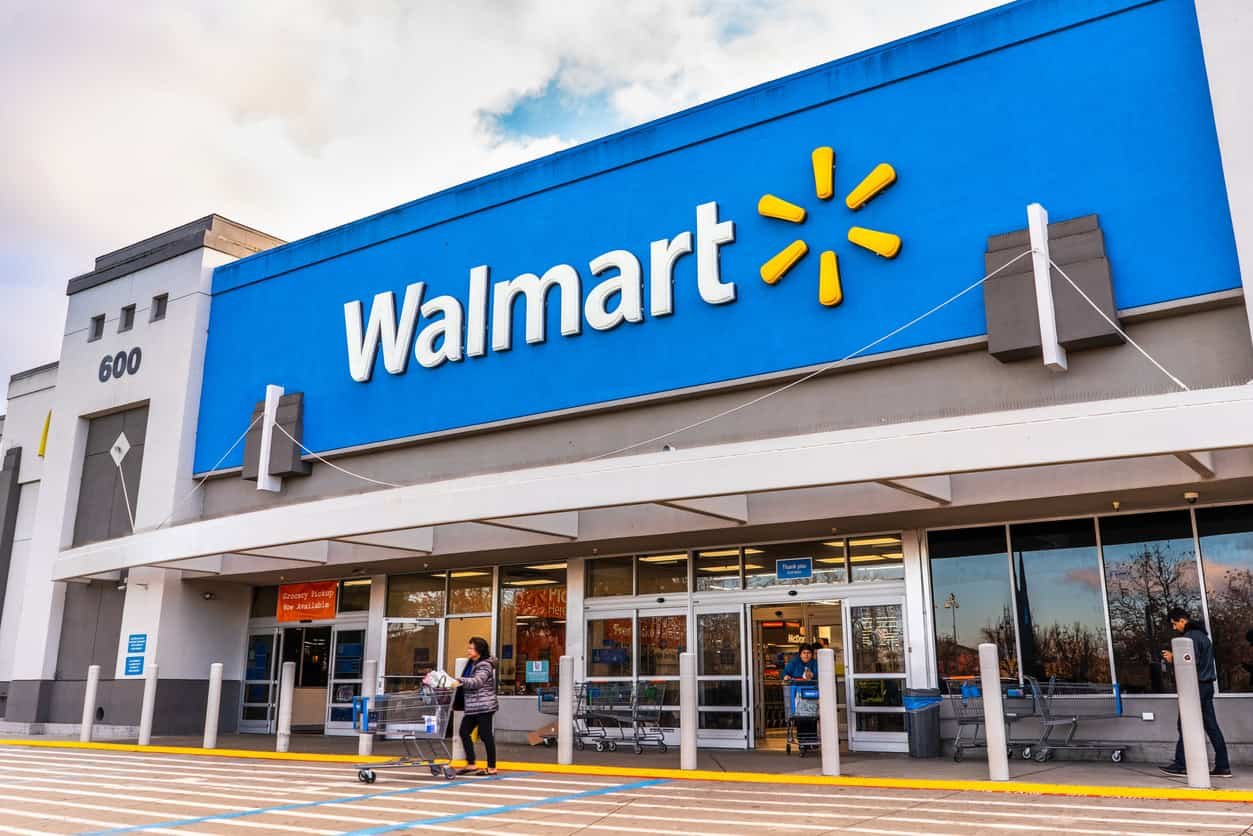
Is Walmart’s Soft Guidance a Cause for Concern?
Walmart Inc. rang up record sales for the holiday quarter, but shares fell over 6% in Thursday trading after executives set 2026 fiscal-year revenue and profit targets below analysts’ expectations.
The world’s biggest retailer reported full-year revenue of $681 billion, up 5.1% from the year before. Operating income advanced 8.6%, or 9.7% on a currency-neutral basis.
For the current financial year, Walmart predicted weaker growth, with a rise of 3% to 4% in sales and 3.5% to 5.5% in operating income. The operating profit guidance includes a 150-basis point, or 1.5%, headwind from acquiring smart TV company VIZIO and the impact of following a leap year in 2024.
Wall Street had been expecting revenue growth of 4.2% and more than an 11% gain in operating profit.
As of Wednesday’s close, shares of Walmart were up about 83% over the past year, according to CNBC, as the chain had repeatedly raised guidance for sales and profits in 2024. Executives stressed they typically set conservative guidance at the start of each year.
"We're one month into the year, so I think it's prudent to have an outlook that is somewhat measured," CFO John David Rainey said on a post-earnings call. "We don't want to get ahead of ourselves. There is certainly some unpredictability in any environment that we have, but we feel really good about our ability to navigate that."
Walmart said its low prices, expanded assortments, and investments to offer more convenience to shoppers — including speedy delivery of online packages — helped it report strong holiday quarter sales and post record annual revenue. But investors focused instead on its disappointing outlook.
Shares of Amazon and Target also lost ground Thursday due to broader retail growth concerns. Walmart was among the first major U.S. retailers to report holiday results.
Justin McAuliffe, research analyst at Gabelli Funds, told The Financial Times, “It’s sort of par for the course for Walmart to guide conservatively, and set themselves up to beat and raise over the course of the year.”
However, Ivan Holman, an analyst at Bernstein, told the Wall Street Journal that while investors were prepared for conservative guidance, “this is a more muted outlook than investor feedback into earnings had suggested.”
“Walmart's lower-than-expected guidance is a warning that U.S. consumer spending is slowing,” Brian Mulberry, client portfolio manager at Zacks Investment Management, a Walmart investor, told Reuters.
"At the moment, the labor market is still strong," he said, noting that if Walmart's soft guidance is followed by a drop in jobs, "it would be a strong signal that economic growth is slowing."
Much of Walmart’s call focused on its strong campaign across 2024 that was marked by its ability to grow operating income faster than sales, helped by accelerated growth in e-commerce as well as expansion into profitable niches such as sales of advertising to its suppliers, memberships to its customers, and shipping services for third-party merchants.
One concern expressed by analysts on the call was the impact of new tariffs imposed by President Donald Trump that could affect Walmart’s margins as well as overall consumer sentiment. Walmart executives on the call said they didn’t have “explicit assumptions” in its guidance on tariffs but highlighted their experience navigating tariffs in the past.
“Tariffs are something we’ve managed for many years, and we’ll just continue to manage that,” said Walmart CEO Doug McMillon. “We’ve got a great team. We know how to do that. We can’t predict what will happen in the future, but we can manage it really well.”
Investors are also concerned about the state of the U.S. consumer, particularly as U.S. retail sales in January experienced their largest monthly decline in two years. Reasons cited for the drop-off included the California wildfires, frigid temperatures, uncertainty created by tariffs, and consumers taking a break after their holiday splurge.
Walmart appeared unscathed with total U.S. comparable sales rising 4.6% in the fourth quarter, with the strongest monthly gain in January. That surpassed analysts' estimates of a 4.15% increase.
“We're strengthening our ability to serve people how they want to be served in the moment. That's what's driving our growth,” said McMillon. “Our prices are low, and we're becoming more convenient. Customers are shopping with us more often and buying more items.”
The gains in the U.S. were driven by continued strength in grocery, up mid-single digits, although health and wellness saw the biggest gain, up mid-teens, due largely to GLP-1 sales. General merchandise sales improved, up low-single digits for the second consecutive quarter, including strength in hardlines, toys, home, and fashion.
Other highlights for the quarter included e-commerce sales surging 20% in the U.S., the 11th straight quarter of double-digit gains. Faster and more frequent deliveries have also helped Walmart’s e-commerce business become more profitable. Additionally, Walmart continued to increase its market share with upper-income shoppers.
McMillon said Walmart’s expectation for healthy growth this year is emboldened by the chain’s track record of driving sales with price-sensitive consumers over the last several years when inflation was high. Walmart also expects to benefit from a “resilient” consumer, with McMillon noting how robust consumer spending in recent years had helped sustain the U.S. economy amid forecasts from some economists calling for a recession.
“We had seen clouds on the horizon and they never came,” McMillon said. “And I kind of feel that same way right now.”
Discussion Thread0
The RetailWire Daily
One morning briefing: the retail news, expert perspective, and business context to bring into your next meeting.
Want to know more? Learn more