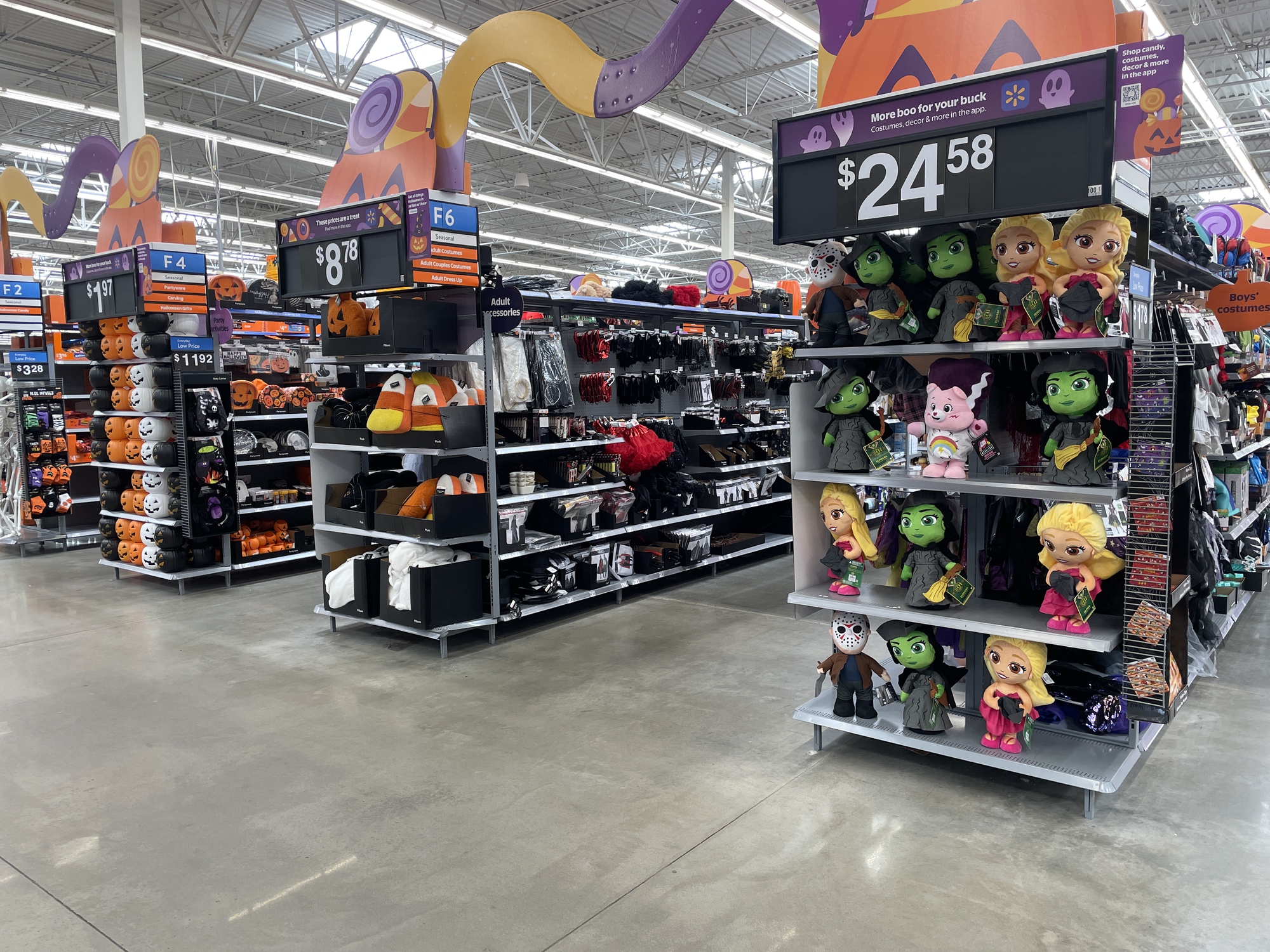
How Can Retailers Best Capture the $13.5 Billion Halloween Opportunity As Shoppers Seek More Value?
According to the most recent National Retail Federation Halloween survey conducted by Prosper Insights & Analytics, consumer spending this spooky season is projected to hit a new record of $13.5 billion in the U.S., beating last year’s $13.1 billion, but a deeper dive reveals a few emerging trends.
“Consumers continue to make Halloween a spending priority, but they are also approaching the season with affordability in mind,” NRF VP of Industry and Consumer Insights, Allison Zeller, said.
“For more than two decades, NRF’s Halloween survey has tracked how consumers celebrate the holiday, and this year’s results show that shoppers are being thoughtful and strategic, looking for ways to maximize value throughout the season,” Zeller added.
One primary throughline running through the data is a sense of U.S. consumers being increasingly interested in Halloween as a season, rather than a single-day event (42% of early shoppers saying they look forward to the fall and 34% calling Halloween a favorite holiday). Further, about half of all shoppers polled (49%) indicated they were starting shopping for Halloween in September, or even earlier – and of these, 23% indicated they’d done so to maximize their budget flexibility, and 21% because prices or promos were too enticing to ignore.
“While consumers are expected to spend an average of $115.14 per person, in line with $114.45 per person in 2025, they remain mindful of costs and are taking a strategic approach to their Halloween purchases. As part of this, consumers are planning ahead. If they encounter higher-than-expected prices on Halloween items, nearly one-third (31%) say they will comparative shop, while 26% say they will look for coupons or sales. Another 34% plan to look for items they can reuse in future years or repurpose for other occasions or settings, as consumers focus on maximizing value,” the report highlighted.
Other data points pulled from the NRF Halloween survey results include:
Discount stores lead the way, with specialty stores close behind: More than one-third (39%) of respondents listed discount stores as the No. 1 destination for Halloween shopping, with specialty Halloween stores (32%) and online storefronts (27%) taking the other two positions on the podium.
Costumes drive top dollar, but there’s a surprising bit of growth on greeting cards: The most popular purchase tied to Halloween remains candy (96% plan to buy, at a $4.1 billion spend) with 78% of shoppers expecting to buy decorations (at a $4.3 billion spend) and 71% costumes (at a $4.4 billion spend). Greeting cards are seeing a surge in popularity, with 42% of those polled showing intent to buy (at a $0.8 billion value).
Halloween shoppers turn to AI for ideas: Almost half (47%) of shoppers are now using AI platforms or tools in backing their shopping this year, with idea generation (34%) and recommendations on products (32%) being the top named use cases. “As consumers prepare for Halloween, many are using these tools to brainstorm costumes and decorating themes, explore production options and find inspiration that help bring their celebrations to life,” Prosper’s EVP of strategy, Phil Rist, said.
And as for the top costumes this year, perennial favorites are blended in with trendier choices. Children plan to dress up as superheroes (most notably Spider-Man, Batman, or the KPOP Demon Hunters), while adults are going for the same – though both age groups also list witch, vampire, ghost, and clown as being in the top 10. Furry friends will don pumpkin, hot dog, and ghost costumes, by contrast.
Questions for further discussion:
Do you believe retailers are currently ideally positioned to meet the needs of Halloween shoppers more zeroed in on value? Why or why not? What signs or evidence are present?
What can be gleaned from the notion of Halloween shopping creeping earlier into the season (in some cases, into the summer) as U.S. consumers embrace the holiday with increasing enthusiasm? How should retailers react without alienating the broader market or cutting into summer seasonal?
Where does the opportunity lie for leveraging the strong preference for reusable décor, costume items, etc.? Are there any brands or retailers uniquely positioned to take advantage of this demand?
Discussion Thread0
The RetailWire Daily
One morning briefing: the retail news, expert perspective, and business context to bring into your next meeting.
Want to know more? Learn more