Is Self-Checkout Leading to Increased Retail Theft, and Why Do Some Americans Feel Justified in Stealing?
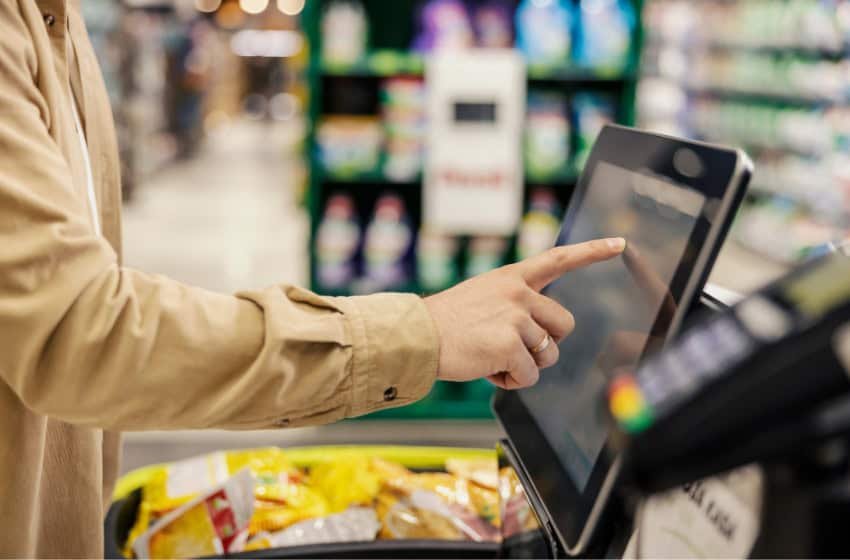
The prevalence of self-checkout seems apparent to anyone who's set foot in a grocery store, drug store, or big-box retailer over the past few years. And alongside that rise in prevalence — a recent Capital One Shopping report suggested that almost 40% of all grocery store registers nationwide are self-checkout kiosks — comes an apparent opportunity for retail theft.
Apparently, more than a few Americans are taking that opportunity to steal.
That same Capital One Shopping report indicated that over 20 million Americans have stolen products via self-checkout (15% of those surveyed) and that a whopping 44% of these plan to re-offend. Only 33% of offenders said they have been caught in the act of self-checkout shoplifting.
And with self-checkout not going anywhere — early estimates peg the North American self-checkout market value at $2.28 billion, rising to $5 billion by 2030 — the matter becomes even more relevant for retailers, vendors, and the (honest or dishonest) customers they serve.
Which US States Have the Most Dishonest Self-Checkout Customers?
A JeffBet survey of Americans using self-checkout drilled down into several key data points, providing some insight as to which states and stores were most vulnerable to this style of retail theft.
As it turns out, the percentage of those shoppers who admitted to being dishonest at the self-checkout varied widely from state to state: respondents from Nebraska (55.1%), Illinois (52.94%), Oregon (52%), and Colorado (51.79%) were the most dishonest, while those hailing from Montana (20%), North Dakota (21.74%), New Jersey (25.49%), and North Carolina (also 25.49%) were the least.
Which Retailers Are Most Vulnerable to Self-Checkout Theft, and Which Dishonest Checkout Practices Are Most Common?
According to JeffBet, Walmart is by far the most common retailer targeted by self-checkout thieves, with 23.51% of those polled admitting they'd engaged in dishonest practices while checking out from the blue-and-yellow brand. Target (11.71%), Kroger (10.15%), CVS (5.7%), and Dollar General (5.29%) rounded out the top five.
In terms of the most common practices conducted by dishonest customers, keying in a cheaper produce code took the lead (18.17%), quickly followed by purposely not scanning an item (17.45%) and using an incorrect, expired, or fake coupon to get a discount (10.07%). Eating or drinking an item without paying for it (9.67%), swapping price stickers (7.82%), and lying about an item being on a sale rack (4.49%) followed.
Why Do Some Customers Feel Morally Justified in Stealing From Large Retailers?
In a comprehensive March 27 report from Business Insider, senior correspondent Emily Stewart profiled a number of anonymous individuals, under pseudonyms, who admitted to — and in some cases, glamorized — shoplifting from large retailers, some by taking advantage of lax self-checkout security.
First up was "Lee," who confessed to pocketing spices and taking home more produce from the self-checkout aisle at Whole Foods than he'd paid for. "If a billionaire can steal from me, I can scrape a little off the top, too," Lee said, calling his behavior "grand theft autoing."
It's not just about the self-checkout option in terms of store security failures. Jesse, a 30-something tech worker, shoplifts under the guise of being an Instacart shopper — once again targeting Jeff Bezos-related Whole Foods with a sense of intentionality.
"I never felt bad for the corporation as a whole, because it was Amazon and, you know, it was Jeff Bezos," Jesse said.
"He just profits so much taking advantage of the little people, so if we as little people can bite back a little bit, and that's me taking $100 maybe out of revenue for him, that's a little bit of a middle finger," he added.
Stewart also outlined the motives of some "anti-Amazon avengers" abusing the company's return policies to their benefit but posited a pointed philosophical question during her examination.
"It is fair to wonder, though, if stealing from Whole Foods or returning a dress you wore to a wedding is the best way to get back at Bezos. It's a bit of a stretch to think the answer to that one is yes," she opined.
Discussion Thread0
The RetailWire Daily
One morning briefing: the retail news, expert perspective, and business context to bring into your next meeting.
Want to know more? Learn more