Should Burberry Give Up Its Luxury Aspirations?
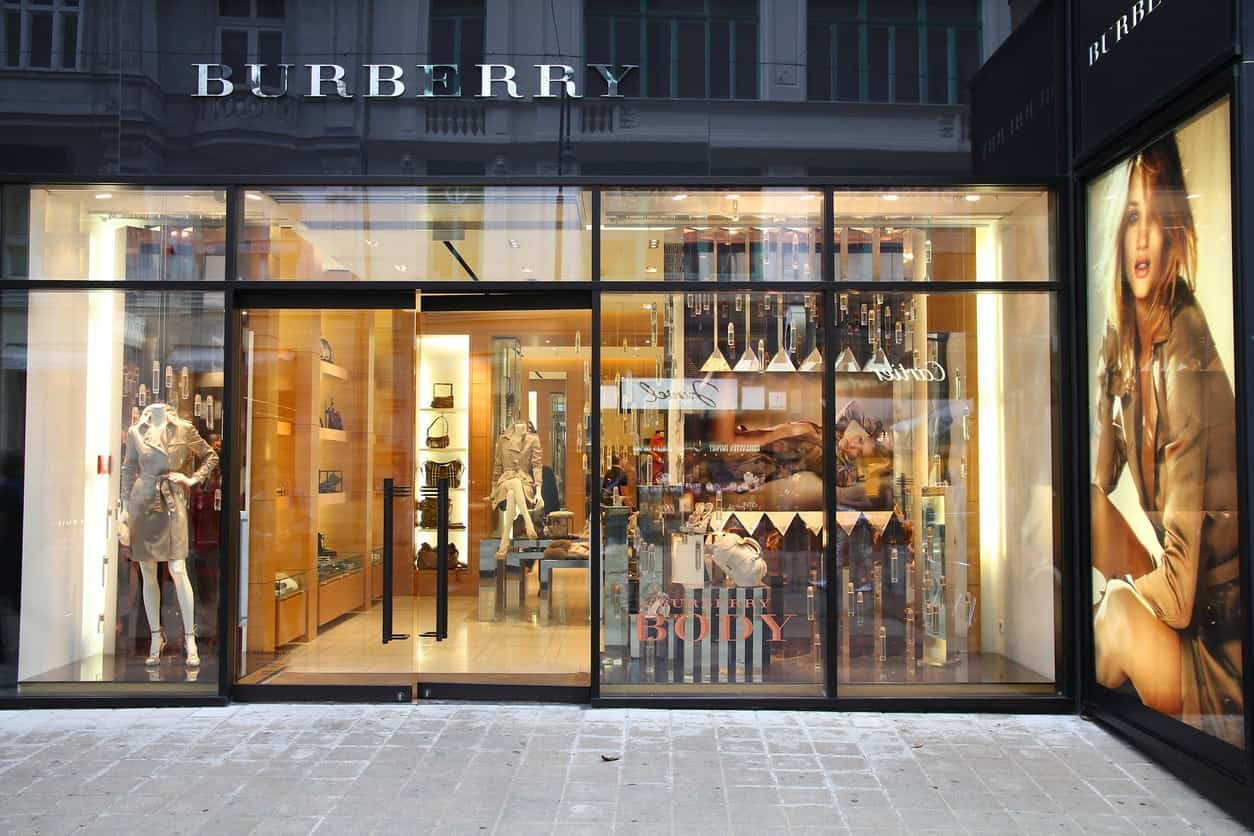
Burberry, which in July appointed its third CEO in the last eight years amid continued struggles, should abandon its push to move upmarket to join Gucci, Dior, Prada, and other pure luxury brands and instead settle into the aspirational tier of the pricing pyramid, according to a number of analysts.
A shift toward that direction was signaled by the CEO hiring of Josh Schulman, who most recently led Michael Kors and Coach, two premium brands seen as aspirational but not uber-luxury. Per WWD, “Industry sources have said his arrival could signal a new dawn for Burberry as ‘the Coach of the U.K.’ with a focus on outerwear, accessories and branded apparel — and more accessible prices.”
The appointment came as Britain’s largest and most identifiable luxury brand reported a 22% drop in first-quarter sales, warned of a first-half loss due to the overall slowdown in luxury spending, confirmed layoffs, and suspended its dividend.
The 168-year-old brand reached iconic fashion status in the earlier part of the current century under the direction of CEO Angela Ahrendts and lead designer Christopher Bailey.
“Bailey grabbed British cultural references that spoke to a broad audience — the Beatles, Princess Margaret, David Hockney, Marianne Faithfull — to create a look that was aspirational but accessible, classy without being snobbish,” wrote Jess Cartner-Morley, The Guardian’s fashion editor. “By packing his front rows with politicians and rappers, as well as actors and supermodels, he gave Burberry a context in culture. He popped the collar on the trenchcoat, streamlined it into a more flattering silhouette, and built out the color palette from boring beige into soft neutrals.”
After Ahrendts exited to join Apple in 2014, Burberry’s sales slowed and Bailey was replaced as lead designer by Riccardo Tisci, renowned for his work at Givenchy, and then Daniel Lee, credited with transforming Bottega Veneta.
With the design changes, Burberry shifted away from its bestsellers, like the classic trenchcoat, to edgier looks with higher pricing that alienated its customer base. A strong push into handbags, which typically deliver the highest margins for fashion houses, failed to pay off.
“They tried to be a major fashion player because fashion was back in fashion,” Jelena Sokolova, a senior equity analyst at Morningstar, told Business Insider. “It was the same with boosting leather goods. Neither of these things, I would say, are extremely strongly in the brand DNA.”
On its July earnings call, Chairman Gerry Murphy admitted designs had “moved a bit too far, too fast with the new aesthetic” and said the brand would be taking steps to make offerings “more familiar to Burberry’s core customers by delivering relevant newness.”
He stressed, however, that the hiring should not be seen as a “significant change of overall direction.” Schulman was also formerly president of Bergdorf Goodman and CEO of Jimmy Choo, and he held leadership roles at Gucci and Yves Saint Laurent. Lee is staying on as lead designer.
Murphy elaborated, “The focus is very much on rebalancing our offer to be more familiar to Burberry's traditional clientele, based on a greater representation in the assortment of classic timeless pieces, but with a top spin of novelty and newness provided by Daniel Lee for the runway customers and for more fashion-forward customers. So, we're trying to be a universal brand.”
He attributed the weakness in large part to the broader slowdown in luxury spending and promised the moves, including cost savings, should “start to deliver an improvement in our second half.”
The Wall Street Journal noted that to be positioned in the upper echelons of luxury, Burberry would have to significantly reduce its reliance on outlets, which are estimated to account for up to 30% of its sales and up to 60% of profits.
Following the model of Coach and Michael Kors, which rely even more greatly on outlet sales, would allow Burberry to reduce costs, accelerate growth through off-price selling, and boost profits. WSJ added, “The trade-off would be a lower stock market valuation than its European peers and an end to any hope of being a high-end luxury brand.”
Discussion Thread0
The RetailWire Daily
One morning briefing: the retail news, expert perspective, and business context to bring into your next meeting.
Want to know more? Learn more