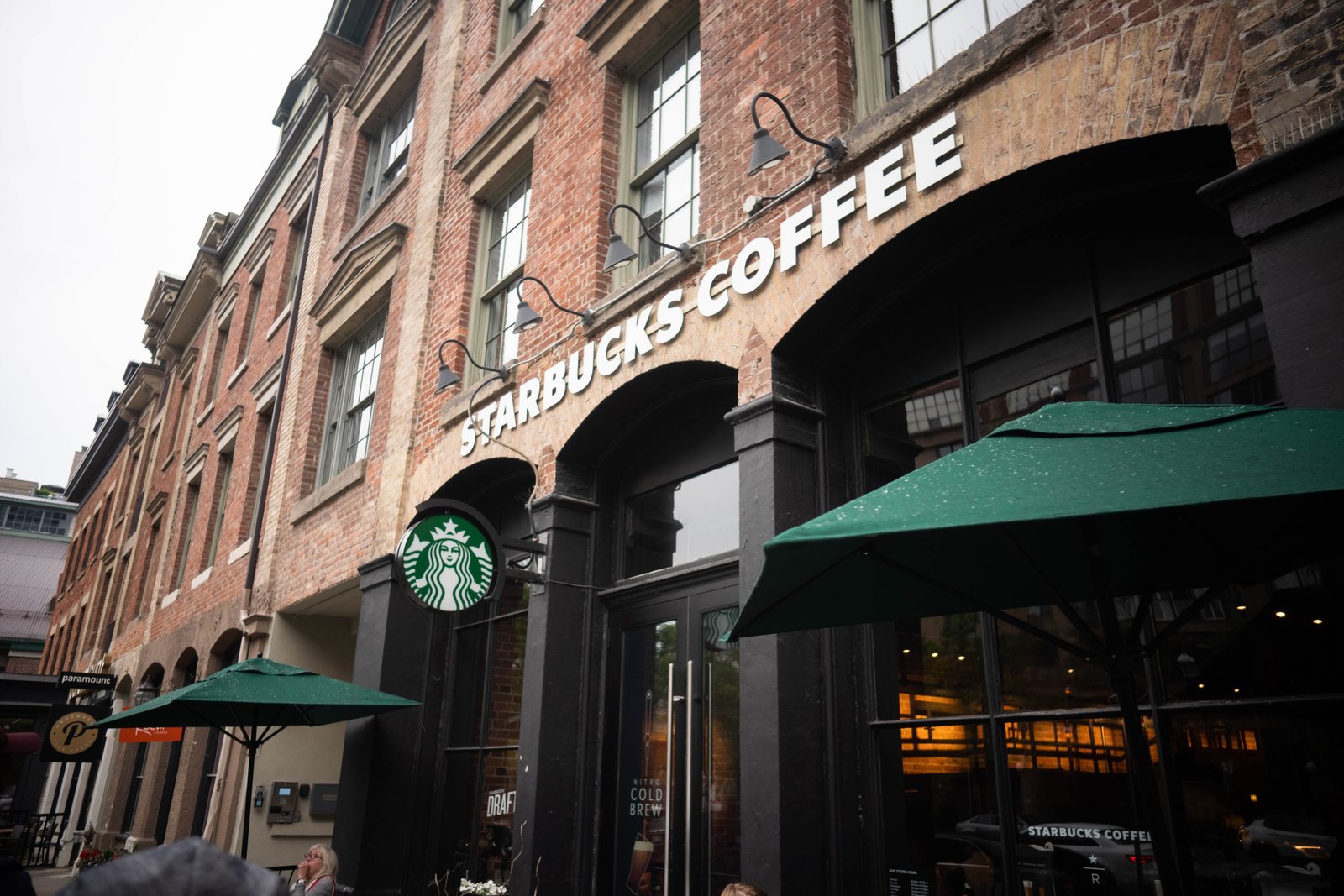
Photo by TR on Unsplash
Reversing its open-door policy after almost seven years, Starbucks will require people visiting its coffee shops to buy something in order to stay or to use its bathrooms.
The new policy, outlined in a Code of Conduct, will be enacted later this month and applies to the company’s cafes, patios, and bathrooms.
In a statement to "Good Morning America," Starbucks spokesperson Jaci Anderson said the new rules are designed to help prioritize paying customers. She said most other retailers have similar rules.
"We want everyone to feel welcome and comfortable in our stores. Implementing a Coffeehouse Code of Conduct is something most retailers already have and is a practical step that helps us prioritize our paying customers who want to sit and enjoy our cafes or need to use the restroom during their visit," said Anderson.
"This means our cafes, patios, and restrooms are for customers and partners," Anderson continued. "By setting clear expectations for behavior and use of our spaces, we can create a better environment for everyone. These updates are part of a broader set of changes we are making to enhance the cafe experience as we work to get back to Starbucks."
The Code of Conduct will be displayed in every store and also prohibit behaviors including discrimination, harassment, smoking, and panhandling. People who violate the rules will be asked to leave the store, and employees may call law enforcement. Employees will receive training on enforcing the new policy.
The new rules reverse an open-door policy established in 2018 after two Black men were arrested at a Philadelphia Starbucks where they had gone for a business meeting. The incident, caught on video, went viral across social media and sparked national outrage and calls to boycott the chain, leading to an apology from Starbucks and the temporary shutdown of 8,000 company-owned stores for a mass employee training on combating racial bias.
At the time, Starbucks Chairman Howard Schultz said he didn’t want people to feel “less than” if they were refused access, according to The Washington Post.
“We don’t want to become a public bathroom, but we’re going to make the right decision a hundred percent of the time and give people the key," Schultz said.
By 2022, Schultz indicated that Starbucks might not be able to keep its bathrooms open to the general public, blaming a growing mental health problem that was posing a threat to staff and customers and making it difficult for Starbucks employees to manage stores. In July of that year, Starbucks closed 16 stores around the country — including six in Los Angeles and six in its hometown of Seattle — for repeated safety issues, including drug use and other disruptive behaviors.
Starbucks has also been making widespread changes since new CEO Brian Niccol joined the company from Chipotle in September 2024 amid declining sales, eroding employee morale, and pressure from activist investors. Niccol has vowed to make Starbucks' locations “inviting places to linger,” with the goal of reestablishing the chain as the nation's “community coffeehouse.”
In an open letter to employees, customers, and stakeholders just after becoming CEO, Nichol said Starbucks is a beloved brand but that he found during conversations with employees and customers a “shared sense that we have drifted from our core.”
Starbucks is also trying to incentivize customers to stay in its cafes instead of ordering to-go by giving perks for in-store orders. Beginning Jan. 27, all customers can get one free hot or iced coffee refill served in its ceramic mugs or reusable glasses. Previously, the perk only applied to members of Starbucks’ loyalty program.
“It is a very, very risky move,” Subodha Kumar, a professor of statistics, operations, and data science at Temple University’s Fox School of Business, told 6ABC in Philadelphia, on reversing the open access policy. “Clearly some customers will feel safer, but there's a second type that some people will just not come because they feel it will not be a welcoming environment.”
Limiting restroom access also comes at a time when many U.S. cities and suburbs lack adequate public access to them.