Target sees stores as key to meeting its distribution challenges
Photo: Target
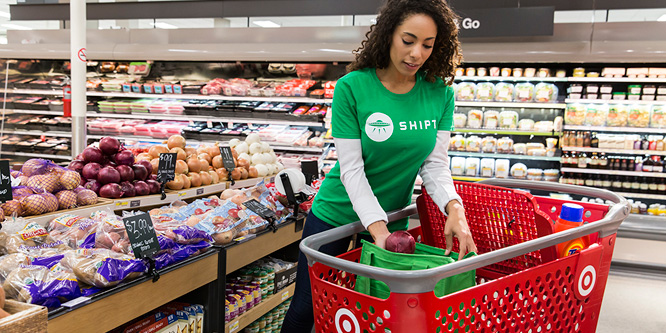
Target’s top executives were feeling pretty good in March when the retailer announced its fourth quarter financials showing a rise in customer traffic in stores and online that drove positive results. One of the keys to Target’s performance was its ability to handle distribution for nearly 70 percent of its online orders through its stores.
John Mulligan, Target’s chief operating officer, told analysts on the call that the retailer sees its stores as “hubs that offer a great shopping experience, support our communities and fulfill digital orders.”
The COO said that Target has a choice when it receives an online order — to fulfill it either through a warehouse or a local store. The retailer has concluded that using its stores results in getting orders to customers more quickly, while reducing costs.
Mr. Mulligan said that shipping from a store enables Target to deliver orders “nearly two days faster” than if it were sent from a regional facility. He said that most of what Target sells online mirrors what customers buy in stores, meaning stores in an area are more than likely to have the item ordered online already in stock.
“Shipping from a store is the best way to lower the total cost of digital fulfillment,” said Mr. Mulligan (via Seeking Alpha). “We hear a lot about optimizing, picking and packing, which can help make fulfilling an online order more efficient. But step back and look at the total cost of fulfillment. There are fixed and variable costs required to run and staff the fulfillment center, but no question shipping is by far the largest chunk.”
Increased customer traffic and the demand placed on stores to fulfill online orders has led Target to test a new distribution strategy, according to a Wall Street Journal report. The pilot being run through a warehouse (AKA as a “flow center”) in Perth Amboy, NJ offers smaller and more frequent deliveries to Target’s small store formats as well as locations in more densely populated areas.
Preston Mosier, Target’s senior vice president of global supply chain and logistics field operations, offered an example of how the flow center would work at an industry conference this week. He said it could ship “five bottles of shampoo, a case of ketchup, two polo shirts on hangers and a pallet of water, all prepared to move out directly to the sales floor.” The same or similar items could also be prepared in the store to “to move directly to a pack station to later go out to a guest in the neighborhood.”
The flow center test is the latest in a series of supply chain initiatives and acquisitions Target has made. In December, it acquired the online same-day delivery service Shipt for $550 milion in cash. As a result of the deal, Target expects to offer two-day delivery from most of its stores before the start of this year’s Christmas selling season.