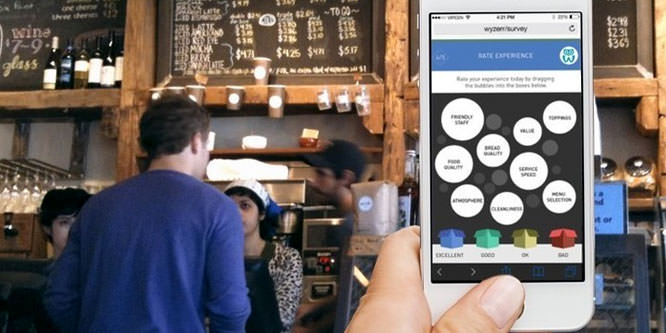
Wyzerr - Winner of CART's Retail Innovation Pitch Event 2016 - Photo: Wyzerr
When CART (Center for Advancing Retail & Technology) recently hosted the Retail Innovation Pitch Event, which put retail technology startups in front of a panel of retailers, we gained some insight into how retailers make decisions when assessing new, innovative solutions.
The industry has a reputation for moving slowly and being adverse to change. Retail organizations are performing a balancing act in maintaining older systems and processes while also trying to adopt new ways of doing business that they know they need to stay competitive. This lack of decisiveness has paralyzed many retailers and left others creeping along with slow, incremental improvements. Only a handful are confidently embracing new innovation.
Few retailers are thinking about retailing from a fresh perspective; they’re merely thinking about how to make current retailing better. Today, there are entire schools of technology, such as 3D printing, virtual reality and robotics, which have the potential to completely change the game. When pitch contestants in our recent event presented such ideas, we had a chance to observe retailers weighing the cost of innovation against the potential benefits.
We saw the decision making process break out into three main areas:
Integration
Traditional retailers have a big problem and a big opportunity — their brick & mortar stores. The existing ecosystem of hardware and software in a store needs to work synergistically with any new solutions, especially when moving beyond a pilot. Solutions that require little to no integration are easier to work with moving forward and tend to be more rapidly embraced.
Peer feedback
Many retailers, especially those on the smaller side, simply don’t have the skill-sets, processes or capabilities to properly vet new solutions. Before committing to move forward, it’s natural to want to know if the solution works in a scalable way and if the initiative is financially justifiable. Peer experiences may not be perfect in understanding these risks; however, they do provide a certain comfort level. The question here is: if several other retailers are already working with something new, is it truly innovative?
Culture
Chain size ultimately has little to do with a retailer’s ability to innovate — it’s the leaders within an organization that create a culture that accepts innovation and all that comes with it, or rejects it. While the iteration cycle of trying new things is slightly different in-store than online, continuing to push the envelope is more of a mindset than anything else. Even if it's not broken, it can always be better.
Understanding current trends and engaging with the latest technology is only the first step. Taking steps to do something about it has to come next.