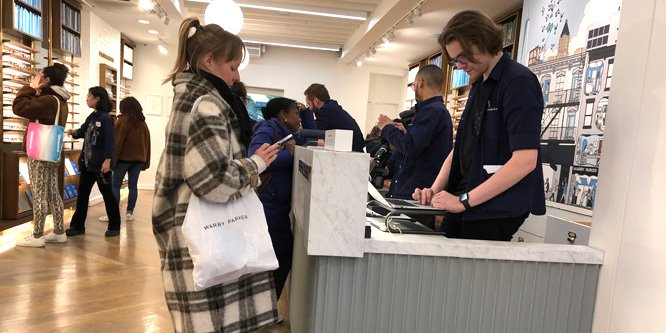
Photo: RetailWire
The year 2019 has certainly been an interesting one for retail. We’ve seen an enormous transformation as the industry has continued to evolve with establishments learning how to balance strategies between online and brick and mortar sales.
In 2020, we can expect the market to be influenced heavily by emerging technologies such as artificial intelligence (AI) and Internet of Things (IoT). Let's look at five trends that will shape retail within the next year:
Open relationships
Winning retailers will build ecosystems by accelerating the use of new sales channels or working with value-adding partners that offer differentiation by supplementing products with relevant services. Gartner has described these as ecosystems that will create “connections between partners, employees and even competitors ... built into vibrant networks that can unlock value for all.”
Support networks
Retailers will use IoT to innovate and differentiate but, most importantly, will begin to realize their IoT projects need to be connected. By connecting together IoT initiatives they will benefit from the “network effect” that transforms individual silos, projects and initiatives to enable new insights and innovation.
Sitting at the top table
Technology will take its rightful place at the organization’s top table in the New Year, following years of undervaluing the criticality of IT in enabling new business models. Technology leadership will start to bring innovation to the rest of the business, as visionary CIOs and their teams contribute new ideas.
Eco-warriors
Environmental responsibility will become a differentiator for retailers. An increased focus on the environment is starting to inform consumer choices and retailers will respond accordingly.
Smart retailers will see technology as a tool to help. This could be applying IoT and real-time AI responses to supply chain issues, improving data visibility that drives decisions, or using process mining to understand and eliminate delays that have an adverse environmental impact.
Blurred lines
The blurring of industry lines will continue as consumer goods companies seek to avoid using the traditional retailer. The direct to consumer business model focuses on delighting its customers without any intermediary involved.
There’s no doubt about it, the latest trends in retail will continue to push the envelope as the technological landscape evolves. As long as retailers are prepared to incorporate new advancements in IT into their game-plan, they will be well-positioned to succeed in the year ahead.