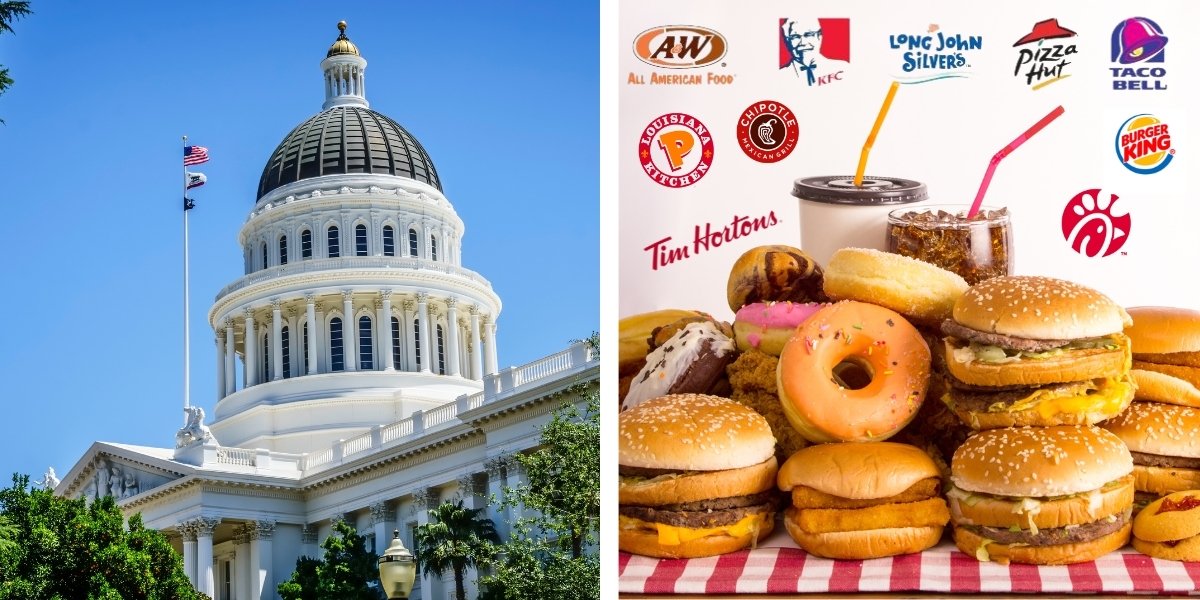
What’s Next After the Messy Fast-Food Fight With Unions?
Photo: Canva
CNBC reports that "a fight between fast-food chains and unions in California is over, for now," and it resulted in the California minimum wage for fast-food workers increasing up to $20 an hour by April 2024. But it doesn't end there.
A special council of nine members has also been assembled to oversee future minimum wage pay increases in the California fast-food industry from 2025 through 2029. The council will be comprised of four representatives from the fast-food industry, four from the workers' group, and a neutral chair.
The Fast Food Council lacks the authority to establish working conditions, with its role limited to suggesting standards to state agencies. However, unions will continue advocating for improved conditions. More specifically, the council has "the authority to raise the hourly minimum wage annually by whichever is lower: 3.5% or the annual change in the consumer price index."
If they hadn't made this deal, there might have been "a fight between the two sides that threatened to stretch out for years. The restaurant industry was gearing up to spend more than $100 million on the battle." CNBC also claims that there are industry analysts who agree that higher wages will help avert more costly and problematic consequences.
Before coming to this agreement, Governor Gavin Newsom "signed AB 257, also known as the FAST Act, into law in January. The legislation would have created a 10-person council that would govern fast-food chains with more than 60 locations, including setting guidelines for working conditions and wages. The initial wage hike could have been as high as $22 an hour."
The fast-food industry, including Chipotle, Chick-fil-A, Yum Brands, and Restaurant Brands International, lobbied against the bill before it even had a chance to reach Newsom's desk. McDonald’s U.S. President Joe Erlinger publicly criticized the legislation on the company's website, labeling it "lopsided" and accusing lawmakers of being selective in their targeting.
The restaurant industry pushed for a referendum, letting Californians vote on the FAST Act. However, the Service Employees International Union (SEIU), supporters of the act, claimed the industry had misled signers. The judge disagreed. The SEIU then endorsed AB 1228, a bill holding franchisors accountable for franchisee violations, but critics argued it undermined franchising. While AB 1228 passed the California State Assembly, the Senate didn't vote on it. Instead, the restaurant sector and unions reached a compromise, altering AB 1228 and agreeing to repeal the FAST Act and withdraw the referendum by Jan. 1.
Currently, experts are weighing in and predicting that the new $20 minimum wage in California will draw more people to apply and work for various fast-food restaurants. This, in turn, might make it more difficult for companies like Amazon, Target, and Walmart to hire their workforce.
Additionally, fast-food businesses must determine how to address increased wages — some might increase prices, risking customer pushback, while others may reduce staff or turn to automation. Despite these concerns, the agreement "provides a more predictable and stable future for restaurants, workers, and consumers," Sean Kennedy from the National Restaurant Association said in a statement.
The deal sidesteps the feared joint-employer liability changes, preserving the franchise model. While companies like McDonald’s, KFC, and Taco Bell might mostly be unaffected unless they own locations in California, their franchisees will have to address wage increases.
The National Owners Association, representing McDonald's franchisees, anticipates a $250,000 annual cost per restaurant. Meanwhile, non-franchising companies like Chipotle, with 14% of its locations in California, will directly bear the heightened labor costs.
The new minimum wage bar is being set, and other states, like New York and Minnesota, may also follow suit.