
Why is translating analog customer service to digital so complicated?
Photo: RetailWire
Elaine Kleinschmidt, EVP, Strategy & Experience Design, WD Partners
Through a special arrangement, what follows is an excerpt of an article from WayfinD, a quarterly e-magazine filled with insights, trends and predictions from the retail and foodservice experts at WD Partners.
What consumers want from a store experience will always be recognizable. They want well-trained and informed people to talk to and welcome them into a retail space and, yes, they still want this even when what constitutes a store becomes unrecognizable.
And that’s the hard part, transitioning away from an analog definition of what customer service means. What does and doesn’t constitute great customer service has morphed in both detail and form in the digital age. There are some daunting expectations. Shoppers have been primed by Amazon Prime, a cornball-y if apt pun. Even five years ago, what has since become a baseline expectation would have sounded like a ridiculous and Herculean demand: She likes that pair of sheepskin-lined boots, but you don’t have her size in stock. Better find a way to get them on her doorstep in 24 hours or less.
Customer service once encompassed a rather simple directive: Just be nice to people. This principle still applies. But customers now judge a physical store experience through the lens of all e-commerce experiences. And that’s why the bar keeps getting higher.
In the chart below, we outline the shifting meanings of customer service as the digital lens alters consumer expectations.
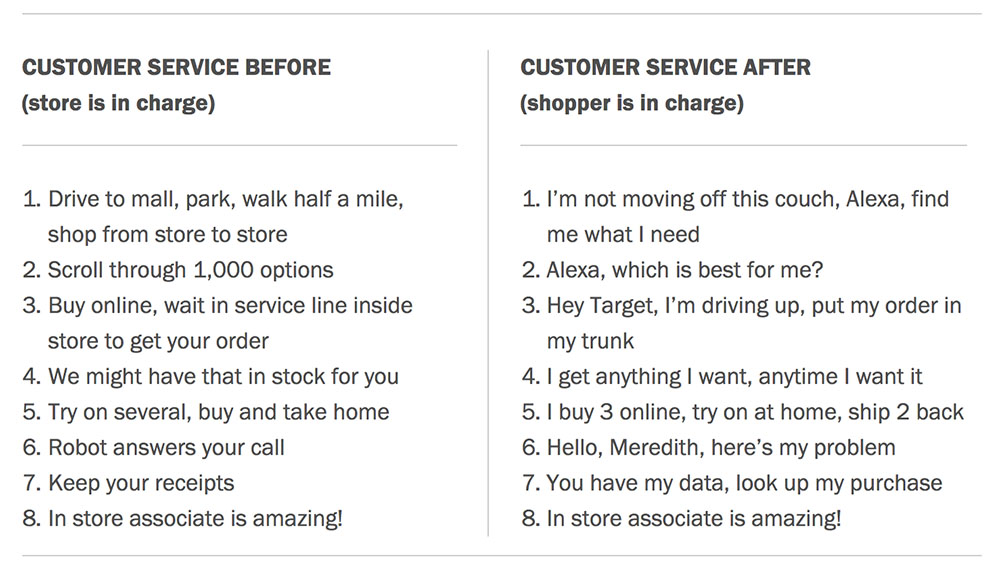
In short, customer service isn’t the only thing, it’s just the No. 1 thing. The possibilities offered by technology are both disruptive and distracting. But stores with a loyal customer base who meet expectations with exceptional service first can hedge against Amazon’s price-driven and transactional approach.