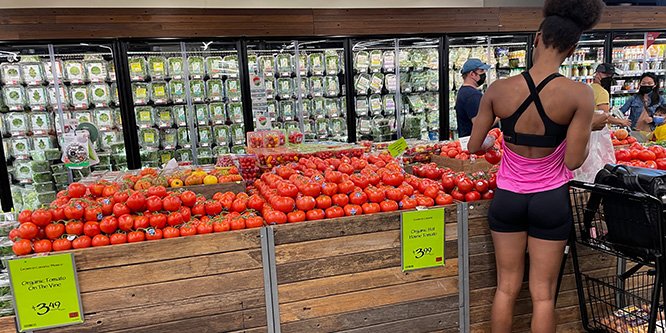
Photo: RetailWire
In the biggest update since organic standards were first established in 1990, the U.S. Department of Agriculture announced new guidelines designed to close loopholes and increase confidence in the often pricier product bearing the agency’s organic seal.
Key updates include requiring certification of more of the businesses, such as brokers and traders, at critical links in organic supply chains, as well as requiring organic certificates for all organic imports. The rules also standardize training and operations requirements for organic businesses and personnel and call for more on-site inspections.
Companies will have a year to comply with the new requirements, which officially take effect Mar. 20, 2023.
The updates were reportedly motivated by part by a series of articles detailing rampant fraudulent organics by The Washington Post in 2017.
This month, Department of Justice officials issued indictments in a multimillion-dollar scheme to export non-organic grain to the U.S. to be sold as a certified organic product. The accused individuals were alleged to charge 50 percent more for “organic” grain than conventional.
"This rule includes more robust traceability and verification practices that would have helped identify and stop this type of fraud earlier," the USDA said in its notice.
Advocacy groups, including the Organic Trade Association and Organic Farmers Association, applauded the long-awaited update.
Mark Kastel, founder of OrganicEye, which works with smaller farms, however, told the Washington Post, “I’m quite concerned that everyone is going to declare victory and go home.”
Mr. Kastel said violations of guidelines, such as not giving cows time to graze outdoors, amount to “a betrayal to the values that justifies consumers paying a premium price for organic dairy products.”
A survey earlier this year from The Hartman Group found 50 percent of U.S. consumers that buy organic food cite cost as the main barrier that prevents them buying more (down from 60 percent in 2020), followed by availability (20 percent) and poor labeling (18 percent). Of the respondents, 58 percent agreed somewhat or completely that USDA organic certification was weaker now than it used to be and 60 percent agreed somewhat or completely that organic was an excuse to charge more money.
- USDA Publishes Strengthening Organic Enforcement Final Rule – USDA
- Organic Trade Association statement on USDA's Strengthening Organic Enforcement final rule – Organic Trade Association
- The labels said ‘organic.’ But these massive imports of corn and soybeans weren’t. – The Washington Post
- USDA moves to crack down on ‘organic’ fraud – The Washington Post
- USDA toughens up regulation of organic products for first time since 1990 – CNN
- Pingree Welcomes Long-Awaited USDA Action to Protect Integrity of the Certified Organic Label – Congresswoman Chellie Pingree (D-Maine)
- New Hartman Report Organic 2022: Then, Now, Next Paints a Bright Future Ahead for Growth in Organic Food and Beverage – The Hartman Group
- How organic food can navigate the cost-of-living crisis – Just Food
- Consumers seek sustainability claims in addition to organic – Food Business News