Are Department Stores Becoming Obsolete in the US?
iStock.com/AlexandreFagundes
The department store has been struggling to survive in the aftermath of its once-dominant heyday.
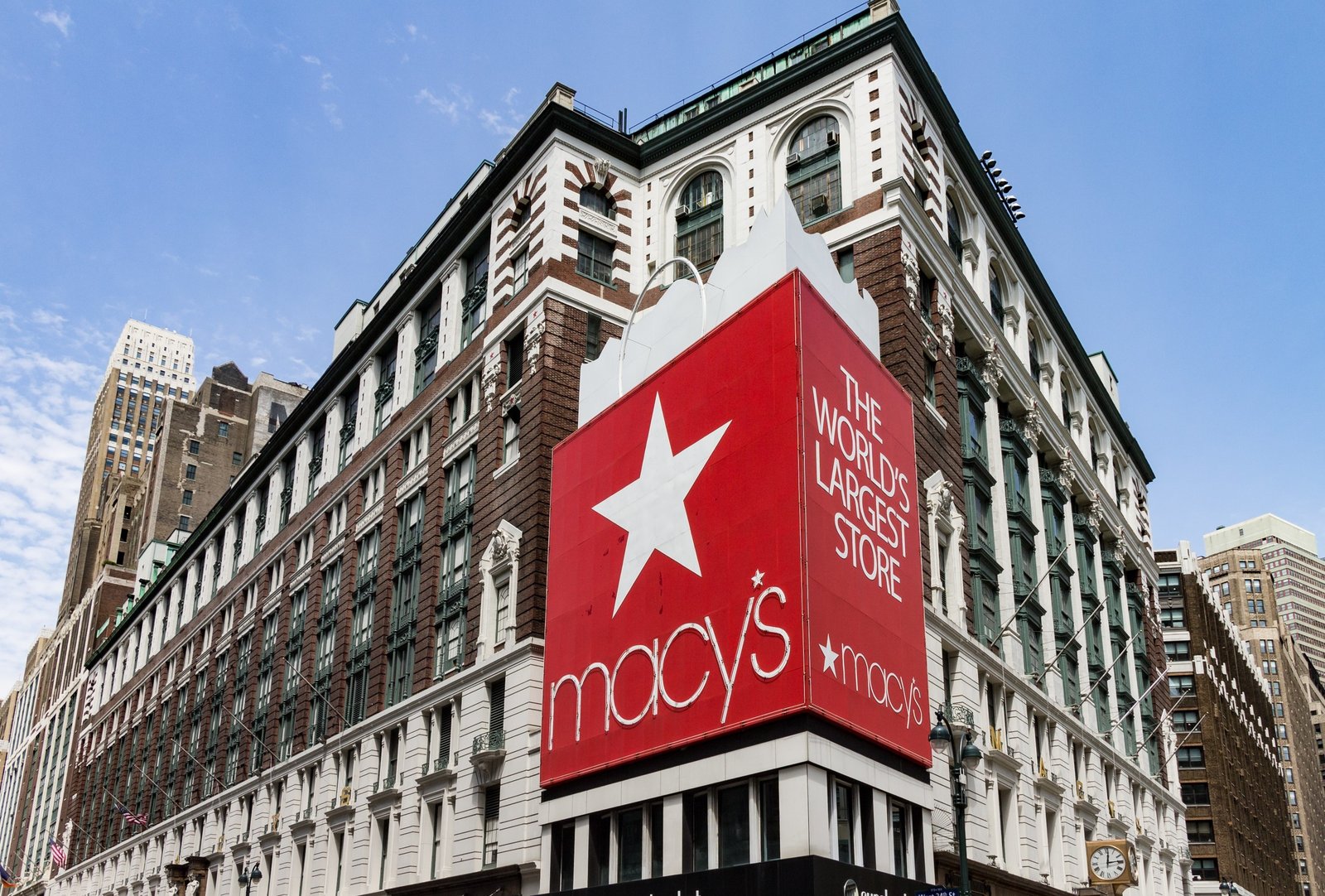
Many developments have been clueing to what might eventually signal the end. Nordstrom has recently decided to once again become privately owned, while Saks Fifth Avenue acquired Neiman Marcus. However, as reported by Glossy, Saks is allegedly "far behind on payment to many of its vendors." Additionally, in February, Macy's announced plans to close at least 150 stores by 2026.
Macy’s shared mostly disappointing financial results for the second quarter of 2024, revealing a decline in net sales and comparable sales despite achieving positive earnings per share (EPS) and gross margin performance. The retailer reported a 3.8% drop in net sales, totaling $4.9 billion, and a 4% decrease in comparable sales on an owned basis. These declines reflect ongoing struggles within the consumer market and a significant challenge to Macy’s profitability.
The company’s net sales fell across several segments, with Macy’s nameplate experiencing a 4.4% decline in net sales and a 4.5% drop in comparable sales. Bloomingdale’s and Bluemercury also faced setbacks, with Bloomingdale’s sales decreasing by 0.2% and comparable sales down by 1.1%. Although the gross margin rate improved to 40.5% due to lower discounting and cost control measures, these gains were not enough to counterbalance the overall revenue losses.
Looking ahead, Macy’s has revised its annual guidance downward, reflecting a more cautious outlook in light of a tougher consumer environment and heightened promotional activity. The updated forecast predicts a decrease in net sales to between $22.1 billion and $22.4 billion, down from the previous range of $22.3 billion to $22.9 billion.
As for other department stores, Von Maur Department Store has been recognized as America's Best Department Store for the third year in a row by Newsweek. The accolade follows an independent survey conducted with over 7,000 U.S. shoppers, assessing retailers on criteria such as product quality, service, and store layout. Von Maur was ranked first in the department store category and placed 10th overall among the top 200 retailers.
But what does this mean for the department store sector if the winning company is not a household name, with many consumers not even aware of its existence? Von Maur currently operates 37 stores across 15 states and plans to open new locations in Pennsylvania and North Dakota. According to Chain Store Age, the retailer was founded in 1872, and it's "known for its superior customer service, including an interest-free charge card, flexible return policy, free gift wrapping and shipping services."
Other department stores that made Newsweek's list included Bloomingdale's, Boscov's, Nordstrom, and Saks Fifth Avenue.
Compared to the struggles that many department stores are facing, off-price retailers are growing and thriving, even though their store layouts are not always as expansive or grand as a traditional department store — they make up for it with variety and discounted products.
According to Burlington's recent financial report, total sales grew by 13% in the second quarter of fiscal 2024, reaching $2.461 billion, while comparable store sales rose by 5% compared to the same period in fiscal 2023.
Ross' financial report was also positive, with a net income of $527 million, up 15.4% year-over-year. Additionally, it reported total revenue of $5.29 billion, a 7.2% year-over-year increase compared to Q2 2023.
TJX shows no signs of slowing down, either. Per CNBC, the retailer "beat Wall Street’s expectations on the top and bottom lines as it raised its full-year guidance." The outlet also noted that TJX has "become a haven for price-sensitive consumers" and has been taking market share from Macy's, Target, and other competitors.
As reported by CNN in February, the "gradual demise of the American department store" can be attributed to several factors, including competition from big-box retailers, the rise of e-commerce, and activist shareholders vying for control of company boards.
Department stores are also faltering as inflation and changing consumer preferences divide the retail market between discount and luxury segments. Retail analyst and fellow BrainTrust member Neil Saunders of GlobalData shared data at the time pointing to losses, with department stores' share of U.S. retail sales dropping from 14.1% in 1993 to 9.8% a decade later, 5.7% in 2013, and just 2.6% last year.
Saunders stated that "decline [is] inevitable. But I don’t think extinction is inevitable."
He explained that over the years, struggling department stores like Macy's have not successfully updated their offerings to contend with newer rivals. “Quite frankly, a lot of them stopped caring. They stopped listening to customers,” he said. “Sure online has taken its share, sure big box has taken its share. But most of all, it’s a failure to evolve.”
On a hopeful note, Retail & Leisure International shared a different perspective, noting that many international department stores are reinventing themselves to survive in the digital age by adopting experiential retail and adaptive spaces. To stay relevant, they are enhancing in-store experiences with technology, flexible layouts, and unique offerings.
For example, WOW Concept Madrid features dynamic, engaging shopping environments with pop-up shops and temporary installations. Selfridges in London invests heavily in unique in-store experiences, including pop-up shops and art installations, while Galeries Lafayette in Paris has launched a sustainable fashion initiative, Le Nouveau Cool, emphasizing circular fashion and environmental responsibility. These strategies transform shopping into a memorable experience, helping the department stores remain competitive and appealing in a rapidly changing market.