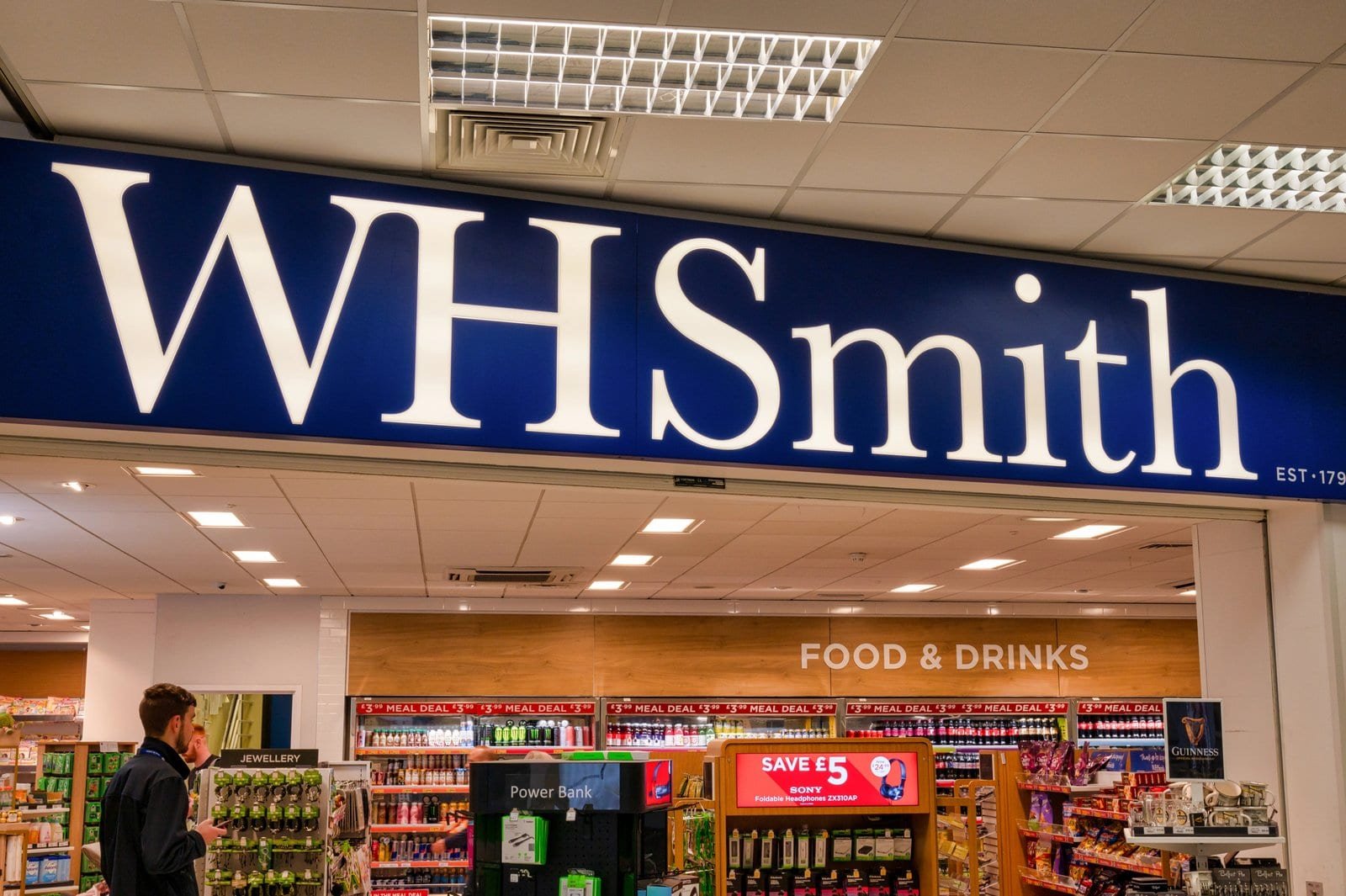
Airport media WHSmith

January 30, 2026

swilphotos/Depositphotos.com

Will In-Store Media Fly For WHSmith?

Share: LinkedInRedditXFacebookEmail

WHSmith has partnered with retail adtech firm In-Store Marketplace (ISM) to power digital and audio ads across more than 700 digital screens inside its more than 350 U.S. airport stores. The partnership promises to give advertisers access to “high-value travelers with long dwell times and strong spending power.”

Advertisers will be able to manage, sell, and schedule digital inventory across screens and audio channels inside stores through a single system, streamlining campaign activation for advertising partners. The network further reportedly offers the ability to deliver more contextually relevant and timely messaging to consumers while they shop, helping align content with traveler needs and moments.

Early adopters, including Frito-Lay and Bose, are activating campaigns, with additional brands expected to follow.

“We’re able to open our entire airport footprint to advertisers in a way that’s seamless, scalable, and built for today’s travel audience,” said Alison O’Keefe, partnership director of WHSmith North America Media Network. “The result is the most sophisticated travel retail media network, moving from isolated placements to a true media ecosystem that delivers measurable impact.”

In-store media — including QR-enabled screens, digital endcaps, smart displays, and in-store audio — is gaining more traction as retailers embrace formats that integrate naturally into the shopping experience. However, it is expected to remain a small part of the overall retail media due to challenges competing against the ability of digitally linked purchases to ads.

“Do I want to get in front of the shopper in store? Yes. Is there an infrastructure to support that properly yet? No,” Benoit Vatere, CMO of water brand Liquid Death, said on a panel at last year’s Interactive Advertising Bureau’s Connected Commerce Summit, according to Marketing Dive.

Vatere cited Amazon among the few able to adequately leverage demand-side platforms to track the path to purchase of consumers inside Whole Foods.

In-Store Media Still Faces Challenges in 2026 and Beyond, But Progress Is Being Made

EMarketer predicts U.S. in-store media spend will reach $1 billion by 2029, representing less than 1% of overall retail media spend, a challenging hurdle.

In a recent column for TotalRetail, Toni Restrepo — VP of retail media networks at ISM — said a challenge for in-store media has been the “disconnect” between marketing and media, particularly in making messaging adjustments to overstocks or understocks.

However, artificial intelligence-powered systems are introducing the ability to inform in-store media using inventory levels, demand patterns, and merchandising priorities. Restropo wrote, “Rather than relying on rigid schedules, retailers can adjust content strategies with greater flexibility, deciding when to reinforce brand messaging, shift creative emphasis, or spotlight available products.”

Adam Skinner, managing director of unified retail media at Epsilon, added in-store media will also benefit as AI advances personalization and recommendations efforts at the shelf level.

He said, “Retailers are doubling down on first-party identity and real-time audience solutions to deliver person-based, cross-channel engagement and dynamic ad decisioning tied to margin and inventory.”

The adoption of AI agents in the online shopping journey is also expected by many to be highly disruptive to digital media, potentially making in-store media more attractive. Tyler Murray, chief enterprise solutions officer for VML in North America, told Marketing Brew, “The best strategic moat retailers can do to combat AI is to shift dollars towards in-store retail media, because there’s no AI that’s impacting shoppers as they’re in Walmart going down aisle seven.”

BrainTrust

"What are the main hurdles holding back increased adoption of in-store media? Do you see artificial-intelligence or other technologies offering solutions?"
Avatar of Tom Ryan

Tom Ryan

Managing Editor, RetailWire


Discussion Questions

What do you think of the WHSmith’s opportunity to help advertisers reach travelers with in-store digital and audio ads?

What are the main hurdles holding back increased adoption of in-store media? Do you see artificial-intelligence or other technologies offering solutions?

Poll

6 Comments
Oldest
Newest Most Voted
Inline Feedbacks
View all comments
Neil Saunders

Given that WHSmith’s North American operation is mostly in airports, I think this will work as it gives brands access to a location that is not overly crowded with other retailers vying for media spend. However, the execution needs to be sensitive as airports are, for many, high-stress and time-sensitive. WHS should not add to the noise and clutter with a welter of screens.  

Craig Sundstrom
Craig Sundstrom

It would seem to be a semi-captive audience, so if the ads are relevant for the traveler, I think this can fly (pun acknowledged). Of course the reverse is true as well: advertise something irrelevant in an airport context, and the message may be quickly forgotten.

Last edited 23 minutes ago by Craig Sundstrom
Mohamed Amer, PhD

WHSmith’s airport context makes it a tactical setting: captive audiences with disposable income and long dwell times are ideal for media monetization. But let’s be clear about what “in-store media as a strategic moat against AI agents” actually means: retailers admitting they’ve lost the discovery battle. When executives celebrate that AI can’t reach shoppers browsing physical aisles, they’re describing a temporary attention monopoly, not a sustainable advantage. Airport retail works precisely because consumer agency is constrained by limited time, limited alternatives, and forced exposure. This is exactly the model agentic commerce disrupts.

Mohamed Amer, PhD

The real signal is that in-store media accounts for less than 1% of retail media spend today, and eMarketer projects it will remain below 1% by 2029. Even as absolute dollars double from $500 million to $1 billion, in-store media isn’t gaining share; it’s treading water while digital retail media scales massively. Treating forced exposure as a strategic moat isn’t a strategy; it’s monetizing the moments before agents optimize the entire purchase journey.

Lisa Goller
Lisa Goller

Wins all around. WHSmith and brands reach upscale shoppers and can earn their trust by solving the boredom of long layovers or long flights.

WHSmith could also attract non-endemic brand advertisers like international banks and telcom companies that design targeted campaigns for travellers.

Customers may enjoy the product discovery and find the ads align beautifully with their active lifestyle or business travel routine.

Georganne Bender
Georganne Bender

I can’t say I’ve ever been compelled to make a purchase at an airport store based solely on digital media. Most of the time it’s just noise.

While a captive audience is certainly an advantage, the effectiveness of this program will ultimately hinge on the quality and relevance of the advertising. When I’m moving through an airport, being marketed to isn’t on my agenda.

6 Comments
Oldest
Newest Most Voted
Inline Feedbacks
View all comments
Neil Saunders

Given that WHSmith’s North American operation is mostly in airports, I think this will work as it gives brands access to a location that is not overly crowded with other retailers vying for media spend. However, the execution needs to be sensitive as airports are, for many, high-stress and time-sensitive. WHS should not add to the noise and clutter with a welter of screens.  

Craig Sundstrom
Craig Sundstrom

It would seem to be a semi-captive audience, so if the ads are relevant for the traveler, I think this can fly (pun acknowledged). Of course the reverse is true as well: advertise something irrelevant in an airport context, and the message may be quickly forgotten.

Last edited 23 minutes ago by Craig Sundstrom
Mohamed Amer, PhD

WHSmith’s airport context makes it a tactical setting: captive audiences with disposable income and long dwell times are ideal for media monetization. But let’s be clear about what “in-store media as a strategic moat against AI agents” actually means: retailers admitting they’ve lost the discovery battle. When executives celebrate that AI can’t reach shoppers browsing physical aisles, they’re describing a temporary attention monopoly, not a sustainable advantage. Airport retail works precisely because consumer agency is constrained by limited time, limited alternatives, and forced exposure. This is exactly the model agentic commerce disrupts.

Mohamed Amer, PhD

The real signal is that in-store media accounts for less than 1% of retail media spend today, and eMarketer projects it will remain below 1% by 2029. Even as absolute dollars double from $500 million to $1 billion, in-store media isn’t gaining share; it’s treading water while digital retail media scales massively. Treating forced exposure as a strategic moat isn’t a strategy; it’s monetizing the moments before agents optimize the entire purchase journey.

Lisa Goller
Lisa Goller

Wins all around. WHSmith and brands reach upscale shoppers and can earn their trust by solving the boredom of long layovers or long flights.

WHSmith could also attract non-endemic brand advertisers like international banks and telcom companies that design targeted campaigns for travellers.

Customers may enjoy the product discovery and find the ads align beautifully with their active lifestyle or business travel routine.

Georganne Bender
Georganne Bender

I can’t say I’ve ever been compelled to make a purchase at an airport store based solely on digital media. Most of the time it’s just noise.

While a captive audience is certainly an advantage, the effectiveness of this program will ultimately hinge on the quality and relevance of the advertising. When I’m moving through an airport, being marketed to isn’t on my agenda.

More Discussions