DISCUSSION
Is Amazon on the right path to improved product discovery with Scout?
Written by RetailWire Staff
Source: amazon.com/scout
Jeff Bezos has said, “To invent you have to experiment and if you know in advance that it’s going to work, it’s not an experiment.” By that definition, Amazon Scout is an enormous experiment.
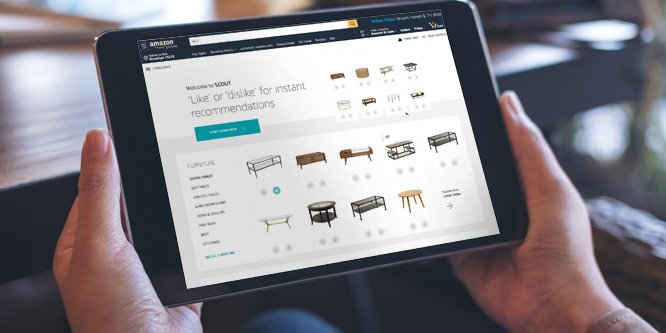
Scout (amazon.com/scout) is a new visual search engine within Amazon. It’s aimed at categories where visual appeal is a big part of shoppers’ selection criteria, so furniture, women’s shoes and lighting are early subjects. Shoppers choose a product subcategory and then give a thumbs up or down to each image. It seems like a simple and intuitive method of culling preferred items from a list of possibilities, but without a rework, I believe it will be a failed experiment.
The system utilizes machine learning to make replacements to the displayed assortment based on similarities or contrasts to the user-ranked item. The more rankings, the more tuned the selection until, in theory, the product choices displayed are largely purchase candidate items that meet the shopper’s desires.
The major breakpoint is that humans rarely make absolute judgements when it comes to shopping, especially when there is an emotional component to the goods being considered. Scout forces the normal expanse of gray area decision-making into one of black or white, which may result in unwanted results, time/effort wasted, disappointment, frustration and lost discovery opportunities.
[caption id="attachment_86978" align="alignleft" width="800"]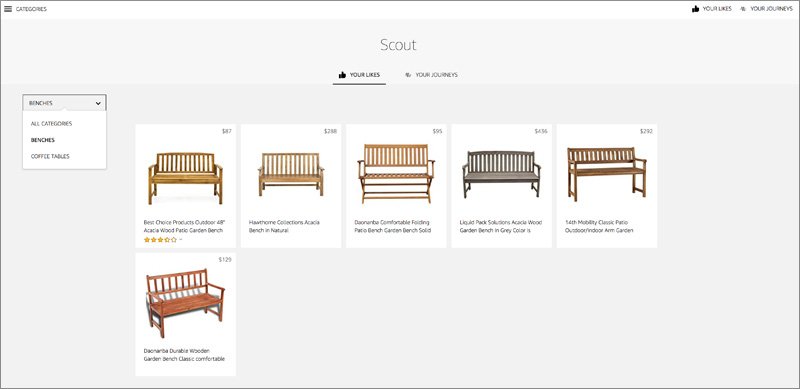 Source: amazon.com/scout[/caption]
I see Scout further hindered by shortcomings including:
Source: amazon.com/scout[/caption]
I see Scout further hindered by shortcomings including:
Source: amazon.com/scout[/caption]
I see Scout further hindered by shortcomings including:
- An inability to ascertain the reason for a like or dislike;
- Potentially insufficient/incorrect metadata to effectively support the replacement process;
- Seemingly no input from prior purchase history;
- Inconvenient access to supplemental product selection attributes, including ratings and reviews;
- A UI design fail that expects users to shop one way for visually oriented items and another for other items.