NRF Big Show 2025 in Review: AI Dominates, But Brick-and-Mortar Retail Is Evolving
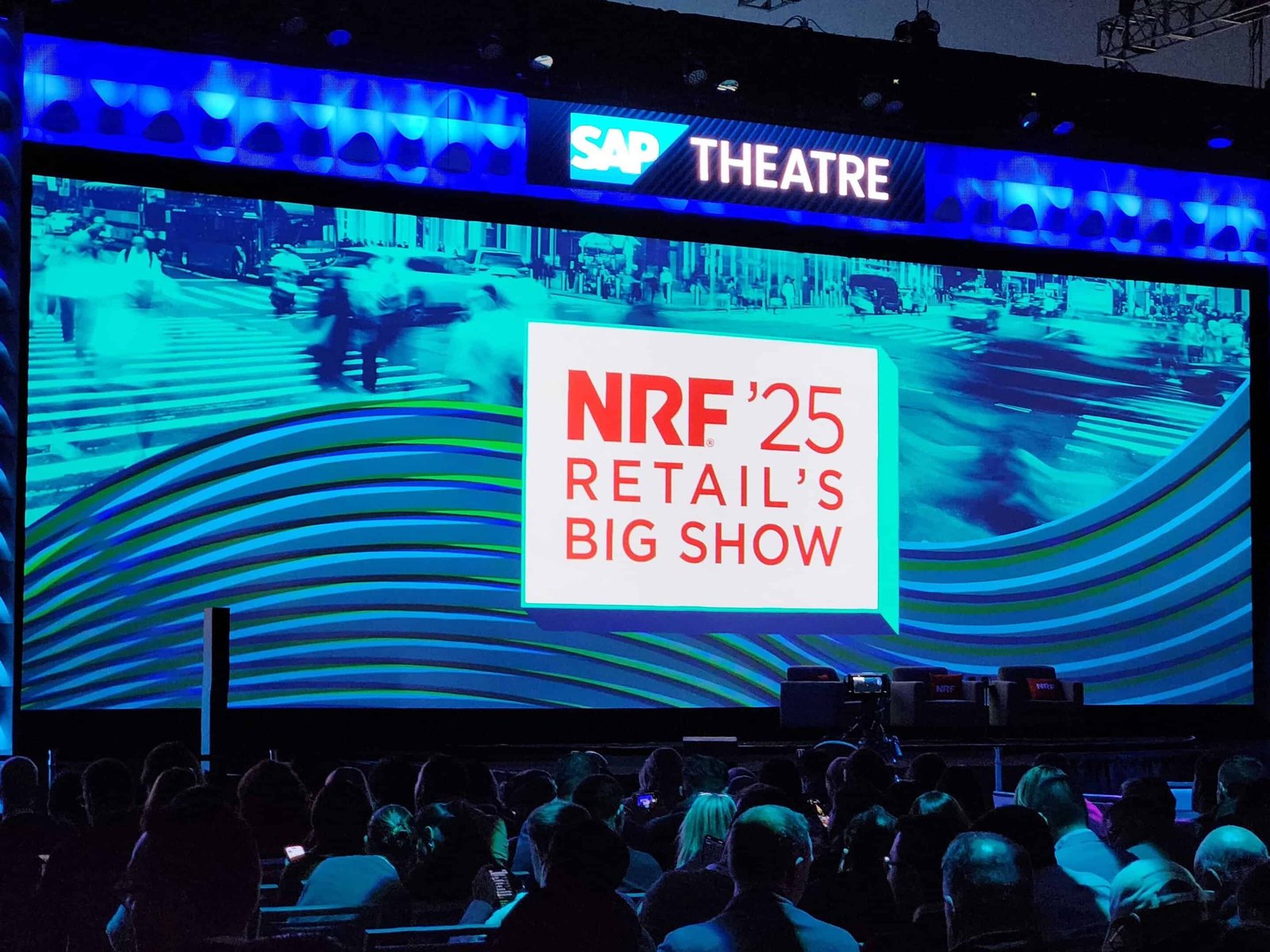
Photo: RetailWire
As the National Retail Federation (NRF) Big Show drew to a conclusion earlier this month, tens of thousands of attendees sat back to reflect upon what they had said, heard, and seen during the sprawling three-day event.
After consulting with members of RetailWire's BrainTrust panel to discuss the most pertinent and prominent themes of this year's NRF conference, one thing was very clear: AI stole the show, with both GenAI and upstart agentic AI — a novel subset of AI being heavily promoted by Nvidia — enjoying most of the spotlight.
AI May Have Dominated the Discussion, But Details and Concrete Solutions Were Brought Into Focus
While artificial intelligence, or AI, may have been a major topic of discussion during past conferences — or throughout the retail community more broadly over the past few years — one thread tugged at by many BrainTrust panelists in attendance was the commitment to a more thorough examination of the subject.
"The great elephant in the room was AI, of course. It was invoked on the main stage and at numerous booths across the exhibit halls," James Tenser, president and storyteller-in-chief of VSN Media, said. "This was expected, of course, but it was heartening at times to hear presenters and vendors drop the sci-fi tropes and focus on practical uses, like making retail jobs better and retail decisions smarter."
David Biernbaum, CEO and senior partner at David Biernbaum & Associates, LLC, expanded upon the above sentiment.
"There was a noticeable shift this year in meetings regarding AI. Last year, it was excitement, confusion, and who, what, where, and when. This year it progressed to AI value, with retailers looking at two or three specific uses for AI. For some retailers, it will be used primarily for forecasting. For others, it might be used for merchandising, pricing, and brand selection. Some will use AI for basic operations and office systems," Biernbaum said.
Perry Kramer, managing partner at Retail Consulting Partners, also weighed in on the inescapable nature of AI at the 2025 NRF Big Show, emphasizing the longevity of the concept as well as its imminent maturity.
"AI was a reality at every key touch point of the 2025 National Retail Federation Big Show in NYC, from product development and enabling associates to leveraging AI-generated messages and content driving customer retention. Some years, hot topics like blockchain and EMV implementation have been important, but few have been transformational to the degree that AI is," Kramer noted.
"It is clear that AI has embedded its roots in both retailers and vendors. It is also clear that retailers who will see early successes with AI are those that have been investing in accurate and well-structured data," he concluded.
Clay Parnell, president and managing partner of The Parker Avery Group, elaborated on this definite trendline, highlighting the deepened understanding of AI's role in retail as well as the various emerging synergistic relationships that successful brands will need to adopt moving forward.
"We were encouraged at this year’s NRF show not simply by the ongoing mention of AI, but by the specific use cases and examples that were explored in detail. Were there still some vendors and firms that remained too high level and general, discussing AI for retail in broad terms? Of course. But the progress from a year ago was impressive and actually surprising," Parnell began.
"The other positive discussions we were immersed in were around retailers wanting to look beyond AI and technology and really dive into what is required to support an essential transformation in their organizations. A lot of emphasis around prioritization, data, processes, people, and sustaining change. Especially people and sustaining change. A combination of new and advanced technology with basic fundamentals AND solid execution can be truly transformative," he concluded.
Agentic AI Commanding Attention Over GenAI to Some Degree at NRF 2025
Although AI was threaded throughout nearly every discussion and presence at this year's NRF Big Show, a few distinctions were drawn more clearly. In particular, the rise of agentic AI.
"Generative AI (like ChatGPT and similar) has garnered most of the headlines lately, but retailers need decision-making tools much more than they need content creation. So I was glad to hear several references to ‘agentic AI’ — describing an artificial intelligence that can autonomously learn, make decisions, and adapt to change on behalf of its human handlers. Listening to several presentations, I came away visualizing a coming wave of AIs that reside within retailers’ ‘walled gardens,’ making use of their proprietary data to enable accuracy and speed for better merchandising and operations," VSN Media's Tenser said.
"Those data are fed from a widening array of in-store sensing capabilities, ranging from shelf inventory optimization systems, fixed and moving video cameras, demand forecasting tools, staff task management systems, RFID and barcode scanners, shopper intelligence platforms, and data management systems, to name a few. Those solutions were on display all over the exhibit floor," he added.
Nikki Baird, vice president of strategy and product for Aptos, was equally as excited about the rise of agentic AI — even if it wasn't quite ready to harness its full potential at this point in the game.
"The surge of interest in agentic AI was interesting — it reminded me of the jump to mobile toward the end of the original internet boom of the early 2000s, where the steam was running out of internet investments as it ran into hard work ahead for companies to truly integrate digital into their businesses. Yes, mobile was the next big thing, but it didn’t really have an impact until 2007 when the iPhone made it easy," Baird indicated.
"Agentic is to GenAI what mobile was to digital in 2001. Yes, it’s awesome and it has a lot of potential, but where Aptos saw a lot of focus was on getting data in order in order to be anywhere near ready to take advantage of it," she added.
Verlin Youd — managing director at Start-Up Scale Advisory Inc. — was more concerned that the overwhelming focus on AI might be drowning out retail fundamentals that are key to excellence in the segment.
"NRF was the great whirlwind it always is, full of reconnecting with old friends and new, finding interesting new technologies, and, as always, hearing some terms overused. This year that term, no surprise, was AI. There were some great, practical, clear uses for AI, including GenAI and even more interesting agentic AI," Youd suggested.
"However, AI was stuck like a bumper sticker on too many booths and in too many conversations. The term that was severely underused was customer experience. Nothing happens without the customer, yet very few were focusing on helping retailers deliver the planned and correct customer experience. That oversight will certainly add to the list of failing retailers, while those who remain focused on their customers, and their store teams, will reap rewards," Youd concluded.
Georges Mirza, founder-principal and product strategy and innovation advisor for ComTask, cut through the superficial nature of current trends to speak to the day-to-day bedrock operational concerns powering the way forward in retail.
"This year’s NRF conference highlighted a shift in retail technology. The real value lies not in flashy trends but in integrated solutions that enhance the shopper experience and harness real-time insights to create a more sophisticated retail environment," Mirza pointed out.
Despite the Retail Obsession With AI, Brick-and-Mortar Operations Remain Top-of-Mind
Many panelists took the time to emphasize the continuing importance of innovation and operational standards in the physical retail business, despite the constant beat of the GenAI and agentic AI drum.
This was a narrative boosted by Frank Margolis, executive director of growth marketing and business development at Toshiba Global Commerce Solutions.
"My main thought on the show would be this: While the message of AI was everywhere, retailers approached the topic with more skepticism this year than last. Previous messages of ‘AI changing the retail world’ — with an uncertain time frame — no longer work," he said.
"Retailers are looking for real-world examples, with actual evidence of immediate applicability and demonstrable ROI, before considering these new solutions. The companies that were able to show impactful operational improvements — whether through AI, ML, or CV — were those with the longest lines and the most excited customers. The ones that I think will be the most successful going forward are those that drive scalable innovation with their customers, with both sides learning and developing solutions together. Innovation, as we all know, works best when great minds come together," he added.
Underscoring the importance of striking a balance between traditional retail and the promise of AI was Carol Spieckerman, president of Spieckerman Retail.
"I was pleasantly surprised by the focus on store associates and the human factor in general. With all the buzz around AI, it was refreshing to hear retailers and brands taking a balanced approach, even as technology threatened to take over the conversation. Walmart, Foot Locker, Target, and others were quite intentional about the potential to use technology to empower associates, and I sensed a real appreciation for the role that people play in retail success. AI is helping retailers better understand how to optimize the hand-offs between high tech and high touch, and that benefits everyone," Spieckerman began.
"It was good to hear retailers acknowledge the challenges inherent with AI adoption, including the need for significant organizational change and skill building. This is the stuff that isn’t as fun to talk about but will have a major impact on how successful AI will ultimately be. Retailers must be ready to invest in dedicated teams and ensure that buy-in from leadership underpins all efforts," she continued.
Mark Ryski concisely summed up his take on the show, drilling down to the foundation of the experience. His conclusion? A back-to-basics approach to ground the hype — and perhaps build a more intricate AI-enhanced framework on top of that grounding — may be in order.
"NRF’s Big Show conference is without a doubt the center of the retailing universe, and in 2025, AI was at the core of every conversation. Virtually every one of the 1,000+ vendors showcased AI-powered solutions, demonstrating how deeply AI is being integrated into every aspect of retail and beyond," Ryski stated. "However, amidst the hype and vendor pitches, retailers must remain grounded. AI cannot fix a broken store operating model or compensate for poor execution of the basics. Technology, no matter how advanced, is only as good as the foundation it supports. You cannot algorithm your way to success."
TikTok, the Importance of Physical Sales, and Other Business Concerns
At the time of the conference, TikTok's fate in the United States was still up in the air — and that remains the case today.
While President Donald Trump speaks to the potential of buyers, including Microsoft, taking up the mantle of TikTok owner, investors and retailers enjoying success on the platform should take note, according to CI&T's director of retail strategy, Melissa Minkow.
"One thing I found very surprising was how many retailers mentioned TikTok as a key marketing tool for them, yet none of them expressed a clear contingency plan for when it's banned. Considering how impactful the platform has been for the industry, I find it hard to believe brands have not devised a way to compensate for the losses they will experience without it," she said.
Lucille DeHart, principal of MKT Marketing Services and marketing expert for Columbus Consulting, highlighted the evolution of AI and its centrality to contemporary retail operations before pivoting to discuss what she found most unique about this year's NRF conference.
"What was refreshing at the show was the parallel balance of brands touting the growing importance of physical brick and mortar and how brand expression and experience is enabling digital interruption. With executions like Jellycat's FAO Schwarz pop-up diner, Louis Vuitton's cafe, Dylan's Candy Bar, and the new Petco Union Square marketplace flagship concept, retailers are continuing to strive to leverage stores to become brand destinations that complement digital commerce convenience," DeHart said.
Gail Rodwell-Simon, strategic retail advisor and founder of SPARX Advisory Group, was most impressed by the capability of brick-and-mortar retailers to create impactful moments despite headwinds posed by encroaching digital-only experiences.
"The NRF conference reinforced for me that physical stores aren’t dead — they’re evolving into spaces where customers come to be engaged, entertained, and educated. I loved seeing how brands like Foot Locker and Anthropologie are creating ‘WOW’ moments, reminding us all that the in-store experience still matters deeply," Rodwell-Simon explained.
Lastly, Brandon Rael — director and consult partner for Kyndryl — was openly enthusiastic about the event, zeroing in on the importance of relationships on a variety of levels.
"While I have written about the latest innovations in AI agents, digital twins, RFID, ESL, and optimization capabilities, the prevailing theme of the event was enhancing human connections. Technology is an enabler for growth, not a replacement for human intuition and ingenuity," Rael stated.
"The power of relationships is everything, and it helped make this the best event ever. There were so many laughs, tears, and happiness as I reconnected with old friends and made new global connections. I walk away from the event with a great sense of optimism, inspiration, and hope for the industry we all enjoy working in," he added.