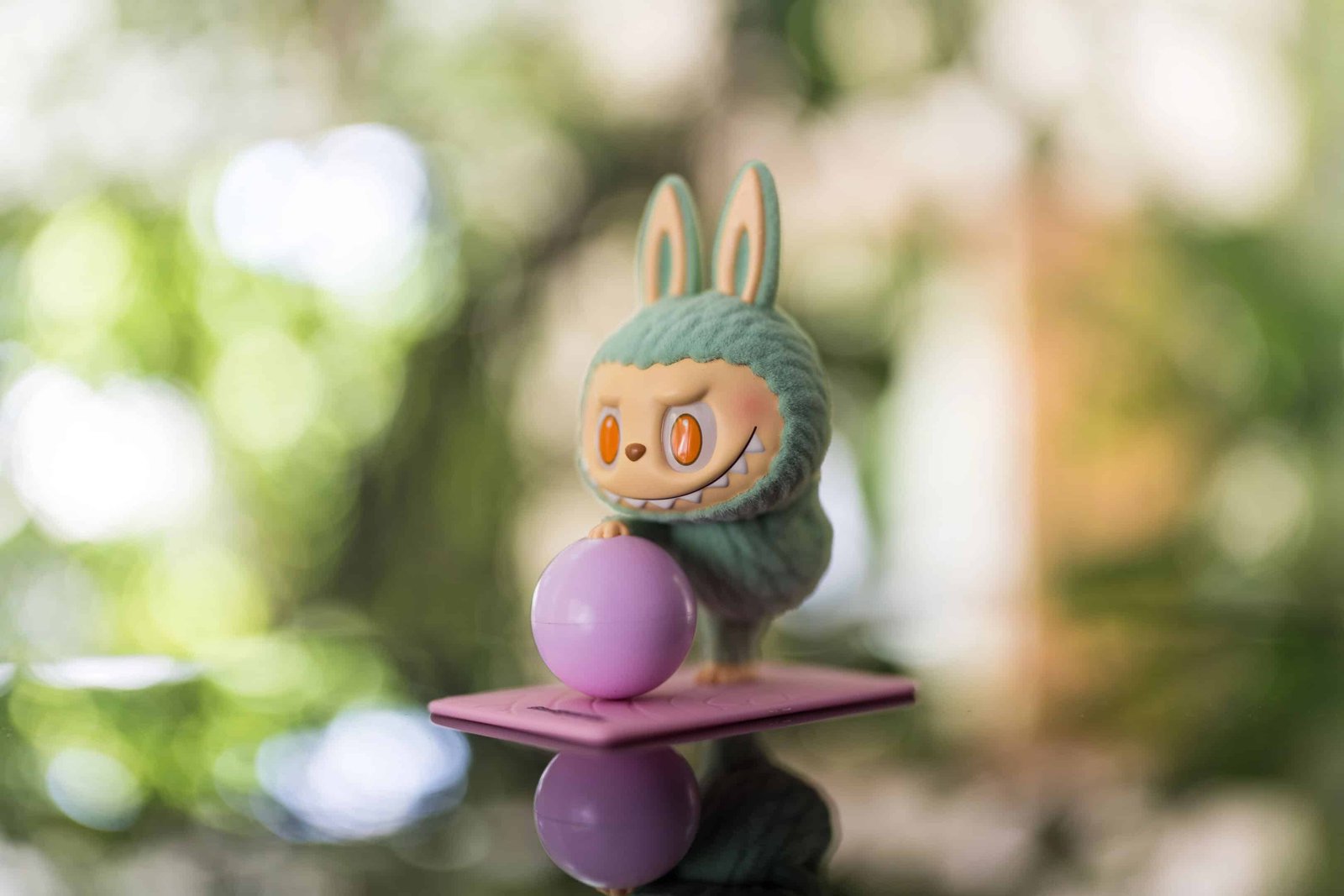
Pop Mart labubu

May 6, 2025

Dontree/Depositphotos.com

Is Pop Mart’s Popularity in the Toy Business a Passing Fad or a Lasting Threat to Hasbro and Mattel?

While Pop Mart may not be as well-established stateside when compared to its rivals in the retail toy business — perhaps most notably, Mattel and Hasbro — its market cap actually eclipses both of these, even when combined.

As Sherwood Media detailed, following its 2020 Hong Kong IPO, Pop Mart’s valuation has soared to an incredible $33.6 billion. For purposes of comparison, Mattel’s market cap currently rests at $5.1 billion after a recent period of downturn, and Hasbro’s at $8.7 billion.

That surge has been backed by the popularity of brand/character Labubu, complete with a furry body, wide eyes, and characteristically pointy ears reminiscent of a fantasy monster.

“So, what’s behind the frenzy? To the growing pool of ‘kidult’ customers, Labubu offers a rare mix: collectible fun, luxury-adjacent styling, and more than a hint of childhood nostalgia — making it this generation’s Barbiecore, just with sharper teeth,” the outlet’s Hyunsoo Rim wrote.

“Though Labubu mania is most notably a thing in Southeast Asia, the craze has come to the United States too, with long lines reported in malls around the country. It’s also sparked an entire cottage industry. Per The New York Times, creators have started to sell ‘tiny outfits specifically designed for the dolls, car seats for them to sit in and even little handbags for them to carry,’” she added.

Will Pop Mart and Labubu Actually Show Lasting Longevity in the US Toy Market vs. Hasbro and Mattel?

The question remains, however: Despite its rapid ascension into global popular culture via toy collectors of all age groups, will Pop Mart — and by extension, its Labubu lineup — be able to hold its own in the American market more specifically, particularly when squaring off against established players such as Mattel and Hasbro?

With Mattel holding the rights to such lucrative properties as Barbie, Hot Wheels, Fisher-Price, American Girl, Mega Bloks, and more — and Hasbro helming Dungeons & Dragons, Magic: The Gathering, Nerf, Transformers, Peppa Pig, and a slew of iconic board games — it could be an uphill battle for Pop Mart in terms of gaining a foothold against entrenched positions.

But Mattel has recently suffered a significant shedding of its own stock valuation in the face of continuing tariffs instigated by President Donald Trump, losing 18% of its value since April 2, when Trump enacted his “Liberation Day” tariff plan in full. Hasbro’s stock price, on the other hand, has largely recovered following an abrupt drop following the April 2 announcements.

In contrast, Pop Mart has been seeing booming business in the North American market, described as having “viral” appeal, as Vogue Business reported.

Rim noted that Pop Mart had seen revenues multiply ninefold during the first quarter of 2025 in the NA region and that the company is advantageously positioned regarding trade risks as compared to stateside competition. Further, given the fact that its product, primarily blind boxes, is priced higher than most offerings from Hasbro or Mattel, it is less susceptible to pricing pressures that may be affecting consumers more familiar with the other two brands.

Lucy Maguire, senior trends editor at Vogue Business, quoted Pop Mart managing director and head of Europe, Peter Shipman, on the key to the toymakers ongoing success story.

“With everything going on in the world right now and so much uncertainty, people are seeking out experiences and items that bring comfort, happiness and a sense of playfulness,” Shipman said.

“Labubu and the whole Pop Mart range offers a little pocket of escapism, something charming and reassuring to carry with you,” he added.

BrainTrust

"I don’t think it’s a fad, but neither do I think the offer is as rounded and defensible as other toy players like Hasbro and Mattel."
Avatar of Neil Saunders

Neil Saunders

Managing Director, GlobalData


"With the emergence of collectible culture and increasing demand for unique, limited-edition products, Pop Mart may be able to continue to thrive by leveraging these trends."
Avatar of David Biernbaum

David Biernbaum

Founder & President, David Biernbaum & Associates LLC


Discussion Questions

Will Pop Mart be able to carve out and maintain a market share comparable to Hasbro and Mattel in the North American toy market? Why or why not?

Given its viral popularity and wild growth over the course of the past few years, is it more likely that Pop Mart will see a falling-off of interest when the trend fades, or is it here to stay as an industry player on the global level?

What can Hasbro and Mattel do to revive interest in their established properties? What success stories can each brand point toward, and what recent failures might they learn from?

Poll

4 Comments
Oldest
Newest Most Voted
Inline Feedbacks
View all comments
Neil Saunders

I don’t think it’s a fad, but neither do I think the offer is as rounded and defensible as other toy players like Hasbro and Mattel. I also think we have to be careful assuming that the players compete completely head-to-head. A lot of Pop Mart’s customers are collectors and skew older, they are not necessarily in the market for buying mainstream toys.

Last edited 9 months ago by Neil Saunders
Craig Sundstrom
Craig Sundstrom

Shame, shame! Market cap is the last thing I would hope to see a retail site use as a proxy for long term product popularity (particularly when it’s paired with words like “mania” and “craze”) And there doesn’t seem to be much else said here to promote the case: growth? sure. But I don’t see market dominance any time soon.

Scott Norris
Scott Norris

And that’s Chinese exchange market cap, to boot – which might as well be Monopoly money as that country’s economy stumbles from investment bubble to investment bubble. When you can’t afford real estate, can’t afford to have kids, you might as well put your yuan into tulip bulbs collectibles of an IP that has zero Western presence.

David Biernbaum

In order to succeed, it must be able to adapt to the preferences of North American consumers and effectively compete against established brands. In a highly competitive and saturated market, success will likely be determined by innovative product offerings, strategic marketing, and building strong brand loyalty.

With the emergence of collectible culture and the increasing demand for unique, limited-edition products, Pop Mart may be able to continue to thrive by leveraging these trends.

Moreover, the company’s expansion into digital platforms and collaborations with popular franchises may help sustain consumer interest. It will, however, take constant innovation and adaptation to meet the changing market needs in order to remain relevant.

Hasbro can look back on their Transformers franchise’s success, which thrived because of its ability to adapt across a variety of media, including movies, television shows, and video games.

Mattel’s Barbie brand experienced a resurgence after embracing modern values and diversity, which broadened its appeal. The decline of traditional toys in the digital age indicates a need for innovation through the integration of technology and expanding into digital experiences to attract today’s tech-savvy youth.

4 Comments
Oldest
Newest Most Voted
Inline Feedbacks
View all comments
Neil Saunders

I don’t think it’s a fad, but neither do I think the offer is as rounded and defensible as other toy players like Hasbro and Mattel. I also think we have to be careful assuming that the players compete completely head-to-head. A lot of Pop Mart’s customers are collectors and skew older, they are not necessarily in the market for buying mainstream toys.

Last edited 9 months ago by Neil Saunders
Craig Sundstrom
Craig Sundstrom

Shame, shame! Market cap is the last thing I would hope to see a retail site use as a proxy for long term product popularity (particularly when it’s paired with words like “mania” and “craze”) And there doesn’t seem to be much else said here to promote the case: growth? sure. But I don’t see market dominance any time soon.

Scott Norris
Scott Norris

And that’s Chinese exchange market cap, to boot – which might as well be Monopoly money as that country’s economy stumbles from investment bubble to investment bubble. When you can’t afford real estate, can’t afford to have kids, you might as well put your yuan into tulip bulbs collectibles of an IP that has zero Western presence.

David Biernbaum

In order to succeed, it must be able to adapt to the preferences of North American consumers and effectively compete against established brands. In a highly competitive and saturated market, success will likely be determined by innovative product offerings, strategic marketing, and building strong brand loyalty.

With the emergence of collectible culture and the increasing demand for unique, limited-edition products, Pop Mart may be able to continue to thrive by leveraging these trends.

Moreover, the company’s expansion into digital platforms and collaborations with popular franchises may help sustain consumer interest. It will, however, take constant innovation and adaptation to meet the changing market needs in order to remain relevant.

Hasbro can look back on their Transformers franchise’s success, which thrived because of its ability to adapt across a variety of media, including movies, television shows, and video games.

Mattel’s Barbie brand experienced a resurgence after embracing modern values and diversity, which broadened its appeal. The decline of traditional toys in the digital age indicates a need for innovation through the integration of technology and expanding into digital experiences to attract today’s tech-savvy youth.

More Discussions