DISCUSSION
Is Victoria's Secret’s inclusivity messaging resonating?
Written by Tom Ryan
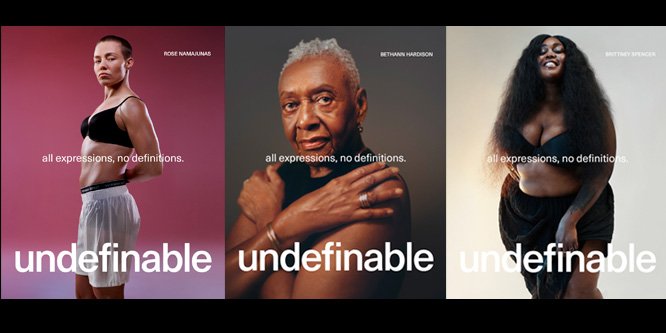
Victoria's Secret’s new campaign, “Undefinable,” builds on last year’s rebrand and marks a further step from its controversial 2014 campaign, “The Perfect Body.”
The new campaign stands out for featuring some supermodels but also a number of change-makers, including female professional athletes, country singer Brittney Spencer, and 80-year model and activist Bethann Hardison.
The messaging emphasizes a continued “commitment to listen and learn” while celebrating individuality and diversity in line with Victoria's Secret’s updated vision to be the “world's leading advocate for women.”
The campaign invites women to share “what makes them #Undefinable,” while women in the campaign share their past and present ideas of femininity.
[embed]https://www.youtube.com/watch?v=lwcKYA0uRi8[/embed]
“We are not here to dictate how to define beauty for anyone but instead we are here to celebrate how they define beauty on their own terms,” said Raúl Martinez, EVP, head creative director at Victoria's Secret, in a statement.
In 2014, the lingerie chain caused a social media uproar for its "The Perfect Body" campaign which featured the slogan alongside images of supermodels, several with visible ribs. The brand changed the campaign’s tagline to “A Body for Every Body," but sales began sliding in 2017 in the wake of the #MeToo movement.
Despite last year’s overhaul that shifted the message to inclusivity, empowerment and comfort, some consumers complained about the changes. As a recent New York Times profile noted, Twitter responses included, “It is too ‘utilitarian.’ No one wants such boring underwear.”
On a quarterly call earlier this year, Victoria's Secret CEO Martin Waters said the chain initially saw a surge in negative reactions to the repositioning, although it was “principally from men” and not best spenders. Social media discussion has since become “overwhelmingly” positive.
Mr. Waters also noted that Victoria’s Secret still sells “provocative” merchandise, including an "unashamedly sexy" Valentine's Day range backed by sexualized imagery.
"For us, it is about balance," he said. "Rather than the brand Victoria's Secret just being one thing, which is sexy, it's about Victoria's Secret, the brand being advocating for women in all aspects of their life, be that maternity, be that date night, being company at home, be it sport.”
- Victoria's Secret Launches Undefinable Global Campaign Seeking to Inspire & Listen to Women Around the World – Victoria's Secret/PRNewswire
- Victoria's Secret Continues Transformation With Launch Of New Partnerships To Positively Impact The Lives Of Women – Victoria's Secret/PRNewswire
- Victoria’s Secret Partners With Adut Akech, Bella Hadid, Rose Namajunas, Bethann Hardison and More for New Campaign – WWD
- Victoria’s Secret and What’s Sexy Now – The New York Times
- Victoria's Secret & Co. Q4 2021 Earnings Call Transcript – Seeking Alpha
- Victoria's Secret's CEO said the company was accused of 'scorching the earth' and 'spoiling' the brand after it ditched racy ads — but found the feedback was mostly from men – Business Insider
- Why Did We Buy What Victoria’s Secret Was Selling? – The Atlantic
- Can Victoria’s Secret shift its brand image from sexy to empowering? – RetailWire
Discussion Thread0
The RetailWire Daily
One morning briefing: the retail news, expert perspective, and business context to bring into your next meeting.
Want to know more? Learn more