DISCUSSION
Could 3-D tech move apparel manufacturing into stores?
Written by RetailWire Staff
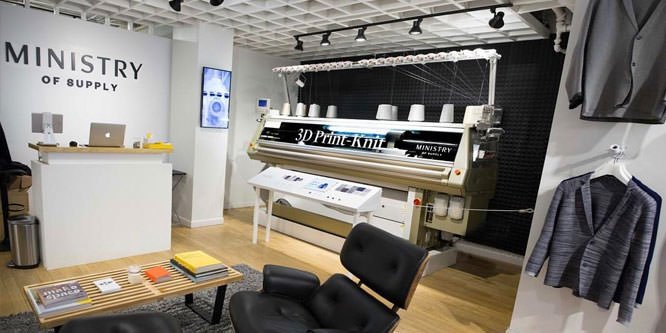
The advent of fast fashion has led to increasing demands on the apparel supply chain to get new clothing designs into stores faster. Now a new boutique apparel retailer is hoping to use "3-D knitting" to circumvent the supply chain entirely.
Boston-based clothing retailer Ministry of Supply has installed a machine next to its checkout counter capable of automatically knitting a customized blazer in around 90 minutes, according to The Washington Post. Customers provide specs such as color and measurements which an associate programs into the machine, and the rest is done automatically. The retailer foresees manufacturing up to one-third of its clothing with the process within a few years. While it currently takes a few days to produce a saleable product due to the need to wash the garment and sew on buttons, the retailer intends to get the turnaround down to the length of an average shopping trip.
Other apparel retailers and brands have begun leveraging mass customization farther down the supply chain. Nordstrom, for instance, backed a consortium of investors who put $15.5 million into an on-demand customized shoe company called Shoes of Prey. The startup purports to have designed 5 million pairs of shoes since 2009 and is considering moving into handbags.
Also in the shoe space, Adidas has begun opening production facilities it calls Speedfactories. The robotic factories can produce at least 50,000 pairs of shoes yearly, and are intended to allow the brand to respond quickly to hyper-local customer demands.
On-demand manufacturing could have a profound impact on the state of the labor market. On one hand it removes the possibility for labor abuses sometimes associated with the global apparel supply chain. But the technology replaces traditional manufacturing in a way that could, someday, do away with a good many apparel manufacturing jobs.
Further, the impact on how consumers shop could be just as drastic — a world in which the distinction between apparel brands is determined not by who manufactures the product, but by a blueprint and guideline for materials a brand furnishes a retailer (or even a home owner of a 3-D knitting machine).
Discussion Thread0
The RetailWire Daily
One morning briefing: the retail news, expert perspective, and business context to bring into your next meeting.
Want to know more? Learn more