DISCUSSION
Are ultra-fast delivery services bad for neighborhoods?
Written by Tom Ryan
The Netherlands’ city of Rotterdam last week issued a one-year freeze on the opening of "dark stores" or mini-distribution hubs used by on-demand services promising delivery in under 10 minutes.
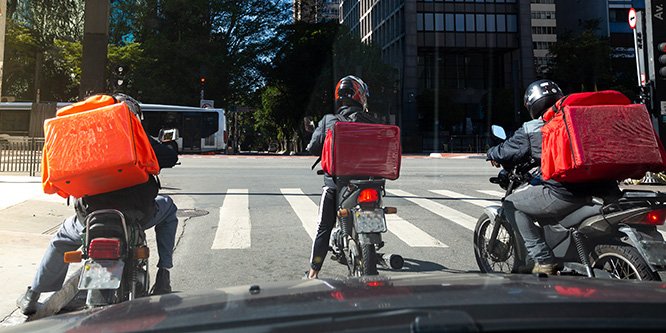
"Everybody knows them by now: darkened windows, disruption to the flow of traffic in shopping streets, noise from loading, reckless bike delivery people and nuisance from the waiting drivers," said Rotterdam city council woman Roos Vermeij in a statement, according to Reuters. "There's nothing wrong in principle with fast delivery, but how it's being done in practice is bloody irritating."
The move followed a similar one the prior week in Amsterdam, Netherlands’ capital, following complaints by the public, with regulations also being pursued in Lyon and Paris in France. Ultrafast delivery companies have quickly gained a foothold across major European cities during the pandemic.
In reaction to the complaints, the services have pointed to the positive response they’ve received from residents and the jobs they’ve created, while promising to explore solutions with city councils.
In New York City, local officials are looking to see if dark stores are violating zoning laws. Created in the sixties, the laws are designed to control traffic and noise as well as support walkability and the character of an area. While some dark stores offer in-store shopping, they may not qualify under the regulations for a residential district if they are viewed as a warehouse.
[caption id="attachment_140907" align="aligncenter" width="666"] Photo: Gopuff[/caption]
Officials are particularly concerned that bodegas, or corner stores, may be unable to compete with the venture capital-funded ultra-fast delivery startups such as Gopuff and Gorillas that promise speedy delivery for under $2.00. Some offer free delivery under introductory deals.
Critics point out that venture funding kept prices low for consumers and compensation high for drivers when Uber and Lyft first arrived, but both have reversed as rideshare services now chase profitability. Veena Dubal, a law professor at the University of California, Hastings, who studies technology and the gig economy, told CNBC, “That was how they hooked drivers. That is how they hooked consumers.”
Complaints about traffic and idling delivery vans have also been heard as well as around standard e-commerce delivery.
Photo: Gopuff[/caption]
Officials are particularly concerned that bodegas, or corner stores, may be unable to compete with the venture capital-funded ultra-fast delivery startups such as Gopuff and Gorillas that promise speedy delivery for under $2.00. Some offer free delivery under introductory deals.
Critics point out that venture funding kept prices low for consumers and compensation high for drivers when Uber and Lyft first arrived, but both have reversed as rideshare services now chase profitability. Veena Dubal, a law professor at the University of California, Hastings, who studies technology and the gig economy, told CNBC, “That was how they hooked drivers. That is how they hooked consumers.”
Complaints about traffic and idling delivery vans have also been heard as well as around standard e-commerce delivery.
Discussion Thread0
The RetailWire Daily
One morning briefing: the retail news, expert perspective, and business context to bring into your next meeting.
Want to know more? Learn more