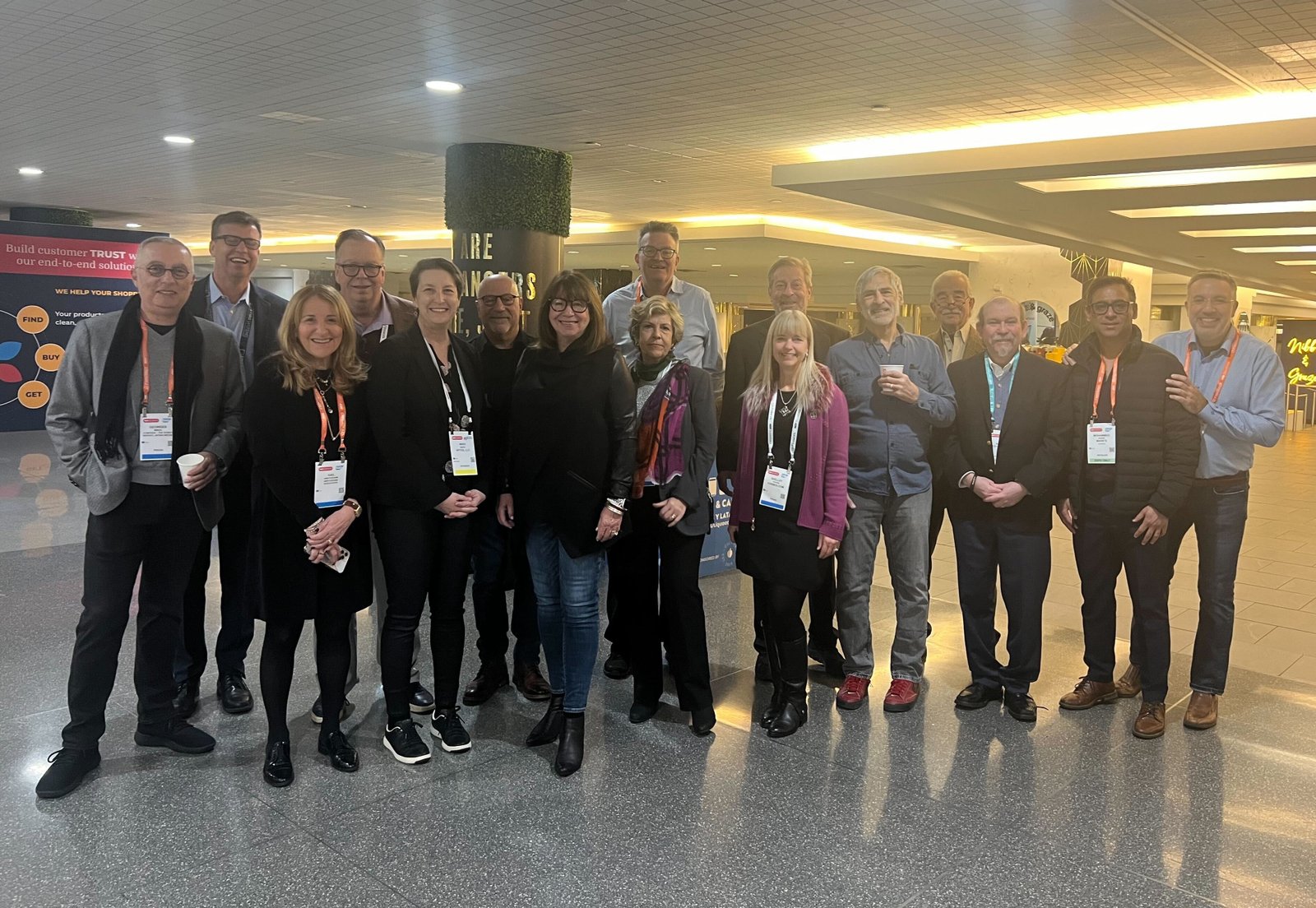
NRF Big Show: Insights and Reflections From the BrainTrust
NRF 2024: Retail’s Big Show brought together industry experts and thought leaders to discuss the latest trends and innovations shaping the future of retail. With over 40,000 attendees, 100 speaking sessions, and 1,000 exhibitors this year, the conference is the world’s leading annual retail event.
After a meeting with RetailWire’s BrainTrust panel of retail executives, analysts, consultants, and academics to break down the big themes of the conference, we’ve collected some key insights and reflections from those who participated.
AI Took Center Stage
At NRF 2024, purpose- and value-driven AI and GenAI capabilities took center stage. According to Brandon Rael, “AI capabilities are no longer in the hype cycle. They are embedded within so many solution capabilities provided by Microsoft, Diebold Nixdorf, IBM, SAP, KWI, Salesforce, and many market leaders in the commerce space.” He explained that AI is driving intelligent checkout experiences and providing value, cost savings, and efficiency.
“This should have been called the AI convention,” David Biernbaum stated. “AI will have a radical impact on retail… As a consultant, it was what I was asked about more than any other topic.” He also said that people are overwhelmed with AI. “There are so many things I can use it for. Should I use it for technology, for internal things? Should I use it for customer information? What function should I use it for first, or do I use it for a lot of things?”
Scott Benedict agreed about the prominence of AI at the conference, stating that it “permeated countless speaker presentations, as well as expo floor booth presentations.” He added that “AI has the potential to drive efficiency, reduce cost, improve sales, and enhance back-office functions such as product forecasting and supply chain operations.”
In Stibo Systems’ recap of NRF 2024, Brian Cluster wrote that “81% of retailer decision makers feel ‘urgency’ to adopt generative AI,” according to Google. He then said, “While there was a great deal of AI buzz, we also heard from some of the larger technology and market research and retailers providing a steady and pragmatic view of how to think about AI as a whole and the importance of building a data foundation that can serve as a prerequisite for AI initiatives.”
Not all BrainTrust members were as excited about the focus on AI. “AI was overrated,” Lucille DeHart said. “AI is a tool, not a solution. Make sure you define the business objective before you look for the tool.” Paula Rosenblum added, “I don't think retail is the best recipient of AI value.”
Cathy Hotka chimed in as well: “I talked to a lot of retailers who said that the Innovation Lab was confusing to them. It was AI overkill.”
Other Key Themes and Predictions
While AI was a significant theme in content and sessions, conversations with retailers revealed a different narrative. One key theme that stood out in particular was data.
Brian Cluster referenced Jamie Clarke from NielsenIQ, highlighting the strategic importance of data in retail. During his NRF 2024 session, Clarke stated, “Data is a strategic asset. Doing it well can be the difference between winning and losing… It is a differentiator as retailers need to have data for the experience in unified commerce.” This underscores the critical role of data in gaining a competitive edge in the industry.
Cluster also believes that “one of the most common use cases of AI is being able to maximize the value of your data.”
Lucille DeHart’s predictions for 2024-2025 outlined a renewed focus on the return of the physical store, last-mile delivery, data, and foundational retail. This forecast aligned with a broader industry shift. Per DeHart, “Retailers have outgrown their core legacy systems, so this year will be a renewed focus on rebuilding. The last several years have been about inventory, Covid-frictionless transactions, and supply chain. Retailers have come up for air and are looking at cleaning and governing their data so that they are ready to adopt innovation.”
James Tenser pitched in as well, noting, “Three broad themes I tracked at NRF were messaging, sensing, and smarter decision-making.” One important decision retailers are currently having to make is how to handle returns. According to David Weinand, “The world has woken up to the importance of returns in retail. It's no longer just a 'cost of doing business.’”
Retail’s Omnipresence and Omnichannel Approach
Michael Zakkour emphasized a key takeaway from NRF 2024 — “Retail is everywhere.” He went on to explain, “It goes beyond the need to integrate online and offline. Retail is on TikTok. Retail is on YouTube, individuals can be retailers.” The concept of unified commerce emerged as a significant challenge for retailers and brands in adapting to this omnipresence.
Brian Cluster agreed, stating that “Besides AI and generative AI, it seemed that unified commerce was the #2 theme overtaking omnichannel this year.”
Scott Benedict noted a focus on omnichannel transformation solutions. He said that at the conference, there were “a significant number of solution providers seeking to provide retailers with the tech solutions needed to integrate specific elements, or in cases broader elements, of their business into omnichannel solutions.”
In-Store Tech and Shrinkage
Scott Benedict also mentioned that in-store tech was prevalent throughout the show, noting that it “enables more efficient operations and increased customer satisfaction, provides store associates with guidance and support, and tracks shopper movement throughout the store.” Loss prevention and theft, in particular, could have some helpful tech-based solutions “that can not only reduce theft but also assist law enforcement in tracking and capturing thieves more effectively,” according to Benedict.
However, Katie Riddle believes that theft isn’t always something retailers can control. “As far as shrinkage goes, we have to control the controllables,” she explained, “and ORC is not a controllable. Employee theft and prevention of food waste are controllable.”
Final Thoughts on NRF 2024
With so much to cover in such a short period of time, the conference wasn’t able to explore every topic that currently impacts the retail industry. “Noticeably absent was ESG and resale,” Lucille DeHart mentioned. “Yes,” Brandon Rael agreed. “Sustainability took a backseat to everything AI and checkout.”
However, some of the best parts didn’t have to do with the topics covered at all. According to Cathy Hotka, “The best part of the NRF show is reconnecting with old friends, and making new ones. Knowledge transfer happens throughout the year.” Georganne Bender agreed, stating, “Seeing people in person whom I have only connected with online is priceless.”
Thinking about the conference and how retail will change throughout 2024, Gwen Morrison shared, “My take from NRF 24 is that the future of retail is transparency. New technologies allow retailers to data-mine the store, just as we do for a website or app. Pulling these tools together gives the industry a holistic view of everything happening, from sourcing to selling.”
Carol Spieckerman also shared a general tip based on her experience at NRF: “Just because you can, doesn't mean you should.” She explained that the retail industry has gone from a realm of possibilities to a landscape where it is better to establish “clear priorities.”
Georges Mirza had a thought to share as well. He said, “NRF showcased an abundance of fragmented innovation… It's time to consolidate them and make them actionable.”
RetailWire’s CEO Dominick Miserandino was also present at NRF 2024. During the meeting to discuss the conference, Ananda Chakravarty asked him, “You mentioned this was a life-changing view for you by attending NRF — what did you personally learn or find amazing about the retail space?”
Miserandino said, “The biggest re-reminder that I learned is that retail is relationships, and NRF gave me the opportunity to reconnect and connect with some amazing people in retail.”
Discussion Thread0
The RetailWire Daily
One morning briefing: the retail news, expert perspective, and business context to bring into your next meeting.
Want to know more? Learn more