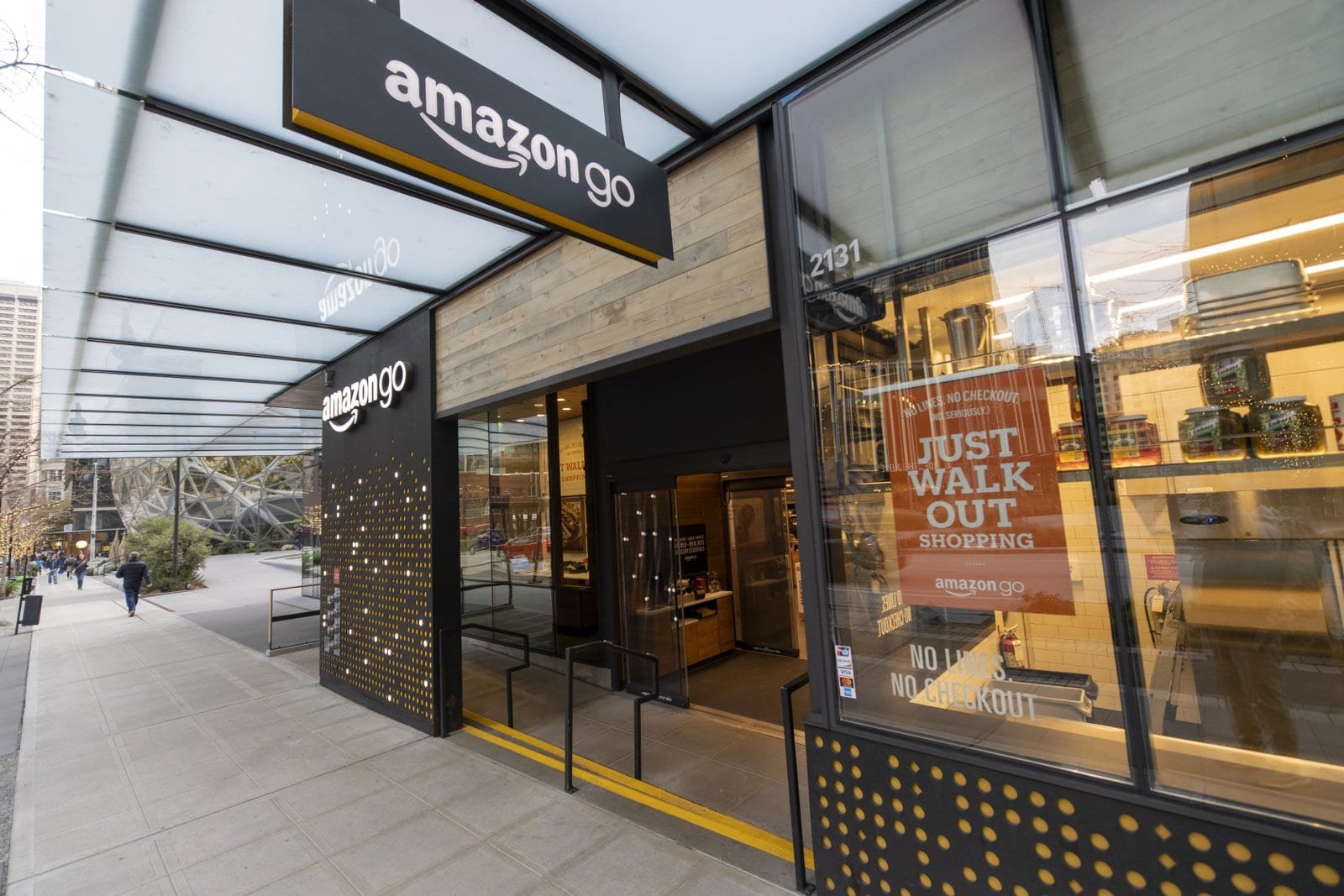
Is Amazon's 'Just Walk Out' Cashierless Retail Solution Set For Wider Third-Party Success?
CascadeCreatives/Depositphotos.com
Amazon's "Just Walk Out" (JWO) cashierless retail solutions have had a checkered history, with earlier closures of its Go stores -- and the shutdown of autonomous or cashierless shopping competitor Grabango last October -- an ominous sign for the tech, as Cashierless Industry Insights reported.
However, according to a recent Retail Touchpoints interview of Amazon Web Services’ business development lead Anthony Leggett conducted by the publication's Adam Blair, the JWO third-party deployment scene is set for new heights after recent successes in test markets.
Noting that over 300 third-party JWO rollouts across the U.S., Canada, France, the U.K., and Australia had already been enacted -- spanning stadiums, hospitals, college campus stores, and warehouse fulfillment centers -- Leggett signaled that Amazon's tech was ready to move from its pilot phase toward a "potential scaled growth phase."
"The momentum is definitely picking up; 150 of our more than 300 deployments were added [just] this year, and this growth allows us to set up for a much bigger expansion in 2026 and beyond," Leggett said.
"In what are established verticals for us, like sports stadiums, we’re pivoting from these customers going from deploying JWO in one or two sites to saying, 'Yes, this is proven technology.' There are 15 deployments at Lumen Field [in Seattle], and the Washington Commanders are launching with JWO technology from the start," he added, noting that educational facilities, hotels, hospitals, casinos, and office buildings presented opportunities given JWO's allowing for 24/7 operations (and little chance of theft).
Other notable talking points brought forth by Leggett:
- Given Amazon's renewed focus on licensing its JWO solutions to third-parties, Leggett noted that Amazon had pivoted to zero in on lowering the total cost of ownership (TCO) for operators. Optimization of the system with AI-powered algorithms and instituting simplified physical installation requirements -- in some cases allowing for the reuse of fixtures and a slashing of installation times from months of work to weeks, instead -- continues to be key.
- Citing examples such as MyVenue, Shift4, Cbord, and Transact in the sports space, Leggett noted an emphasis on seamless integration with existing retail POS systems. Even in harder use cases, where you "typically couldn’t use JWO technology in a retail environment with clothing on racks," according to Leggett, this was solved via the deployment of an RFID lane gate. The word "nimble" was used by Leggett several times to underscore Amazon's new position in distributing its JWO solutions in partnership with third-party retailers.
"We’re expanding from the traditional financial value realization [of cashierless technology] to solving real-world business problems and increasing end user satisfaction," Leggett added.
Critical Analysis: Tech Still Struggles in Certain Scenarios, But Amazon's Licensing Plan Could Be Wise
Cashierless Industry Insights covered a great deal of ground in discussing Amazon's exit from the JWO model -- at least as a primary retail provider, rather than a license-issuer.
"Let’s be honest about what Amazon’s store closures really tell us. The company didn’t abandon Go stores because the technology failed—their 'Just Walk Out' system works. They closed them because running cashierless retail locations as a business turned out to be much harder than anyone anticipated," the CII team wrote.
"Think about it: Amazon has the deep pockets to absorb losses while perfecting a concept. If they can’t make the unit economics work, what does that say for everyone else? The licensing strategy they’ve adopted speaks volumes. They’re essentially saying, 'Here’s the technology, you figure out how to make money with it,'" they added.
The authors then moved to discuss the myriad of tech-meets-real-world problems that JWO solutions face, from customers handing products to their kids, to group shopping, to the problem created by the produce section -- and all of its variety and customer handling issues. A second problem of customer interaction, and human desire for personal touch, was also brought forth, in addition to the discomfiting feeling of constant surveillance shoppers might endure.
Finally, though, the CII team gave credit to Amazon's side-stepping of the everyday problems that the JWO environment creates.
"Amazon’s licensing model might actually be the smartest approach. Let someone else deal with hiring staff, managing inventory, handling customer complaints, and all the other operational complexities of retail. Just provide the technology and collect licensing fees. That’s a much cleaner business model than trying to be both a tech company and a retailer," CII concluded.