DISCUSSION
Can IKEA drive a used furniture movement?
Written by Tom Ryan
IKEA is testing its first second-hand store in Sweden as part of its goal to become a fully circular business by 2030.
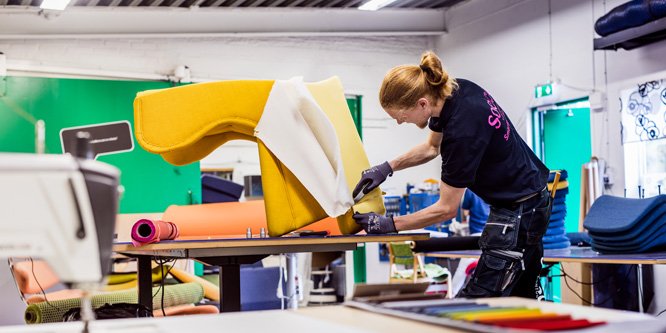
The location, which will sell items from a nearby IKEA store that have been damaged in transit or storage and repaired, measures only 775 square feet, its smallest store.
In recent years, IKEA has launched numerous programs to address concerns that its affordable, flat-pack business model leads to overconsumption and waste. Its home country of Sweden has set an ambitious goal to be carbon neutral by 2045.
Under one program, old IKEA furniture can be traded in for store credit. The items are placed in the store's bargain corner for resale at the same store-credit price. The chain is also testing a furniture rental program.
In early June, IKEA partnered with the Ellen MacArthur Foundation to help guide the home furnishings industry transition to a circular economy. Said Lena Pripp-Kovac, chief sustainability officer, IKEA, at the time, “Our goal is to give products and materials a longer life through the four circular loops: reuse, refurbishment, remanufacturing, and, as a last option, recycling. We believe this requires an innovative mindset, leadership, and collaboration.”
The resale market for apparel, footwear, handbags and other accessories has taken off in recent years, led by younger consumers’ desire for environmentally-responsible actions as well as affordability. While the secondhand apparel market is still facing some supply constraints due to COVID-19, according to The Wall Street Journal, demand remains healthy as concerns over the virus spreading on surfaces has lessened.
Nordstrom, Gap, Macy’s, J.C. Penney and Madewell are among some mainstream chains that have launched resale retail platforms, but the trend has been driven by online portals such as RealReal, ThredUp, Poshmark and Depop.
In the used-furniture space, Kaiyo, AptDeco, Chairish, 1st Dibs and Apartment Therapy's Bazaar are some online sites that have gained traction. Kaiyo, launched last year, has committed to planting a tree through the National Forest Foundation for every order completed.
- Retuna
- 'Need to challenge ourselves': IKEA to open first second-hand store in Sweden – The Local Sweden
- Check Out ReTuna in Eskilstuna, Sweden: The World’s First ‘Second-Hand’ Mall – Prestige Online
- IKEA opens its first second-hand store - in Eskilstuna - SVT Nyheter
- IKEA opens its own second-hand store - Aftonbladet
- Sell your furniture - IKEA
- Will IKEA become the world’s largest furniture rental outlet? - RetailWire
- Can the furniture industry end waste by going circular? IKEA wants to find out – Fast Company
- 2020 Resale Report - ThredUp
- Why used clothing can survive the global health crisis – The Wall Street Journal
- 6 Websites (That Aren’t Craigslist) That Let You Buy & Sell Furniture - Sheknows
- How furniture resale site Kaiyo plans to out-green the competition - Business Of Home
Discussion Thread0
The RetailWire Daily
One morning briefing: the retail news, expert perspective, and business context to bring into your next meeting.
Want to know more? Learn more