DISCUSSION
Should Kroger sell its c-stores?
Written by RetailWire Staff
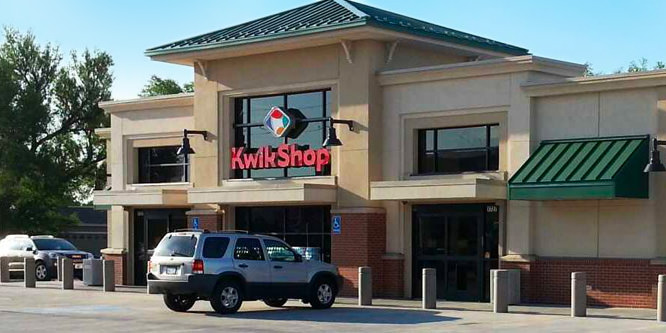
Photo: Kwik Shop
Kroger recently announced enhanced investments in areas including private label, personalized product recommendations, smart pricing and associate training, all fairly standard initiatives designed to improve the fundamentals behind its customer experience. But the retailer is considering a more surprising move – selling its convenience store operations.
The retailer’s convenience store business, which includes KwikShop, Loaf ‘N Jug, QuickStop, Tom Thumb and Turkey Hill Minit Markets, did $4 billion in total sales last year. Kroger operates 784 stores across 18 states.
At an investor conference earlier this month, Kroger CFO Mike Schlotman indicated that the company is investigating if the stores would be more valuable to a c-store-focused owner than to Kroger's shareholders.
Some have hailed Kroger as a data-driven innovator in recent years due in part to its 84.51° division, which was created in April 2015 after the grocer purchased the remaining 50 percent of a joint venture with dunnhumby/Tesco. More recently, some have come to see Kroger as a grocer that hasn't distinguished itself far enough from other big players, and one that will find itself in Amazon.com/Whole Foods' crosshairs if it doesn't make changes.
While there hasn't been much word lately on Amazon's cashier-free standalone c-store concept, the grocery industry is waiting to see how the e-tailer's acquisition of Whole Foods will impact grocery shopping as a whole.
Shares of Kroger have been down 40 percent this year, according to Reuters, the announcement of the possible c-store sell-off led to a 1.2 percent spike to $21.96 per share last week. The current stock price is $20.81.
The c-stores channel is by many indications doing quite well at the moment. Early in 2017, 79 percent of c-store retailers were optimistic about the nation's economy. Sixty-three percent experienced an increase in foodservice sales in 2016.
But competing in the space is becoming ever-more-demanding. Customers have come to expect fresh food offerings from c-stores, and managing such food preparation correctly requires significant expertise and investment.
Kroger owns other properties outside of the mainline grocery segment besides just convenience stores, according to the press release. In addition to other grocery-related retail interests, Kroger owns 222 health clinics, 2,258 pharmacies and 307 jewelry stores.
- Clarification: Kroger's Convenience Store Business Generates $4 Billion in Annual Sales – Kroger
- Kroger Investor Presentation – Seeking Alpha
- Kroger exploring sale of convenience stores, shares rise – Reuters
- Does Kroger's management have a workable plan for success? – RetailWire
- Will dunnhumby's analytics do for Whole foods what it did for Kroger? – RetailWire
- Are convenience stores in for a big year in 2017? – RetailWire
- Should grocers back away from prepared meals? – RetailWire