DISCUSSION
Should retailers push Congress for a more robust stimulus plan?
Written by RetailWire Staff
As Congress struggles to find common ground on a second round of fiscal stimulus, it feels like an important time to review the impact of the CARES (Coronavirus Aid, Relief, and Economic Security) Act legislation. The first program totaled almost $1.8 trillion and was delivered through one-time checks to most households, expanded unemployment benefits and the Paycheck Protection Program.
Here’s what we know about its effects.
During March, April and May, $103 billion in consumer spending disappeared. We spent more money on groceries and liquor, but far less on almost everything else. We also know that by June, the Census Bureau’s Advanced Monthly Retail Trade report showed that sales had rebounded to the 2019 June level.
The data below shows total U.S. retail (excluding auto) and restaurant sales from credit and debit card data from my firm, CassarCo Strategy & Analytics, between March and June 2020 compared with the same weeks in the prior year. We see a huge decrease in spending by all income groups in the early stage of COVID lockdowns followed by a sharp rebound in spending as stimulus payments were released.
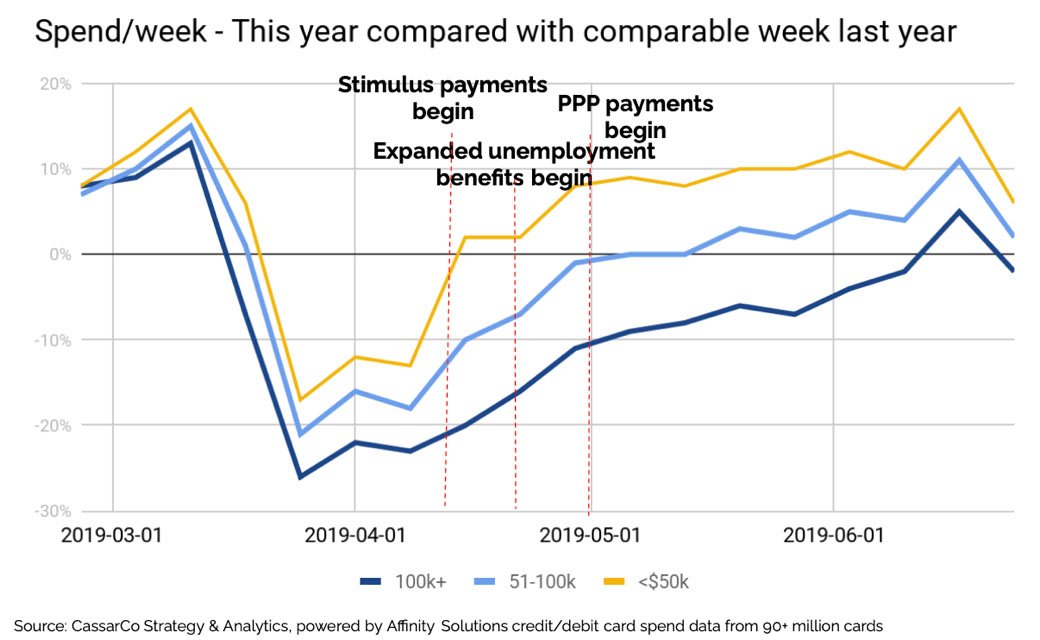 The stimulus was intended to benefit those in lower income groups and we did indeed see a far sharper increase in spending amongst households making less than $50,000 annually (+22 percent compared with +15 percent for households with more than $100,000 in annual household income). The stimulus worked and was a significant factor in June’s rebound.
The Census Bureau will release critical July retail sales numbers on Friday. These numbers include the continued impact of the extra $600 weekly unemployment payments that expired at the end of the month. Anything below July 2019’s numbers ought to shock legislators into quick action on more stimulus. Numbers on par with or better than July 2019 may lead legislators to conclude that their work is done. However, with a national unemployment rate of 10.2 percent, there are millions of workers who have suddenly experienced a $600 weekly drop in income. The trick is that this impact will not be visible until August numbers are released in mid-September.
We’ve seen no evidence that Washington’s work is done. All we know is that the action Congress and the Trump administration took in the spring was effective. This should only double the resolve to continue to support struggling Americans until unemployment comes down to a palatable level.
The stimulus was intended to benefit those in lower income groups and we did indeed see a far sharper increase in spending amongst households making less than $50,000 annually (+22 percent compared with +15 percent for households with more than $100,000 in annual household income). The stimulus worked and was a significant factor in June’s rebound.
The Census Bureau will release critical July retail sales numbers on Friday. These numbers include the continued impact of the extra $600 weekly unemployment payments that expired at the end of the month. Anything below July 2019’s numbers ought to shock legislators into quick action on more stimulus. Numbers on par with or better than July 2019 may lead legislators to conclude that their work is done. However, with a national unemployment rate of 10.2 percent, there are millions of workers who have suddenly experienced a $600 weekly drop in income. The trick is that this impact will not be visible until August numbers are released in mid-September.
We’ve seen no evidence that Washington’s work is done. All we know is that the action Congress and the Trump administration took in the spring was effective. This should only double the resolve to continue to support struggling Americans until unemployment comes down to a palatable level.Discussion Thread0
The RetailWire Daily
One morning briefing: the retail news, expert perspective, and business context to bring into your next meeting.
Want to know more? Learn more