Photo: JCPenney
Through a special arrangement, presented here for discussion is a summary of Steve Dennis’ recent Forbes article. Steve is President & Founder of SageBerry Consulting and a senior Forbes Contributor. His first book — Remarkable Retail: How to Win and Keep Customers in the Age of Digital Disruption — will be published April 14th.
J.C. Penney’s survival will not come from an improvement in margin rates, but an improvement in margin dollars — and that will require a big reversal of sales trends.
Penney’s turnaround will also not come from massive store closings. The vast majority of retailers that are in serious trouble (or have died in this age of digital disruption) have a customer relevancy problem, not a fundamental cost or too many stores problem. They seem to believe that a slightly better version of mediocre can be a winning long-term strategy.
Of course, executing a dramatic improvement in customer relevance won’t be easy. In making its journey from boring to remarkable, Penney’s faces (at least) four big challenges:
- The middle is collapsing. The bifurcation of retail is a real and growing phenomenon, and it’s more and more clear that it’s death in the middle.
- Little customer traction. Newish CEO Jill Soltau is rightly focused on getting basic operating and merchandising disciplines right, and some improvement is evident. But better is not the same as good. The amount of market share Penney’s has lost since Ron Johnson’s disastrous reboot nearly a decade ago is significant and its brand image is not exactly what Millennials will easily gravitate toward.
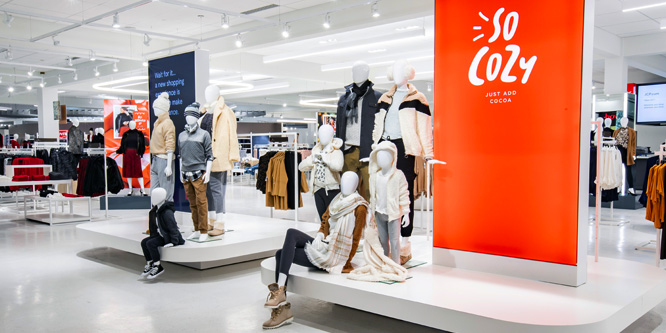
- Significant investments are needed. Penney’s needs to steal significant market share by attracting large numbers of new customers and encouraging existing customers to spend materially more. Most of the ideas being tested in their Hurst, TX prototype are solid but hardly remarkable, and mostly just level the playing field. The ideas have to be far more radical, and big dollars will need to go into their stores and their e-commerce capabilities as well as toward delivering a more harmonized customer experience.
- The problem is they think they have time. Penney’s has guided comparable store sales to be down 3.5 percent to 4.5 percent for fiscal 2020. If that is the best they can do we know where we will be this time next year: more cost-cutting, more store closings and more customers who won’t miss Penney’s when they’re gone.