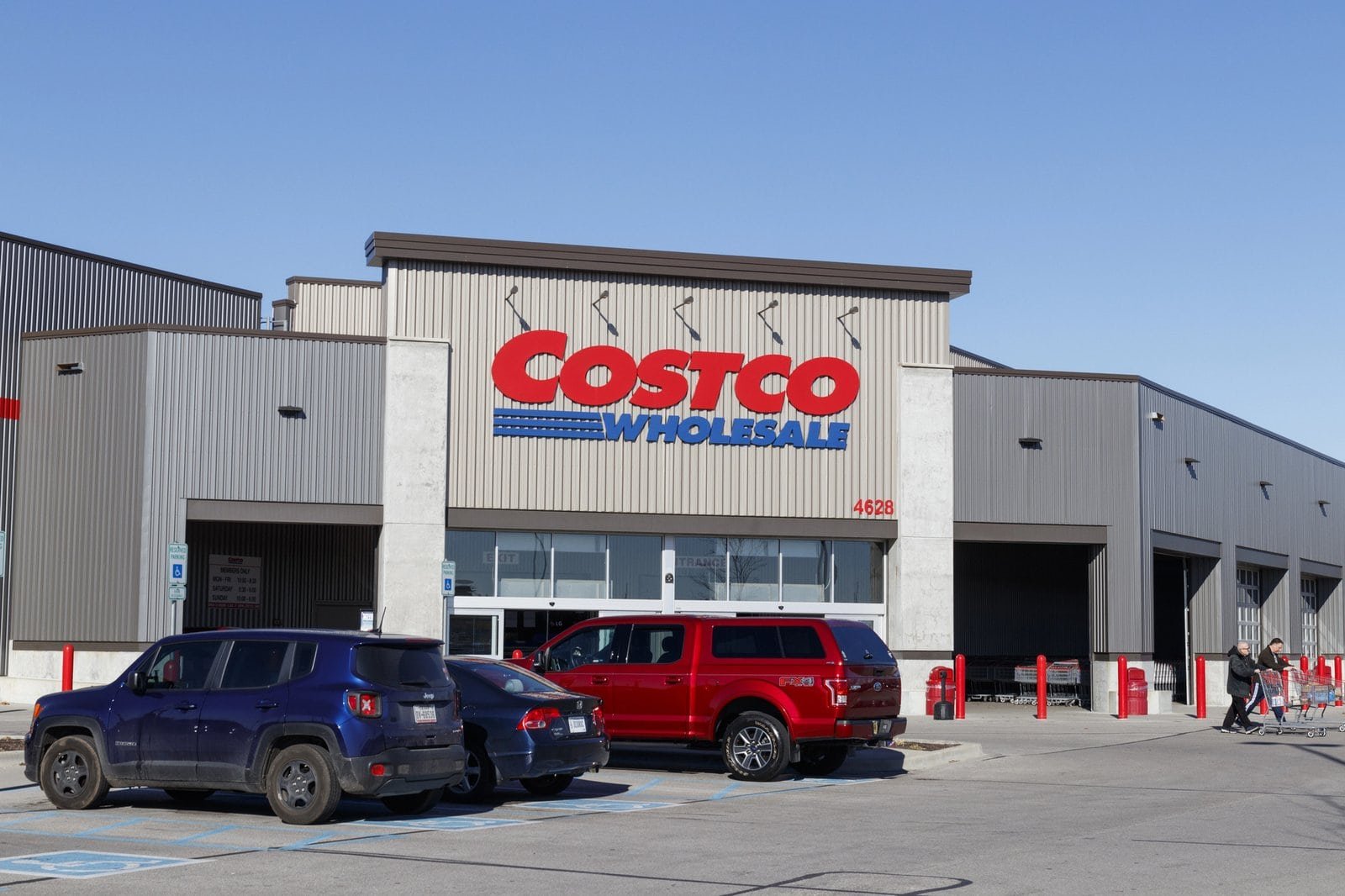
Costco

April 27, 2026

Jetcityimage2/Depositphotos.com

What Does Being a ‘Trustworthy’ Company or Brand Actually Mean in Retail?

Via its most recent ranking in the form of a “Most Trustworthy Companies in America 2026” report, Newsweek provided a gargantuan list of trusted — at least according to 25,000 U.S. consumers polled — companies across a variety of industries, including retail.

In remarks attached to the report, editor-in-chief of Newsweek, Jennifer Cunningham, underscored the importance of trust in a highly volatile world.

“In an era defined by a profound crisis of grievance, a corporation’s integrity is no longer a marketing luxury—it is its most volatile and valuable currency. True leadership requires more than just high-level strategies; it demands a radical, lived transparency that bridges the chasm between executive perception and the lived reality of the consumer,” Cunningham said.

The retail rankings provided were outlined as follows.

  1. Chewy
  2. Costco
  3. Amazon
  4. Academy Sports and Outdoors
  5. The Home Depot
  6. Tractor Supply
  7. Lowe’s
  8. Ace Hardware
  9. Barnes & Noble
  10. Ulta Beauty
  11. Kirkland’s
  12. L.L.Bean
  13. Cabela’s
  14. Bass Pro Shops
  15. PetSmart
  16. Walmart
  17. Harbor Freight
  18. BJ’s Wholesale Club
  19. Belk
  20. Michaels

Followed by Hobby Lobby, Menards, Best Buy, Dick’s Sporting Goods, and Brookshire Brothers rounding out the top 25. Notable entries near the bottom of the list were QVC (at No. 55), The Container Store (at No. 58), Ollie’s Bargain Outlet (at No. 59), Burlington Stores (at No. 60), and Neiman Marcus (taking the last spot, in 64th place).

A relatively recent SAP report collated data from various sources — including Deloitte and Gallup — to suggest a few arguments tied to consumer trust in today’s retail environment: that younger generations were more demanding of retailers, particularly around sustainability and social standards; that trust definitively erodes with data breaches or mishandling of customer data; that shoppers are finding it easier to swap loyalties given the proliferation of online shopping; and that social media platforms serve as a venting ground for dissatisfied customers.

SAP’s report suggested a three-part solution of sorts: the ability to demonstrate capability and reliability to customers when things get tough or problems rear their head; the appointment of a chief trust officer to be empowered with (and responsible for) handling all tasking related to ensuring fulfillment of the brand’s customer promise; and the centrality of transparency and disclosure when it comes to operating principles and methods, sharing information whenever appropriate.

Newsweek’s List of Trusted Companies Draws Some Criticism on Social Media

A few critics of Newsweek’s list appeared in comments attached to Newsweek CEO Dev Pragad’s sharing of the report. One commenter by the name of Jeon critiqued the list as an assortment of business “giants” which created a structural wall of gatekeepers, asking “Are we fostering genuine transparency, or simply certifying a ‘Senate of Corporations’ to dictate the future standards?”

A second commenter added a more moderate critique, asking a question as well. “Can trust really be measured… or just approximated through surveys and perception? Because real trust shows up in behavior, especially when things go wrong,” AJ Berman, CEO of ShareEcard, wrote.

BrainTrust

"How much stock do you place in Newsweek's survey rankings? What do the results say to you, in terms of what consumers consider trustworthy retail fundamentals?"
Avatar of Nicholas Morine

Nicholas Morine


Discussion Questions

How much stock do you place in Newsweek’s survey rankings? What do the results say to you, in terms of what consumers consider trustworthy retail fundamentals?

Are the criticisms levied at the rankings fair or accurate, in your opinion?

What do you think about the three cornerstones of trust outlined by the SAP report?

Poll

9 Comments
Oldest
Newest Most Voted
Inline Feedbacks
View all comments
Cathy Hotka
Cathy Hotka

What a surprising list. No Apple. No Trader Joe’s. I’d love to learn more about the selection criteria for respondents.

Mohamed Amer, PhD
Reply to  Cathy Hotka

TJ: exactly!

Doug Garnett

Some of it can be found in this statement: “evaluations that reflected the perspectives of consumers, employees and investors”. Wait. What?

Here’s their full discussion of methodology. AFTER surveying there is a “social listening” filter. Wait, what?

Worse, they evaluated “how customers viewed the company” — which is meaningless in consumer trust. What matters is how customers view the brand, product, or store — NOT the company itself.

This is really bad research.

https://assets.newsweek.com/wp-content/uploads/2026/04/Methodology_Most-Trustworthy-Companies-in-America-2026.pdf

Last edited 51 minutes ago by Doug Garnett
Craig Sundstrom
Craig Sundstrom
Reply to  Doug Garnett

So what one thing did we learn from this list?
> How little we can trust Newsweek

Last edited 39 minutes ago by Craig Sundstrom
Mohamed Amer, PhD

Both the Newsweek survey and the SAP framework treat trust as something brands build and project. Consumers experience it differently: something they extend and withdraw based on accumulated evidence. That asymmetry explains everything interesting about this list.

Trader Joe’s absence is the proof. No loyalty app, no advertising, no digital footprint. The survey can’t find it. Yet its customers are among the most devoted in retail. Bigger footprint, bigger ad spend, higher score: the methodology rewards visibility, not trustworthiness. The SAP “Chief Trust Officer” prescription makes the same error. When a company needs a C-suite title to enforce trustworthiness, the culture has already lost the argument.

Jeff Hall
Jeff Hall

Trust is built in the small moments when a brand keeps its word.

Was the product in stock? Did pickup happen when promised? Was pricing clear? Did an associate solve the issue without friction? Those everyday moments are where trust is either earned or lost.

In our work, customer trust is nurtured inside the touchpoints. Every store visit, website session, call center interaction, delivery, return, and follow-up email is a chance to reinforce confidence or create doubt. The brands that win are the ones that make consistency feel effortless.

A few truths:
• Trust starts with reliability
• Transparency matters more than polished messaging
• Empowered frontline employees create trust faster than anything else
• When something goes wrong, recovery often matters more than perfection

Customers do not expect retailers to be flawless. They expect them to be honest, responsive, and human.

In the end, trust is simply the sum of experiences a customer can count on.

Doug Garnett

We need to start by noting what this is not — a customer trust survey. Instead, “evaluations that reflected the perspectives of consumers, employees and investors”. Wait. What? Mixing employees and investors with consumers? That’s a strange choice.

Ignoring their list, then, we must ask ourselves what “trust” might mean here? Trust, after all, is thoroughly contextual. Mean people can be trusted to always be mean. We do not know, though, how Newsweek determined a single rating of “trustworthiness.”

Further, it is not clear that trustworthiness turns into “more business.” Certain types of reliance on brands gain profit by continually delivering experiences of a specific sort — that specific taste and texture of Doritos for example. Separated from “trusted to deliver that Doritos taste and texture” any idea of Doritos trustworthiness is meaningless to consumers. A Doritos trustworthiness to always deliver the product that was ordered is a trustworthiness which matters only to retailers.

The most critical issue for both retailers and brands, then, is that they continually and reliably deliver to consumers their product and experience which is unique. Such trustworthiness is, then, different in each and every situation, different between consumers and investors; different between consumers and employees.

Last edited 54 minutes ago by Doug Garnett
Scott Benedict
Scott Benedict

I tend to view rankings like Newsweek’s “Most Trustworthy Companies” as directionally interesting—but not definitive. The methodology behind these lists is often robust, drawing on tens of thousands of survey responses and over 100,000 evaluations across customers, employees, and investors . That gives them scale and a level of credibility. And when you look at the retail names that rise to the top—companies like Costco, Amazon, Home Depot, and Walmart—it reinforces what most retail professionals already know: trust is built on consistent execution at scale.

But that’s also where I place some limits on these rankings. Retailing itself is best left to professionals, and I’d argue that assessing retailer performance is similar. Journalists and industry experts who follow these companies day in and day out often have a deeper understanding of operational realities, competitive dynamics, and long-term performance than broad-based surveys can capture. So while these rankings are useful signals, they shouldn’t be treated as a final scorecard.

The results themselves do point to some clear fundamentals of trust in retail:

  • Consistency and reliability (in-stock, fulfillment, pricing integrity)
  • Value and transparency
  • Customer experience and service
  • Brand reputation built over time

Those are not new ideas—but the fact that they continue to surface tells you something important: trust in retail is still earned through execution, not messaging.

As for criticisms of the rankings, I think many are fair. Surveys capture perception at a moment in time, and perception can lag reality—or be influenced by factors outside the core retail experience. They also tend to flatten nuance across categories and business models. A specialty retailer and a mass merchant may be judged on the same criteria, even though their operating models—and customer expectations—are very different.

On the SAP framework around the three cornerstones of trust (often cited as competence, reliability, and integrity), I generally agree with the premise. But again, in retail, those concepts come to life in very practical ways:

  • Competence = having the right product, at the right time, at the right price
  • Reliability = delivering on the promise, every time
  • Integrity = being transparent and fair with customers and partners

Ultimately, trust in retail isn’t theoretical—it’s experiential. Customers decide who they trust based on what happens when they shop, not what appears in a ranking or a report. Those rankings can be helpful indicators, but the real scorecard is still written every day in stores, online experiences, and customer interactions

Tanya Thorson
Tanya Thorson

Trust is where perception meets proof.
I place some stock in rankings like this because they show how consumers feel in a moment, but real trust is earned in the behavior after the survey. Do customers come back? Do they forgive the mistake? Do they believe the promise enough to choose you again?
The retailers near the top understand the basics. Reliable product, clear value, easy access, strong service, and follow through when something breaks. That is trust at retail level.
The criticism is fair. Big brands often get the benefit of awareness. Scale does not create trust. Execution does.
The SAP points are right directionally, but trust cannot live in one title. A chief trust officer may create ownership, but the work has to sit across merchandising, stores, digital, marketing, fulfillment, and service.
Trust is the operating system.Customers trust what they can count on.

9 Comments
Oldest
Newest Most Voted
Inline Feedbacks
View all comments
Cathy Hotka
Cathy Hotka

What a surprising list. No Apple. No Trader Joe’s. I’d love to learn more about the selection criteria for respondents.

Mohamed Amer, PhD
Reply to  Cathy Hotka

TJ: exactly!

Doug Garnett

Some of it can be found in this statement: “evaluations that reflected the perspectives of consumers, employees and investors”. Wait. What?

Here’s their full discussion of methodology. AFTER surveying there is a “social listening” filter. Wait, what?

Worse, they evaluated “how customers viewed the company” — which is meaningless in consumer trust. What matters is how customers view the brand, product, or store — NOT the company itself.

This is really bad research.

https://assets.newsweek.com/wp-content/uploads/2026/04/Methodology_Most-Trustworthy-Companies-in-America-2026.pdf

Last edited 51 minutes ago by Doug Garnett
Craig Sundstrom
Craig Sundstrom
Reply to  Doug Garnett

So what one thing did we learn from this list?
> How little we can trust Newsweek

Last edited 39 minutes ago by Craig Sundstrom
Mohamed Amer, PhD

Both the Newsweek survey and the SAP framework treat trust as something brands build and project. Consumers experience it differently: something they extend and withdraw based on accumulated evidence. That asymmetry explains everything interesting about this list.

Trader Joe’s absence is the proof. No loyalty app, no advertising, no digital footprint. The survey can’t find it. Yet its customers are among the most devoted in retail. Bigger footprint, bigger ad spend, higher score: the methodology rewards visibility, not trustworthiness. The SAP “Chief Trust Officer” prescription makes the same error. When a company needs a C-suite title to enforce trustworthiness, the culture has already lost the argument.

Jeff Hall
Jeff Hall

Trust is built in the small moments when a brand keeps its word.

Was the product in stock? Did pickup happen when promised? Was pricing clear? Did an associate solve the issue without friction? Those everyday moments are where trust is either earned or lost.

In our work, customer trust is nurtured inside the touchpoints. Every store visit, website session, call center interaction, delivery, return, and follow-up email is a chance to reinforce confidence or create doubt. The brands that win are the ones that make consistency feel effortless.

A few truths:
• Trust starts with reliability
• Transparency matters more than polished messaging
• Empowered frontline employees create trust faster than anything else
• When something goes wrong, recovery often matters more than perfection

Customers do not expect retailers to be flawless. They expect them to be honest, responsive, and human.

In the end, trust is simply the sum of experiences a customer can count on.

Doug Garnett

We need to start by noting what this is not — a customer trust survey. Instead, “evaluations that reflected the perspectives of consumers, employees and investors”. Wait. What? Mixing employees and investors with consumers? That’s a strange choice.

Ignoring their list, then, we must ask ourselves what “trust” might mean here? Trust, after all, is thoroughly contextual. Mean people can be trusted to always be mean. We do not know, though, how Newsweek determined a single rating of “trustworthiness.”

Further, it is not clear that trustworthiness turns into “more business.” Certain types of reliance on brands gain profit by continually delivering experiences of a specific sort — that specific taste and texture of Doritos for example. Separated from “trusted to deliver that Doritos taste and texture” any idea of Doritos trustworthiness is meaningless to consumers. A Doritos trustworthiness to always deliver the product that was ordered is a trustworthiness which matters only to retailers.

The most critical issue for both retailers and brands, then, is that they continually and reliably deliver to consumers their product and experience which is unique. Such trustworthiness is, then, different in each and every situation, different between consumers and investors; different between consumers and employees.

Last edited 54 minutes ago by Doug Garnett
Scott Benedict
Scott Benedict

I tend to view rankings like Newsweek’s “Most Trustworthy Companies” as directionally interesting—but not definitive. The methodology behind these lists is often robust, drawing on tens of thousands of survey responses and over 100,000 evaluations across customers, employees, and investors . That gives them scale and a level of credibility. And when you look at the retail names that rise to the top—companies like Costco, Amazon, Home Depot, and Walmart—it reinforces what most retail professionals already know: trust is built on consistent execution at scale.

But that’s also where I place some limits on these rankings. Retailing itself is best left to professionals, and I’d argue that assessing retailer performance is similar. Journalists and industry experts who follow these companies day in and day out often have a deeper understanding of operational realities, competitive dynamics, and long-term performance than broad-based surveys can capture. So while these rankings are useful signals, they shouldn’t be treated as a final scorecard.

The results themselves do point to some clear fundamentals of trust in retail:

  • Consistency and reliability (in-stock, fulfillment, pricing integrity)
  • Value and transparency
  • Customer experience and service
  • Brand reputation built over time

Those are not new ideas—but the fact that they continue to surface tells you something important: trust in retail is still earned through execution, not messaging.

As for criticisms of the rankings, I think many are fair. Surveys capture perception at a moment in time, and perception can lag reality—or be influenced by factors outside the core retail experience. They also tend to flatten nuance across categories and business models. A specialty retailer and a mass merchant may be judged on the same criteria, even though their operating models—and customer expectations—are very different.

On the SAP framework around the three cornerstones of trust (often cited as competence, reliability, and integrity), I generally agree with the premise. But again, in retail, those concepts come to life in very practical ways:

  • Competence = having the right product, at the right time, at the right price
  • Reliability = delivering on the promise, every time
  • Integrity = being transparent and fair with customers and partners

Ultimately, trust in retail isn’t theoretical—it’s experiential. Customers decide who they trust based on what happens when they shop, not what appears in a ranking or a report. Those rankings can be helpful indicators, but the real scorecard is still written every day in stores, online experiences, and customer interactions

Tanya Thorson
Tanya Thorson

Trust is where perception meets proof.
I place some stock in rankings like this because they show how consumers feel in a moment, but real trust is earned in the behavior after the survey. Do customers come back? Do they forgive the mistake? Do they believe the promise enough to choose you again?
The retailers near the top understand the basics. Reliable product, clear value, easy access, strong service, and follow through when something breaks. That is trust at retail level.
The criticism is fair. Big brands often get the benefit of awareness. Scale does not create trust. Execution does.
The SAP points are right directionally, but trust cannot live in one title. A chief trust officer may create ownership, but the work has to sit across merchandising, stores, digital, marketing, fulfillment, and service.
Trust is the operating system.Customers trust what they can count on.

More Discussions